QR Code Designer (Free)
About
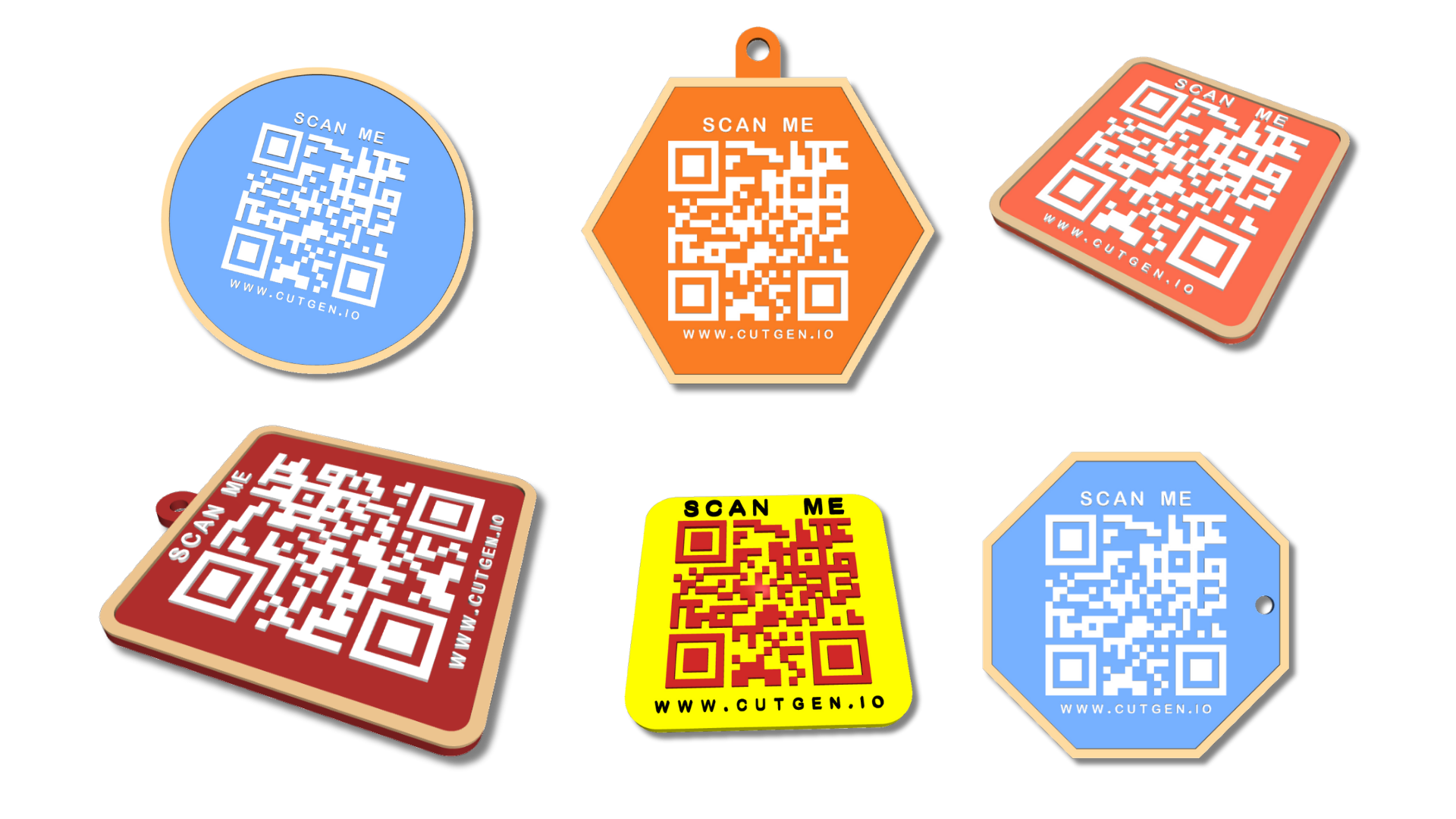
QR Code Designer is an indirect 3D modeling tool tailored specifically for laser cutters, 3D printers, and CNC machines. Customization is facilitated through an intuitive menu with customizable parameters.
Simply the fastest low fuss method for creating QR codes. Providing 3D (STL), and 2D (SVG) outputs
Features:
- Built in QR Code generator
- Url/Text
- WI-FI
- Phone Call
- SMS/Text
- vCard (Contact)
- 4 different shapes:
- Rounded - Square shape with customizable corner radius.
- Circle
- Hexagon
- Octagon
- QR Codes can be either ‘recessed’ (laser engraved) or ‘raised’ (3D printed)
- Lots of Configuration flexibility, making this a universal tool for both Laser/CNC and 3D Printing.
- 1 and 2 layer (border) design
- Independent Border, and Base thickness
- 2 different hole types
- External ‘keychain’ hole.
- Internal hole.
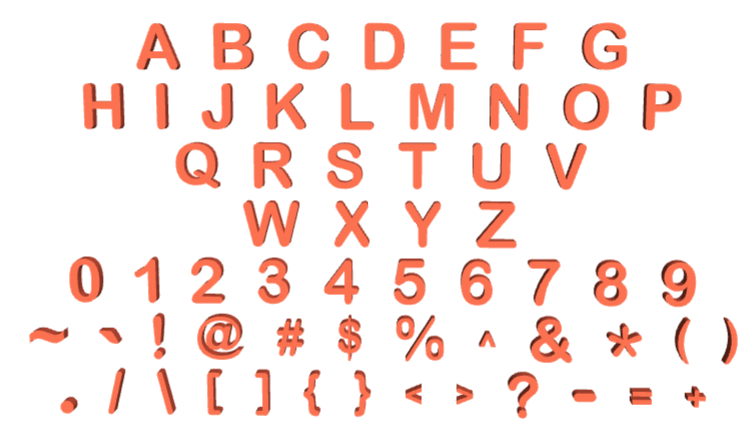
- One Block Font letter set of characters are limited to Uppercase only :
- ABCDEFGHIJKLMNOPQRSTUVWXYZ0123456789~`!@#$%^&*(),./[]{}<>?-=_+
- Independent letter size, thickness, and spacing
- Custom text above (Top text) and below (Bottom text) the QR Code
- 2D (SVG/DXF) or 3D (STL/OBJ) export
Designs can be exported as SVG (2D) or STL (3D) files. SVG can be used with laser cutters and CNCs. STL models can be imported into 3D slicer application to be used with 3D printers
The Sign Designer script operates within the powerful JSCAD environment—an open-source project that enables parametric 3D modeling through code. Check it out here: JSCAD.
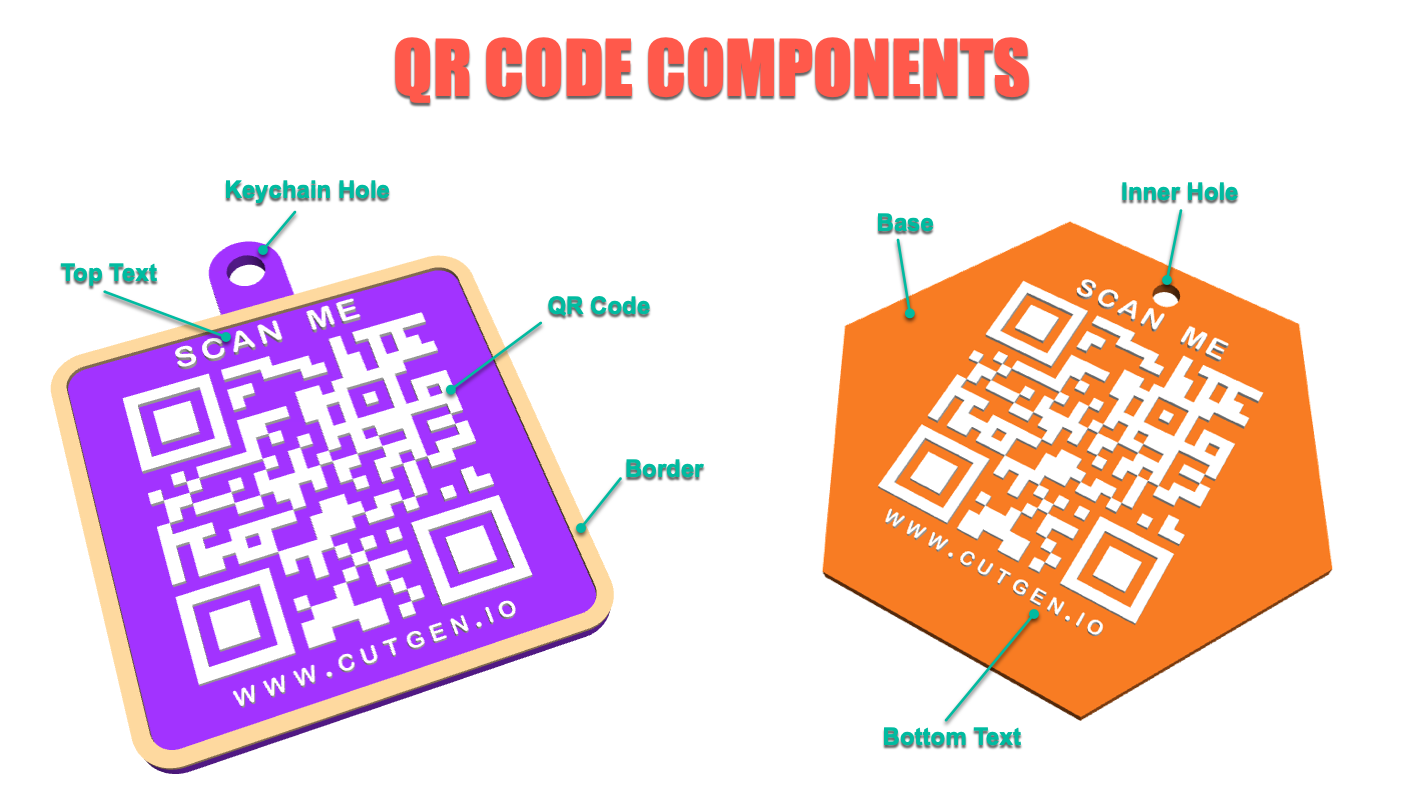
QR Code Components
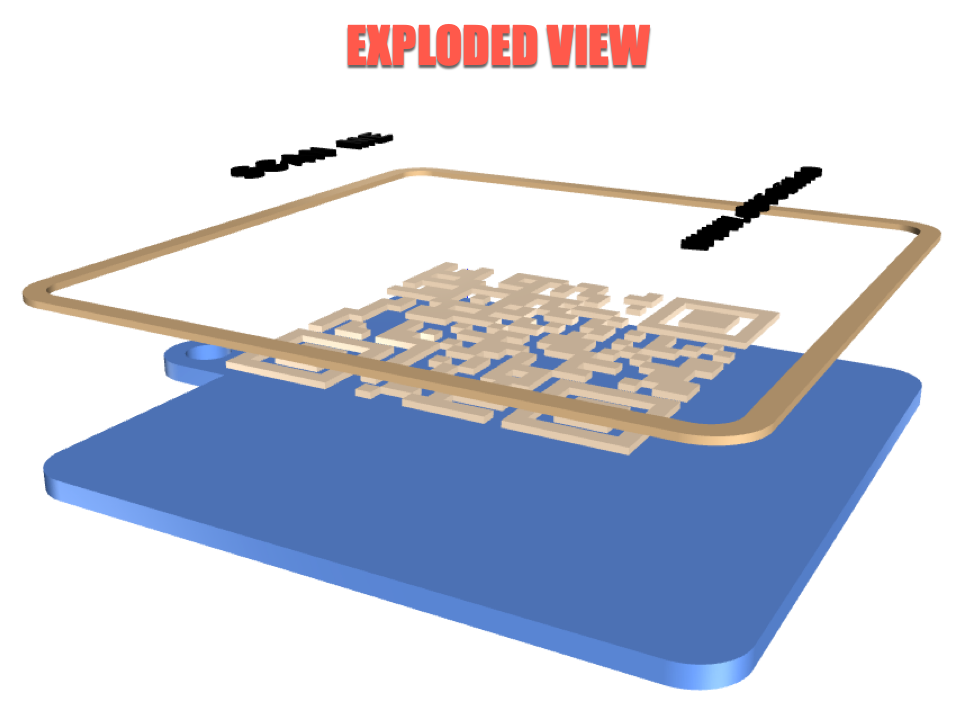
Exploded View
Overall Size
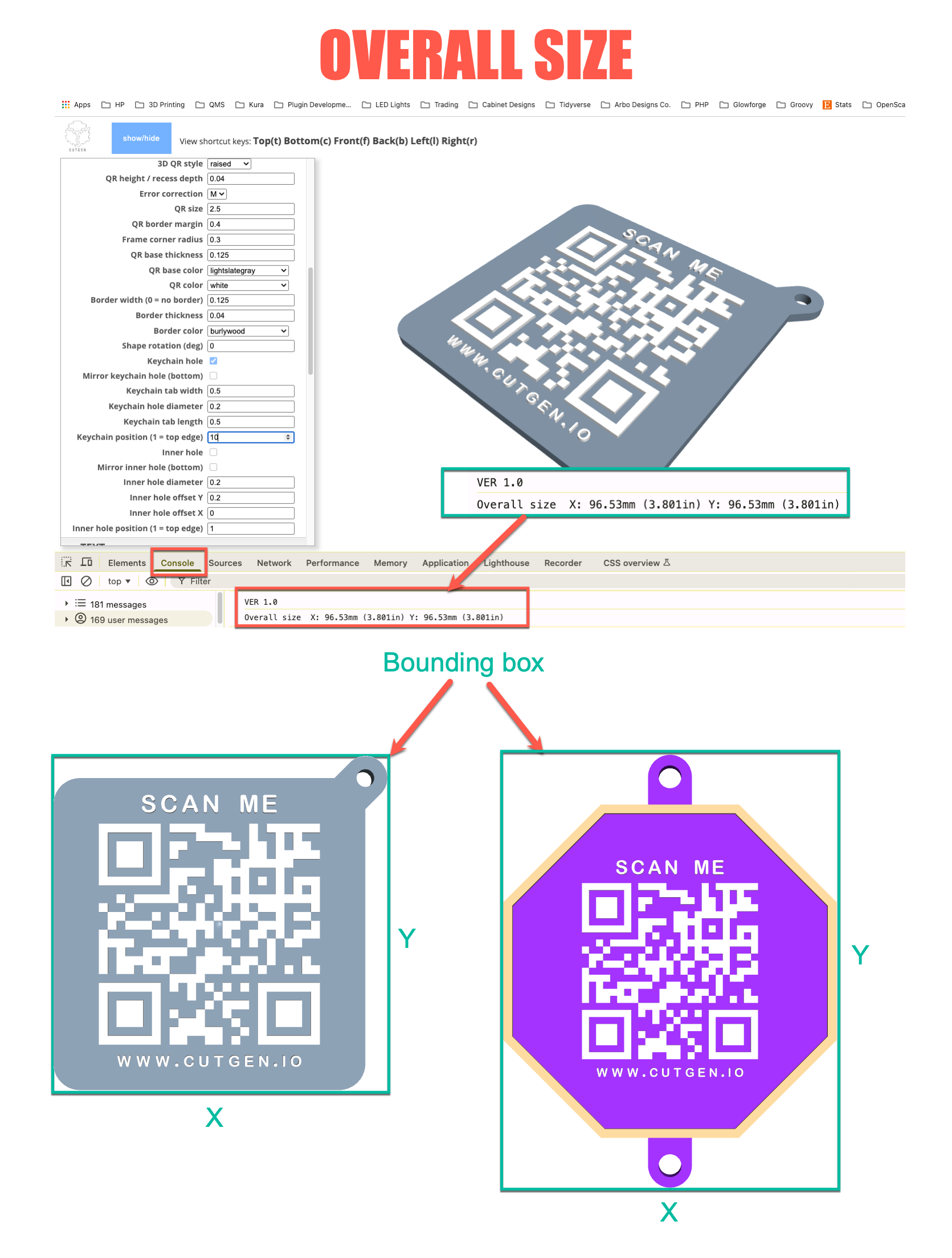
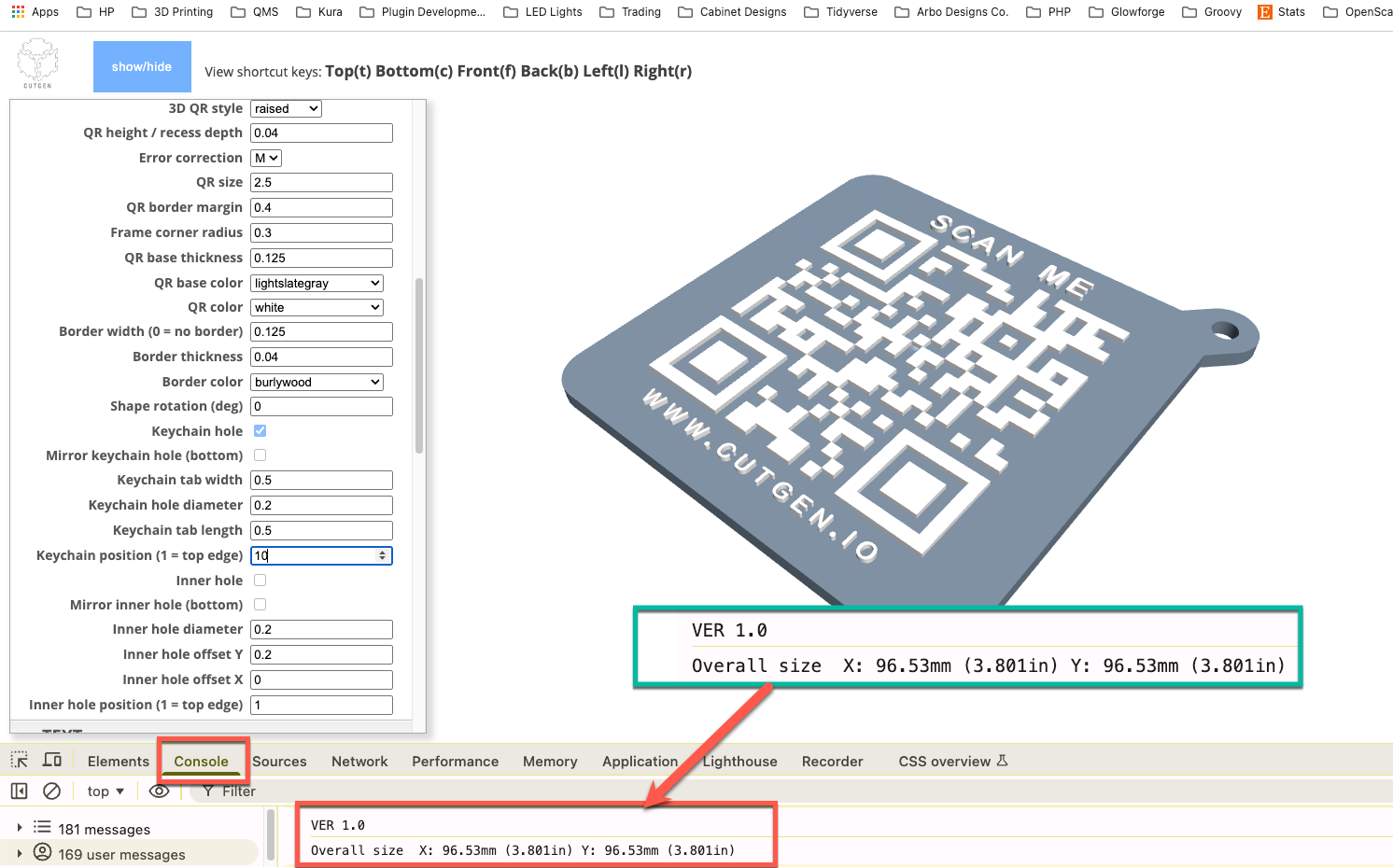
The ‘Overall Size’ is calculated by the ‘bounding box’ area of all the components. To view the Overall size, you will need to open up the browser’sweb developer tools and click on CONSOLE.
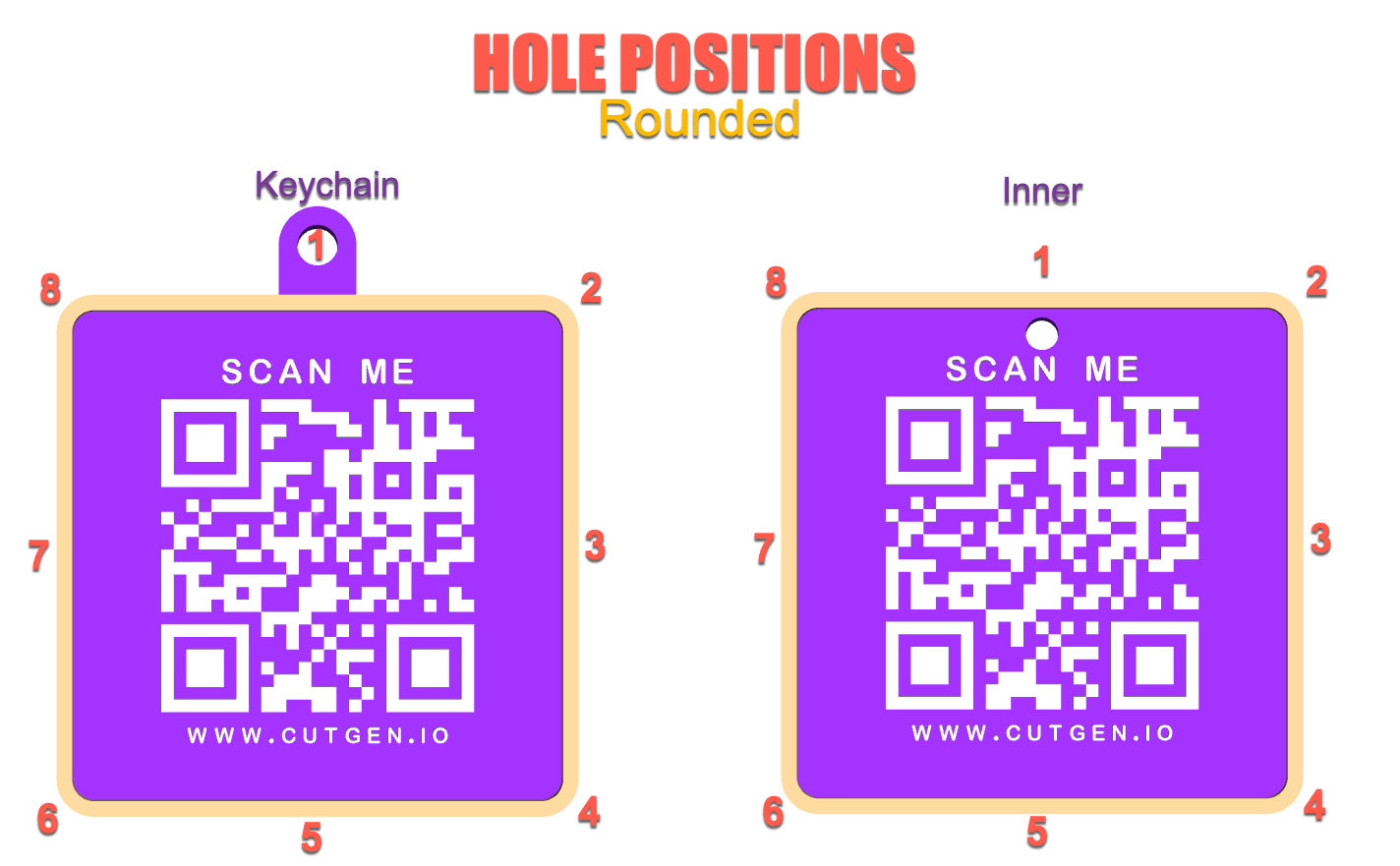
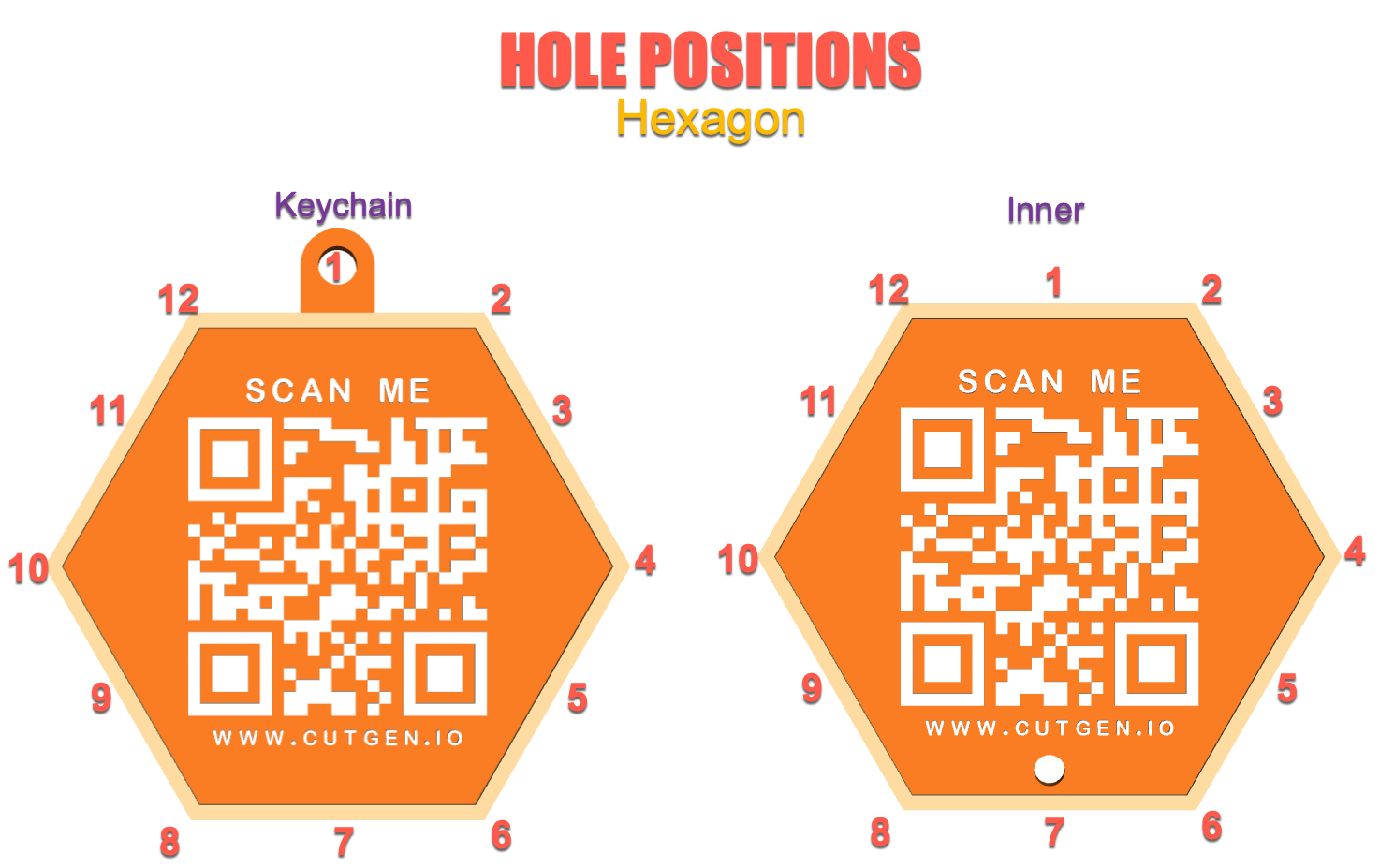
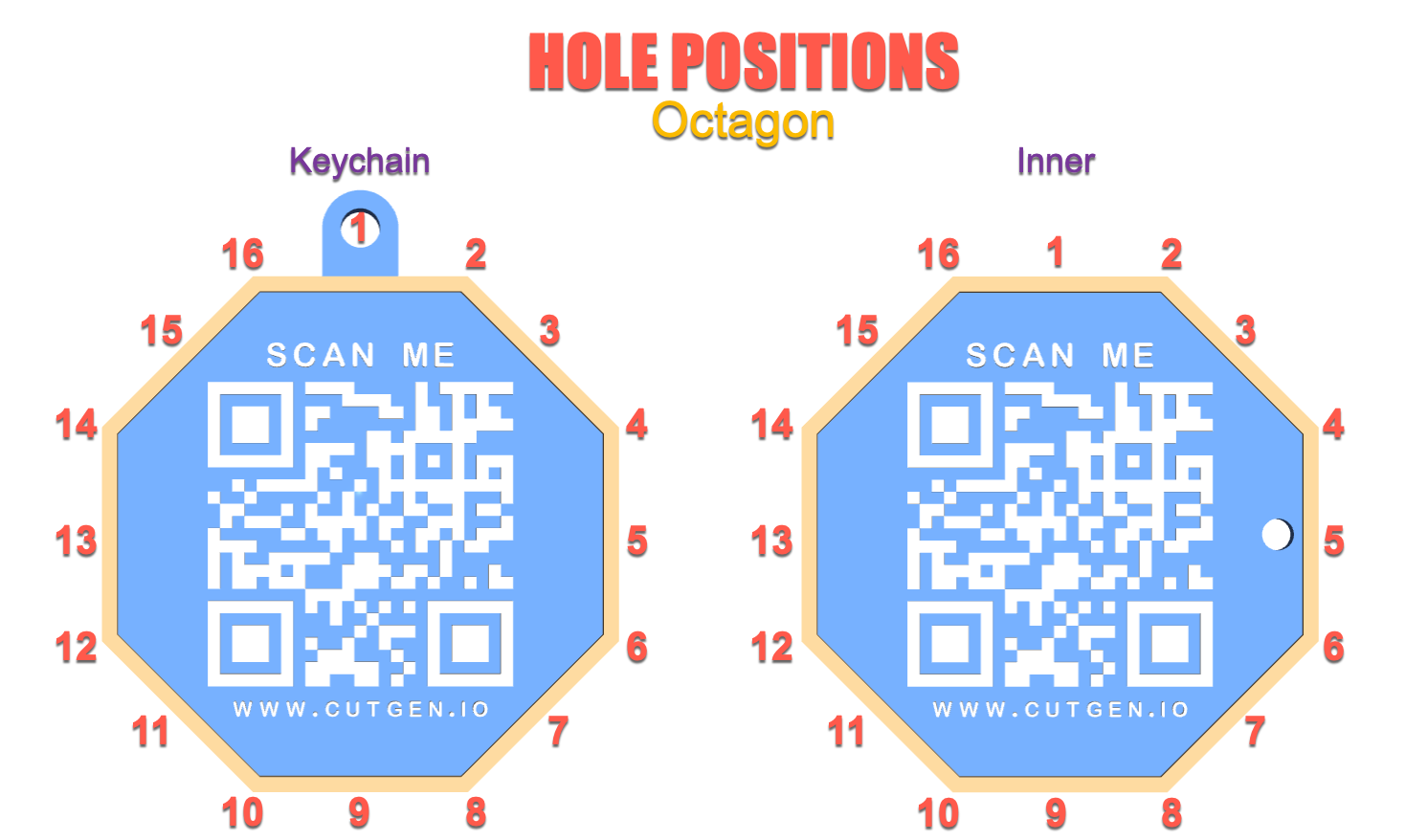
Hole Positions
rounded
hexagon
octagon
Letters
All Menu Parameters

COMMON
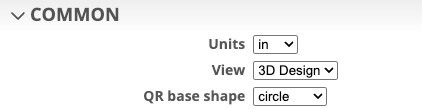
Units
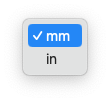
units of measure are in either in inches or mm millimeters.
While you can switch between inches and millimeters during design, the generator doesn’t automatically convert the input values to the new unit, so adjustments must be made manually. Cutgen offers separate design generator options for both ‘IN’ and ‘MM’ measurements, each with pre-set default values. For an optimal experience, we recommend choosing a single measurement unit and avoiding switching between them.
Views
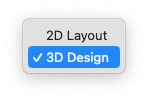
There are 2 different Views you will be working in depending on what you want to.
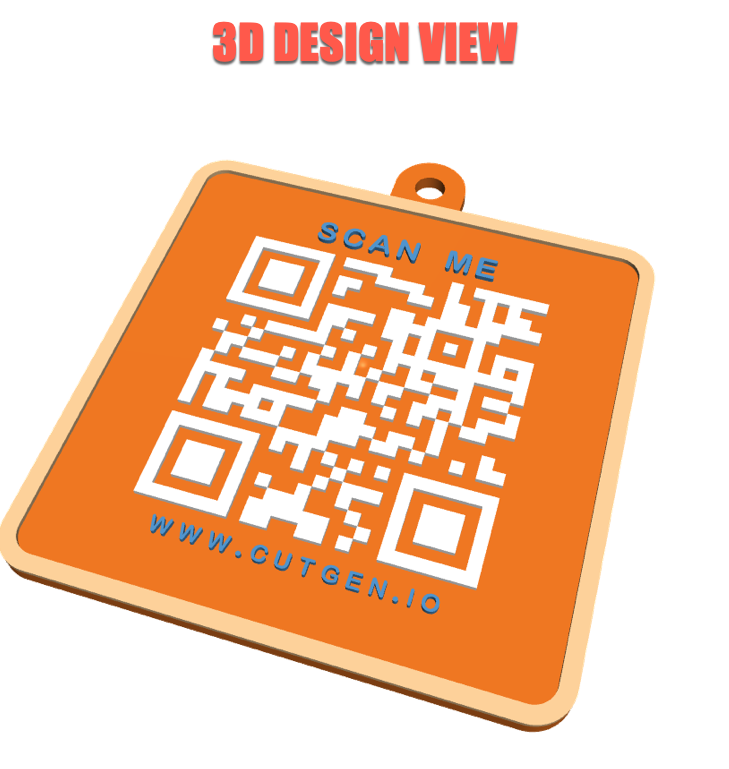
3D Design. This is the default view and used for Exporting STL which can be imported into a 3D slicer or mesh editing software. Mostly for 3D printing.2D Layout. Used for Exporting SVG which be imported into a laser cutting/CNC software such as LightBurn, Glowforge Carbide Create, etc. Mostly for Laser Cutting or CNC operations.
3D Design View
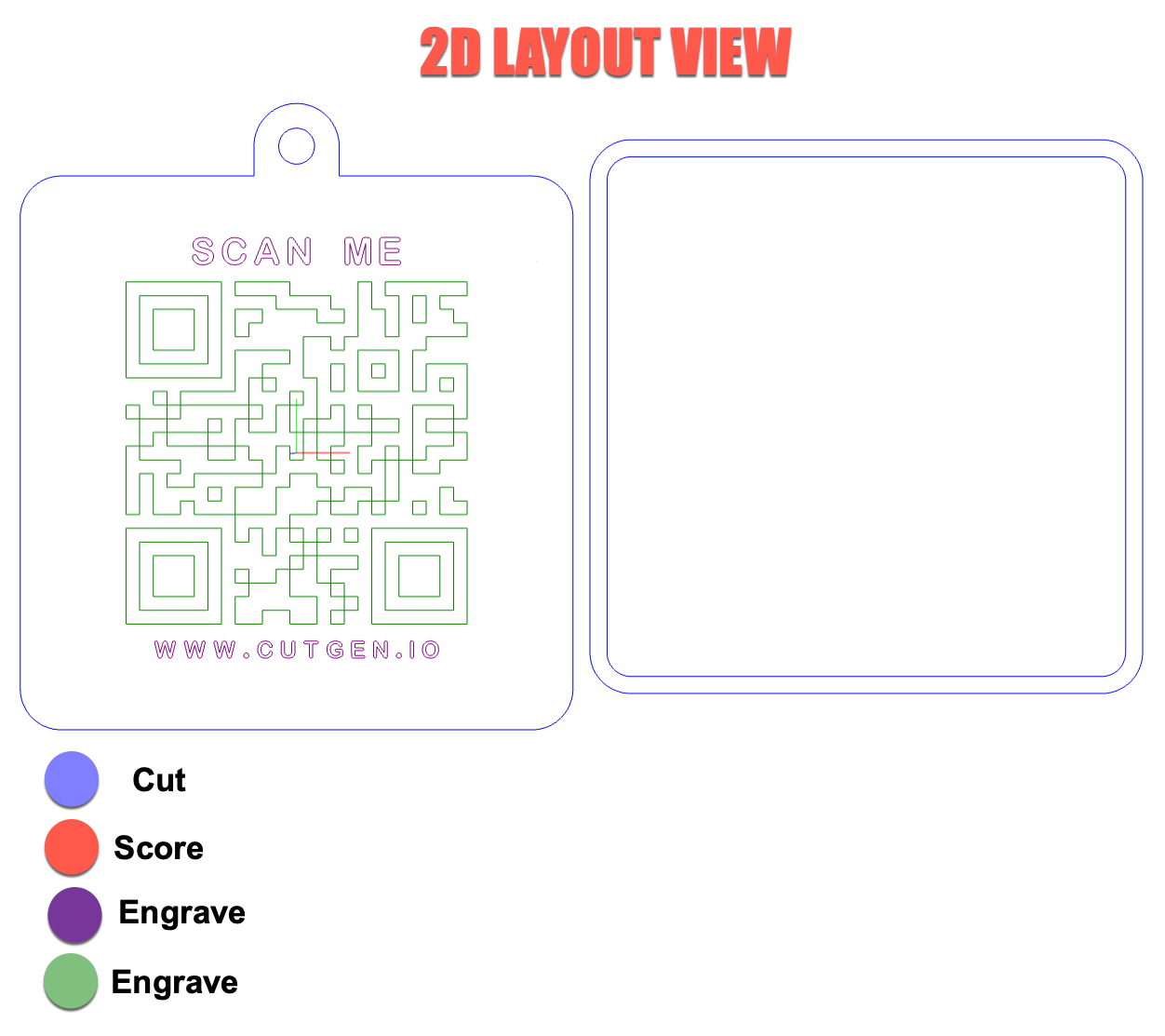
2D Layout View
QR Code
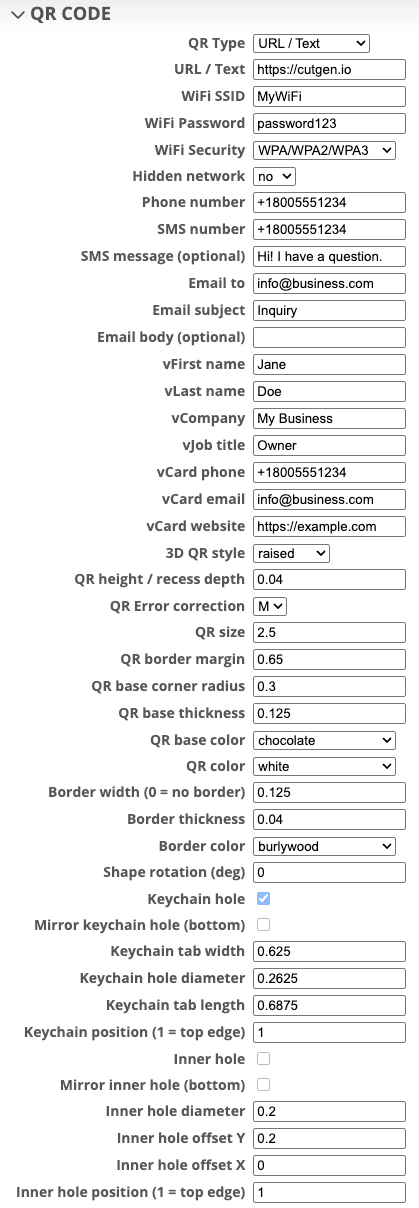
QR Type
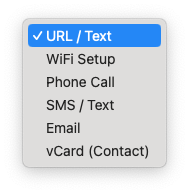
There are 6 different QR Code ‘types’
URL / Text

Enter either a URL address or any text string
Wifi Setup
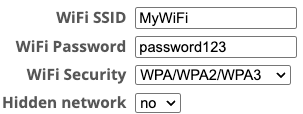
4 parameters. Enter your Wifi setup information using these parameters.
Phone Call

1 parameter. Enter phone number.
SMS / Text

2 parameters. Enter phone number and the message.
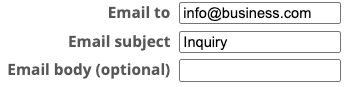
3 parameters. Enter to, subject, and optional body text.
vCard (Contact)
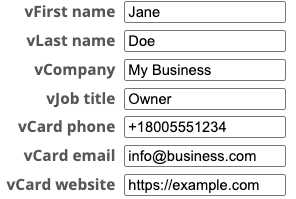
7 parameters. first/last name, company, title, phone, email, and website
3D QR Style
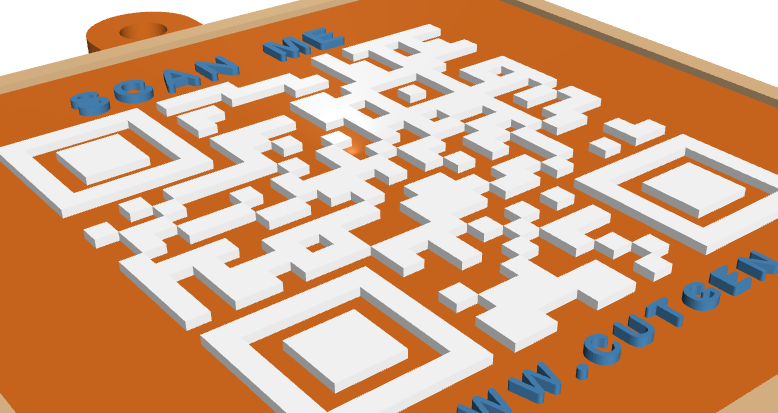
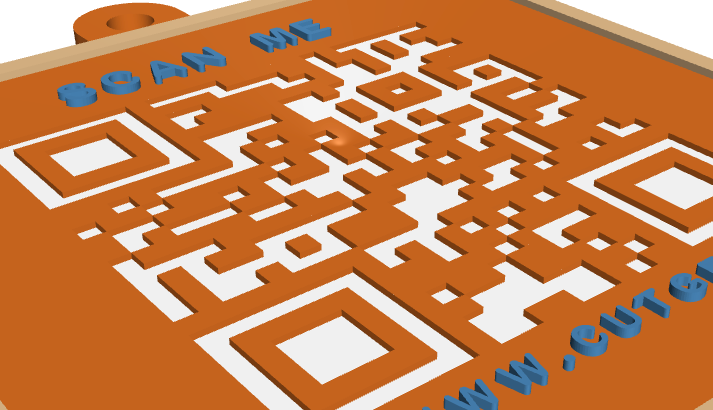
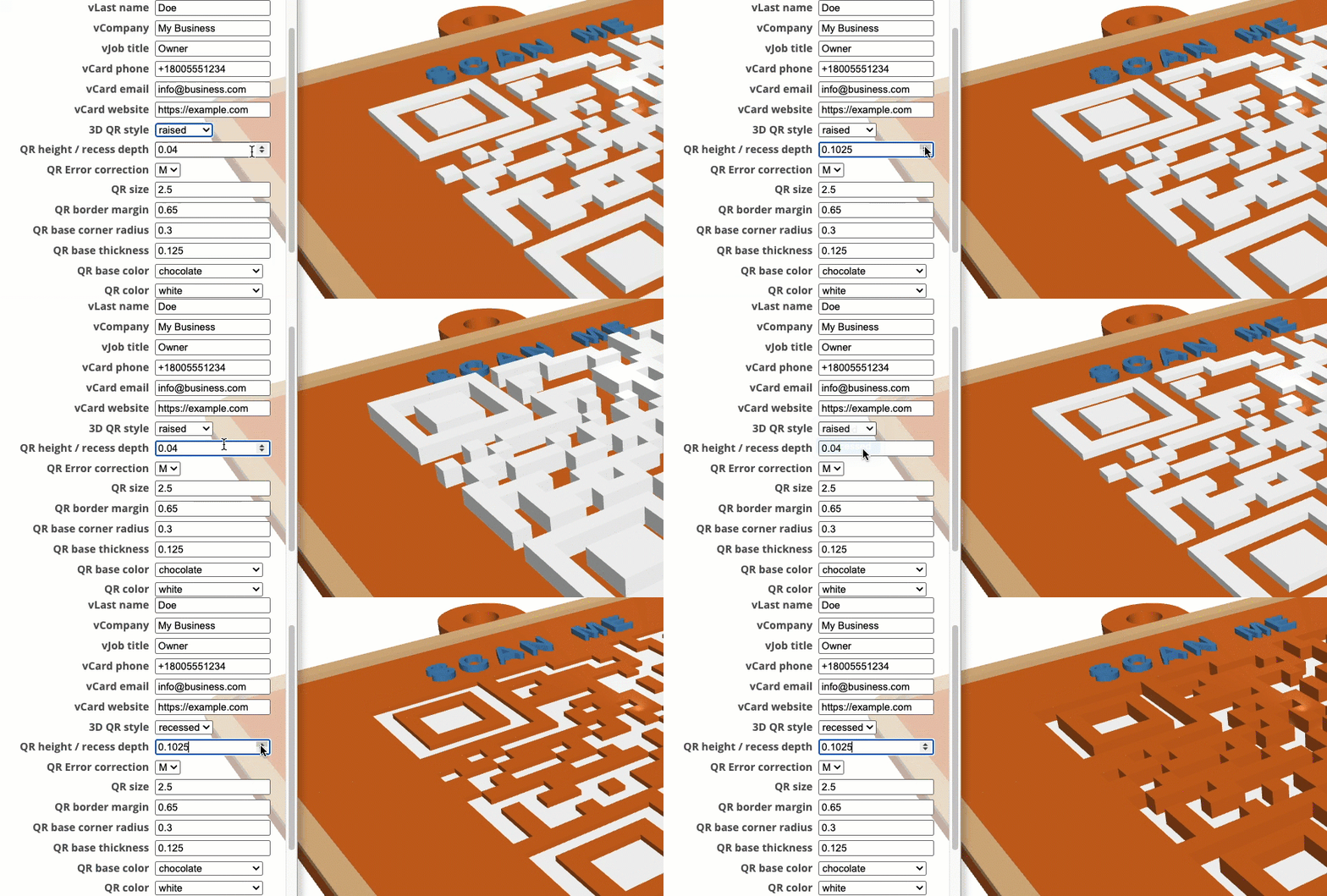
The QR Code, can be either raised or recessed. Laser cutters/engravers will be recessed (material burned away). 3D printers can print either styles, but the ‘raised’ QR code will work much better, but some experimentation may be needed.
raised
recessed
QR Height / recess depth
The depth of the QR code pattern below the base shape’s surface.
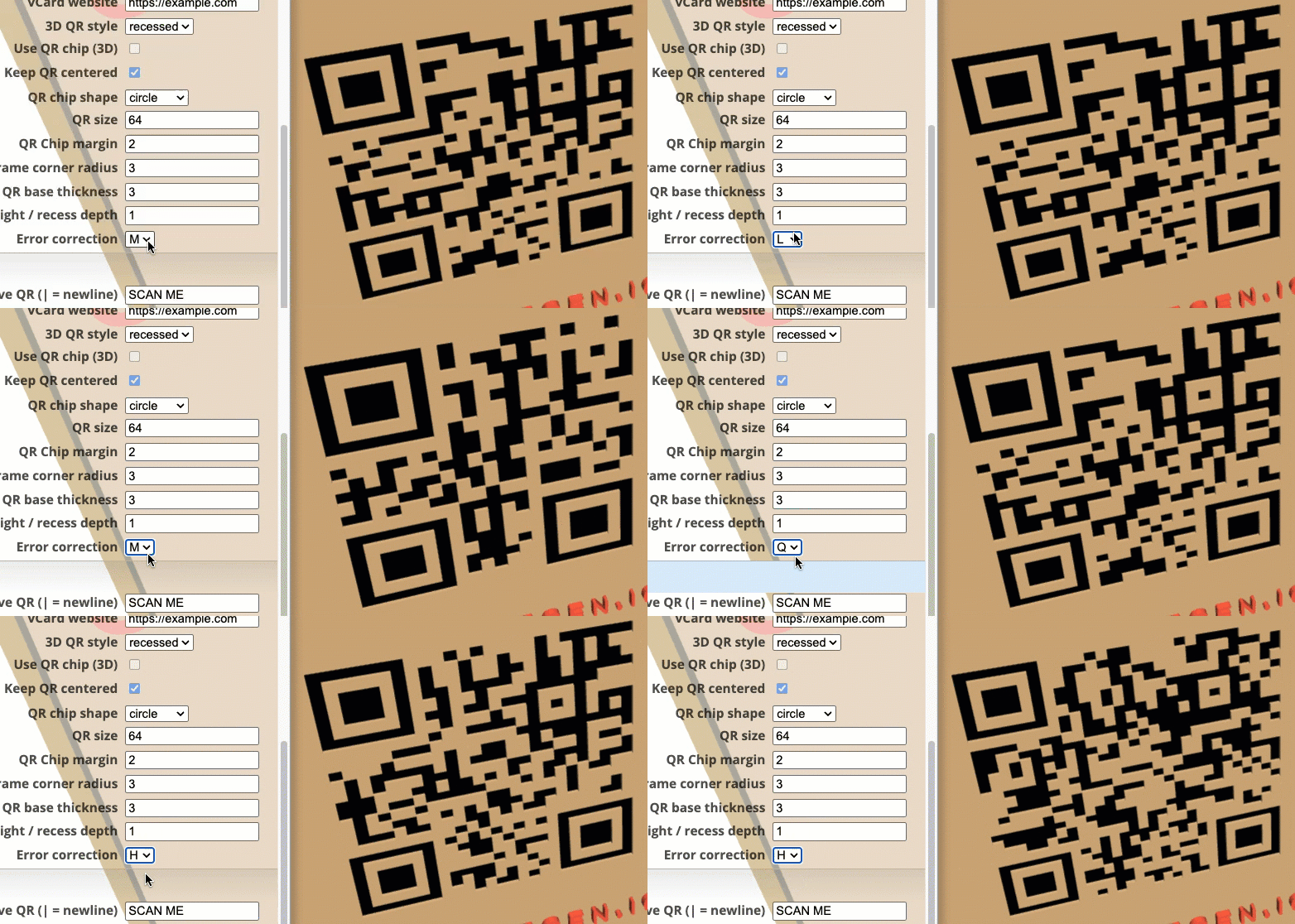
Error correction
M (medium) is default. Fine for most cases.
L (Low): ~7% data recovery (good for clean screens).
M (Medium): ~15% data recovery (a good balance).
Q (Quartile): ~25% data recovery (for moderate damage risk).
H (High): ~30% data recovery (maximum robustness, best for outdoors/industrial).
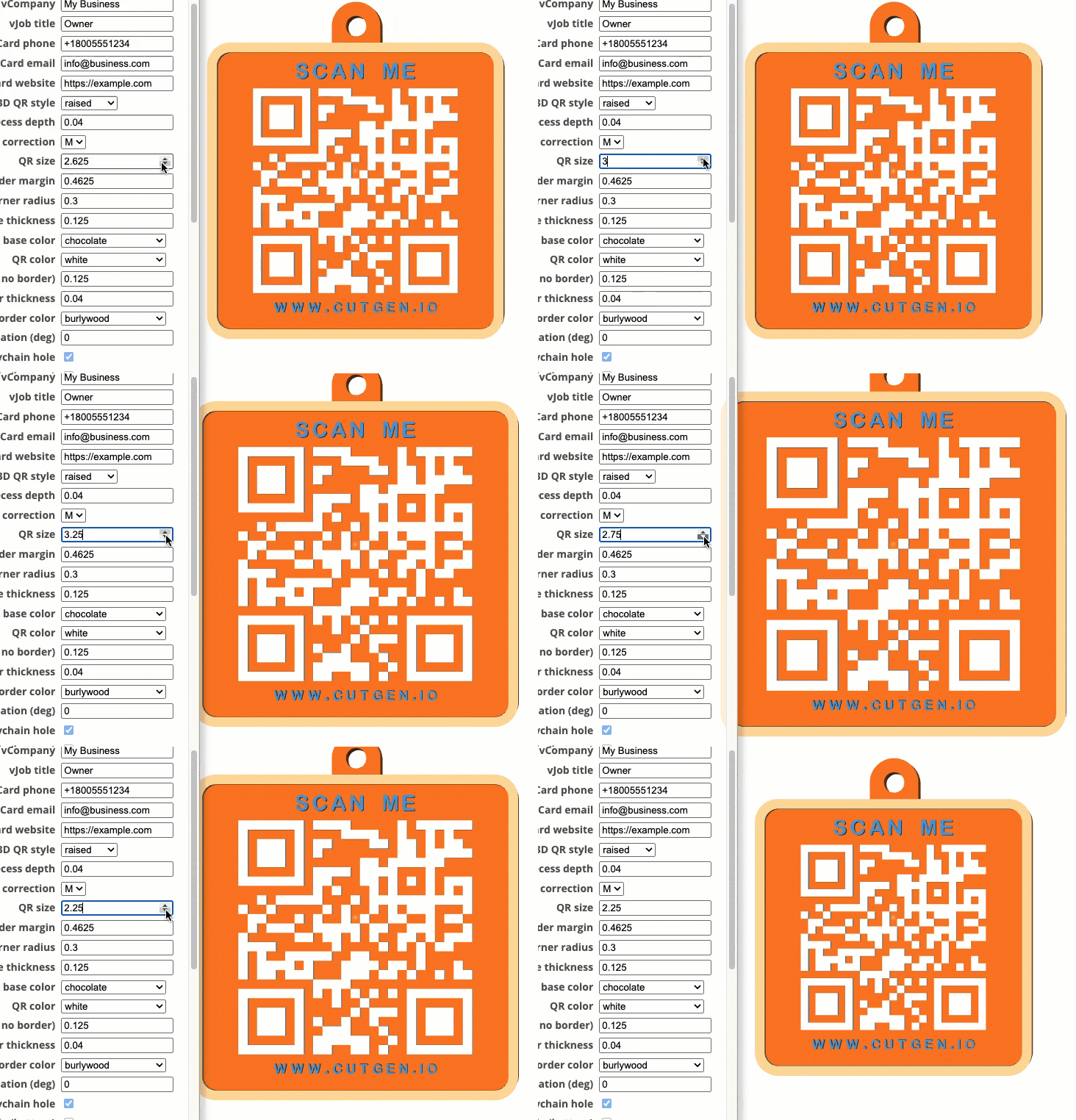
QR Size
The x/y dimension (square) of the QR Code.
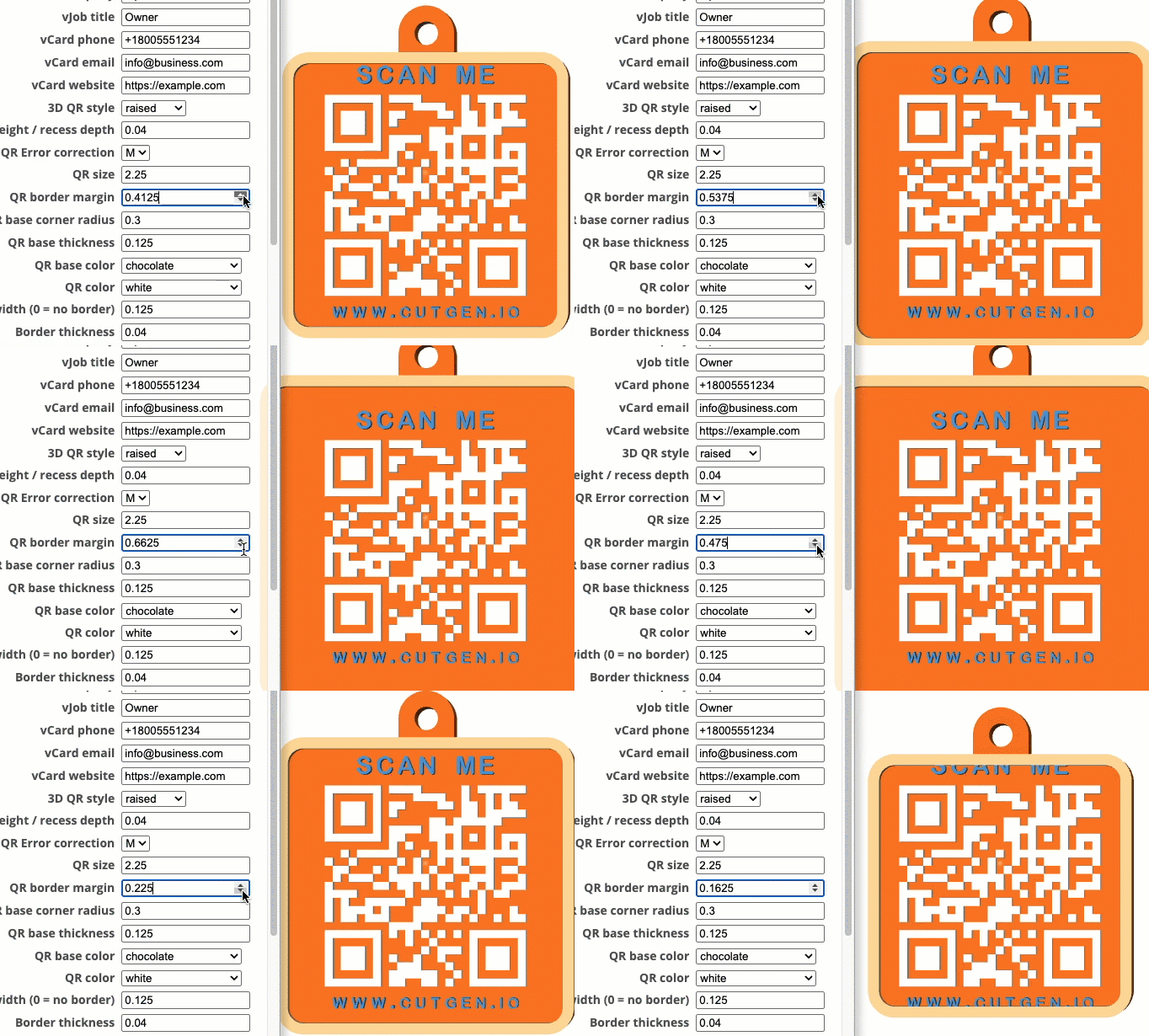
QR Border Margin
The separation distance between the outside of the QR Code pattern and the inside border edge.
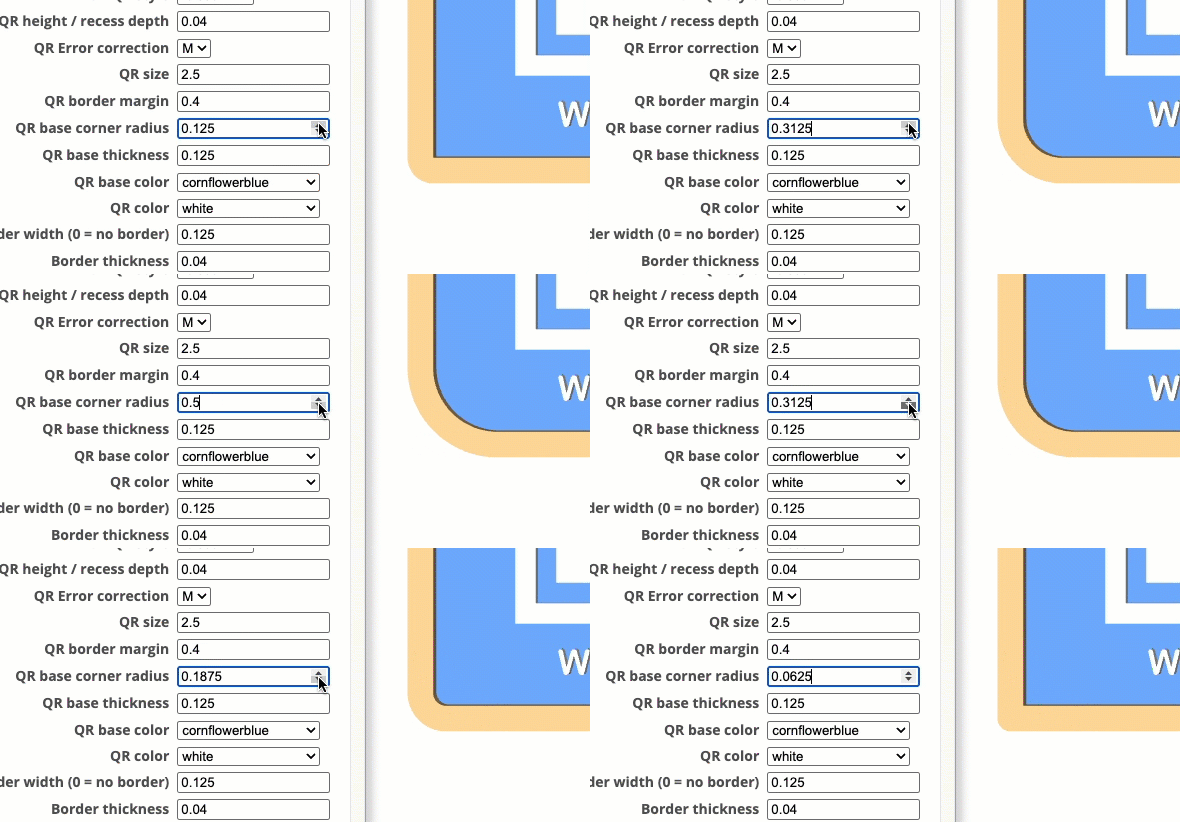
QR base corner radius
Applicable only to rounded base shape. Set the corner radius of the base and border.
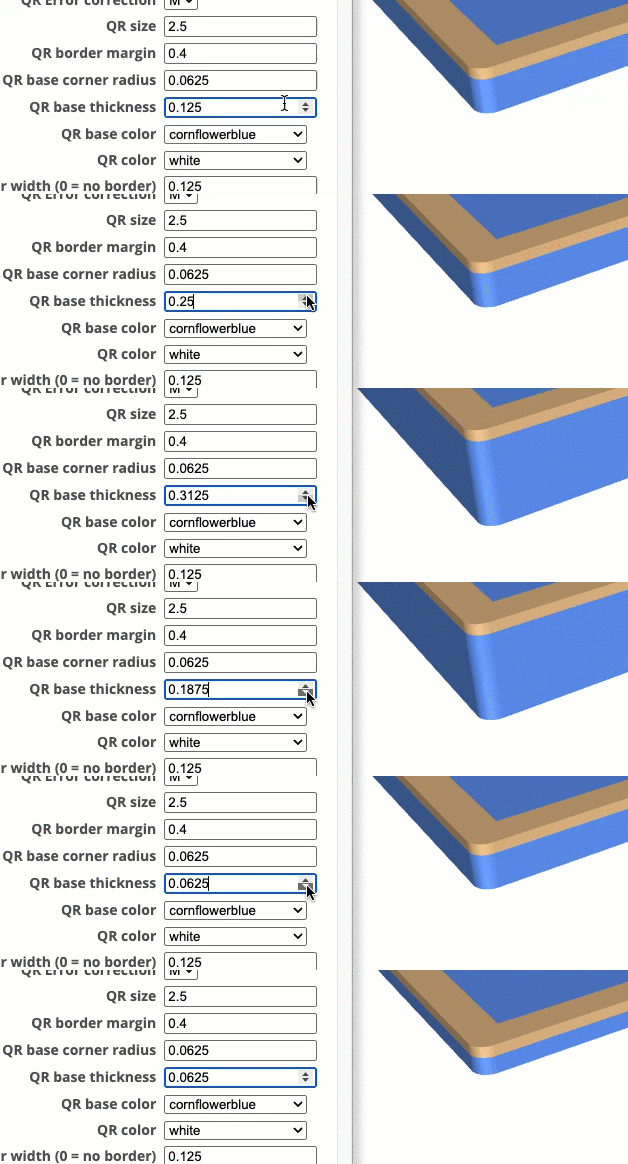
QR base thickness
Thickness of the base shape. For laser cutters, set this value to the thickness of your material.
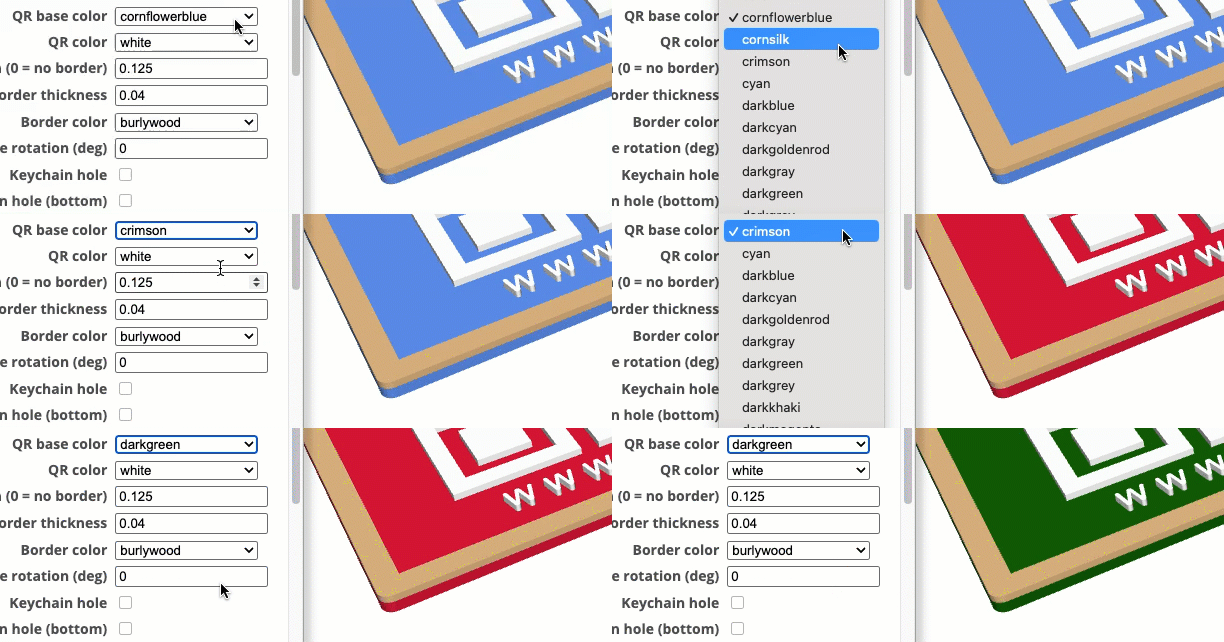
QR base color
Select the color of the base shape from an extensive list of css color names.
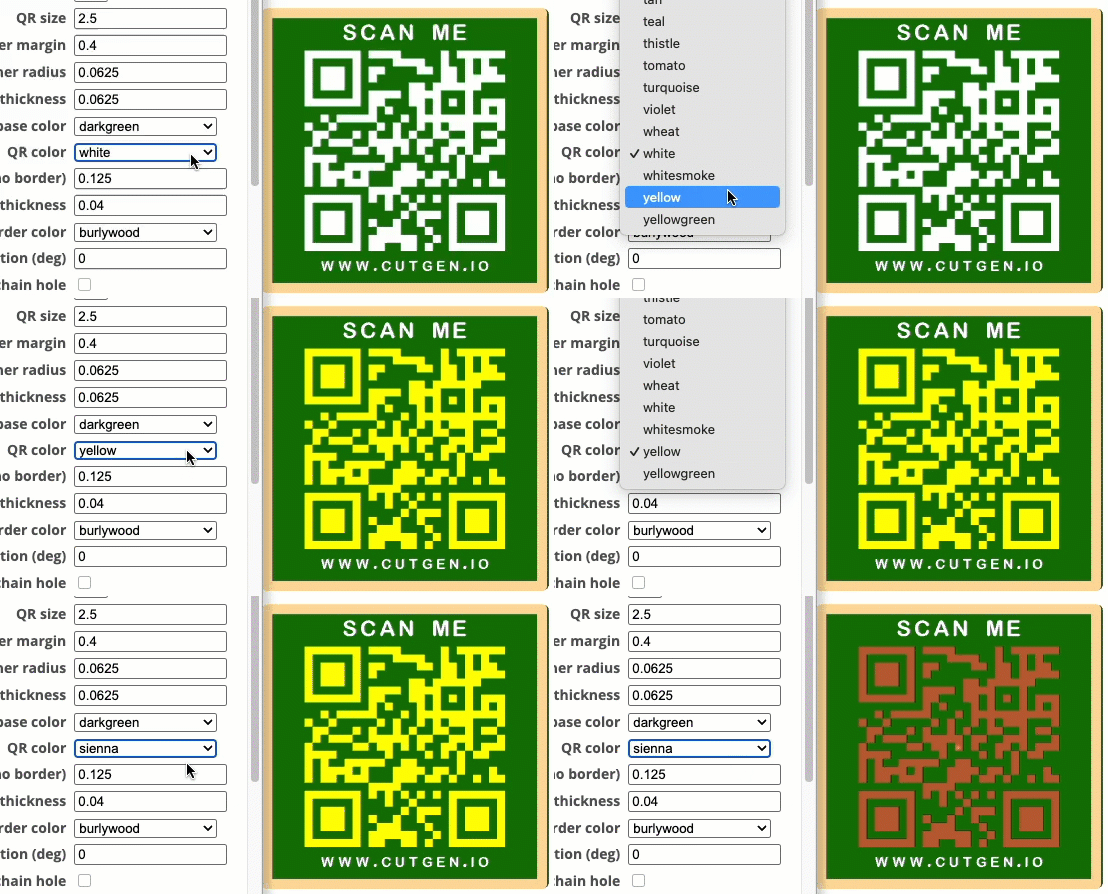
QR color
Select the color of the QR Code pattern from an extensive list of css color names.
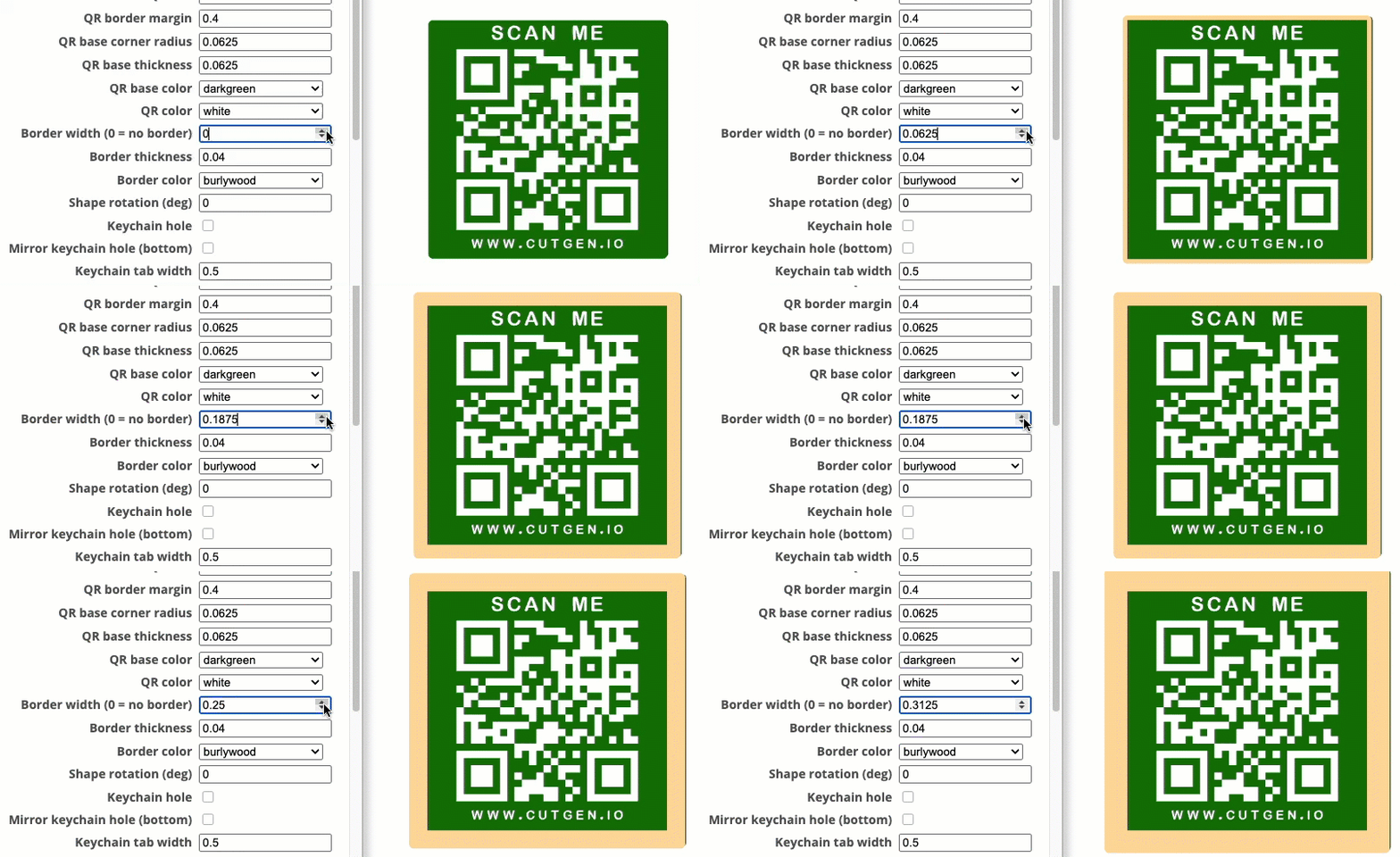
Border width
Width of the border/frame. For no border set this value = 0.
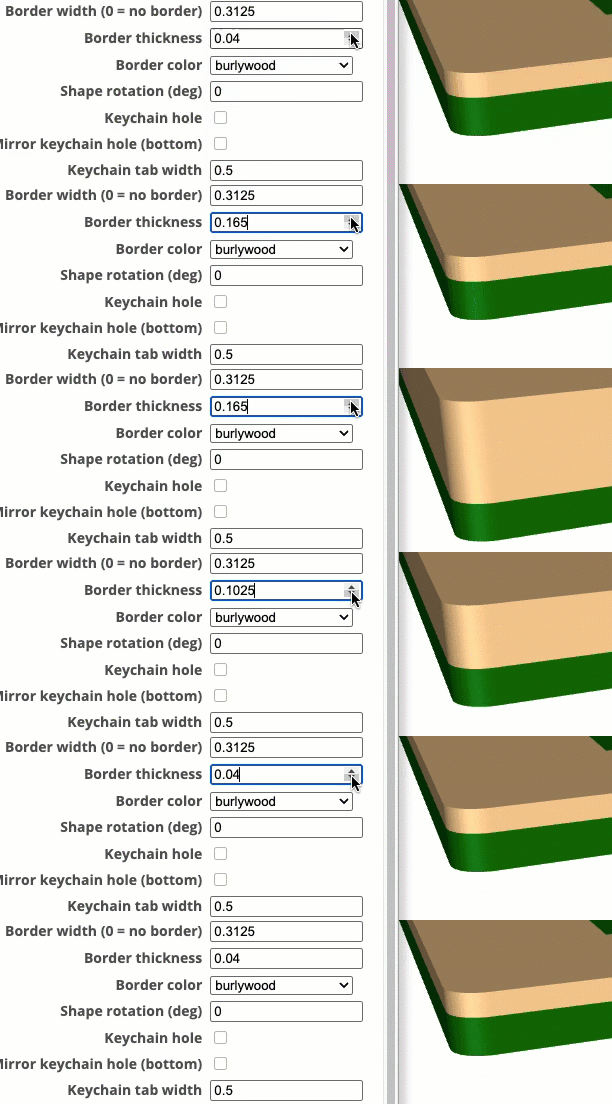
Border thickness
Thickness of the border. For laser cutters, set this value to the thickness of your material.
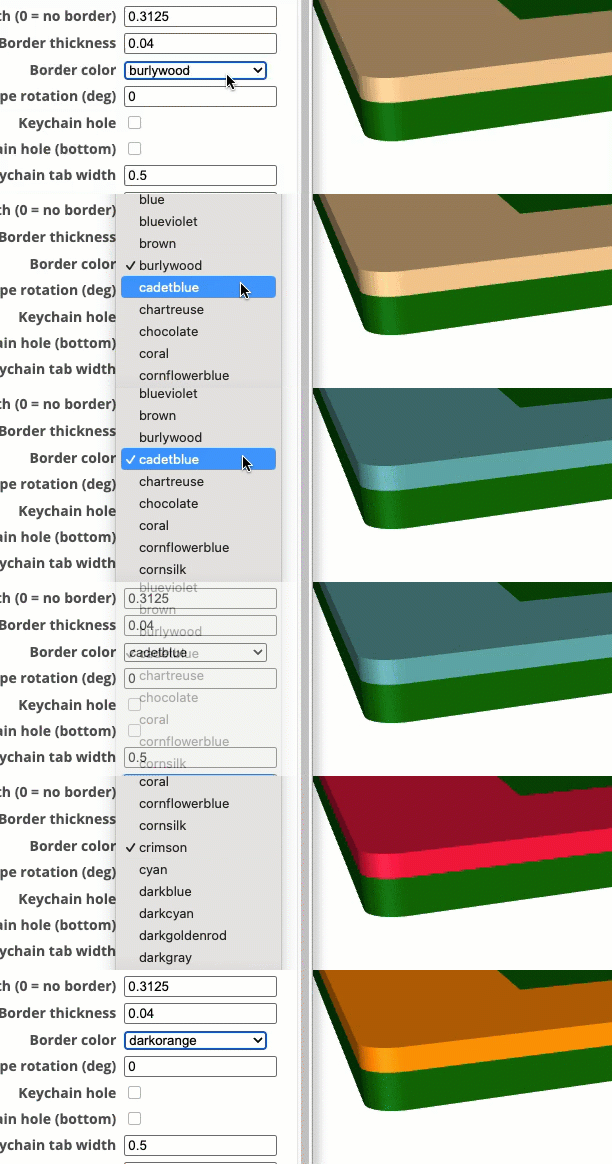
Border color
Set border color from a list of css color names.
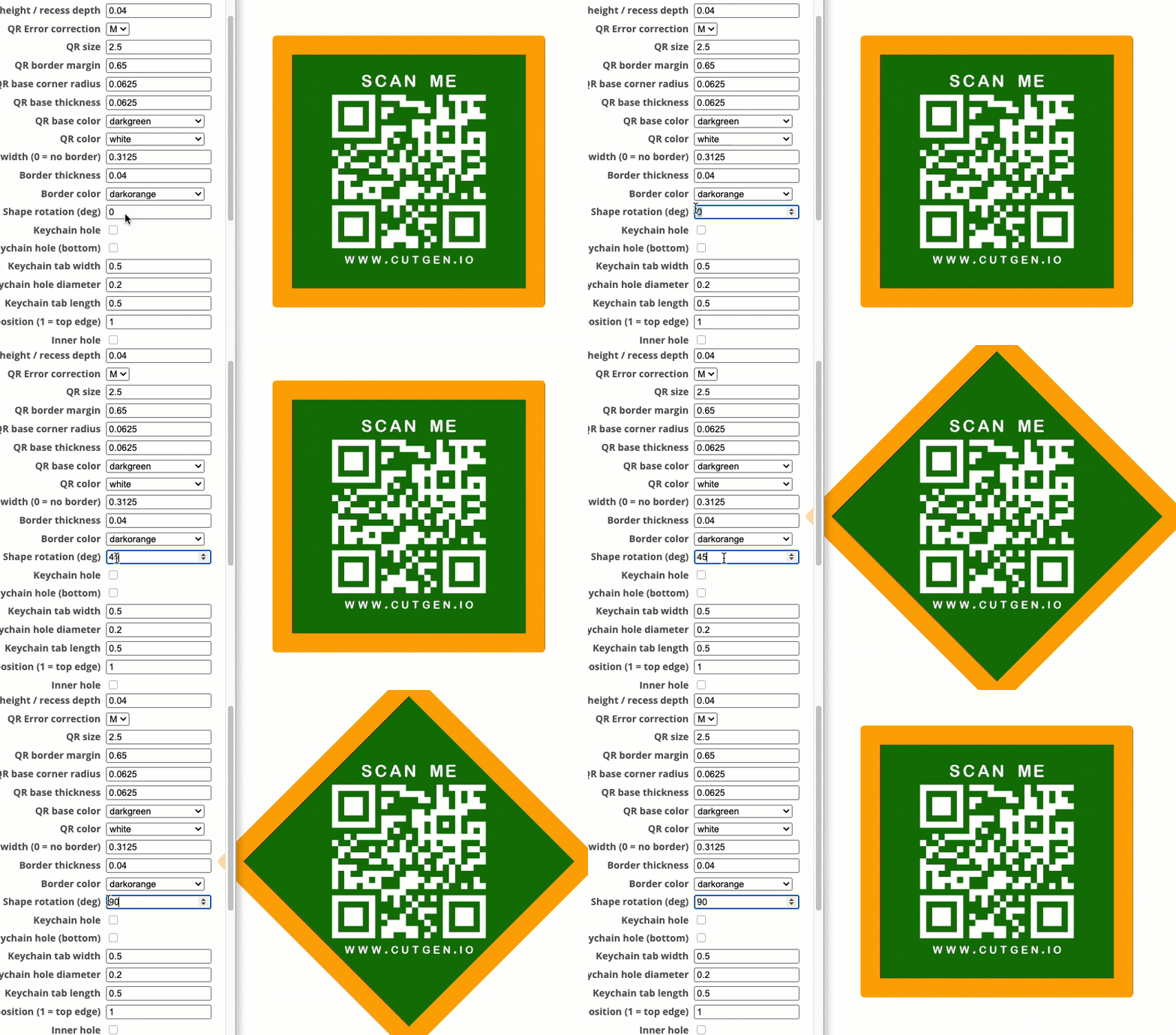
Shape rotation
Rotation in degrees of the base shape.
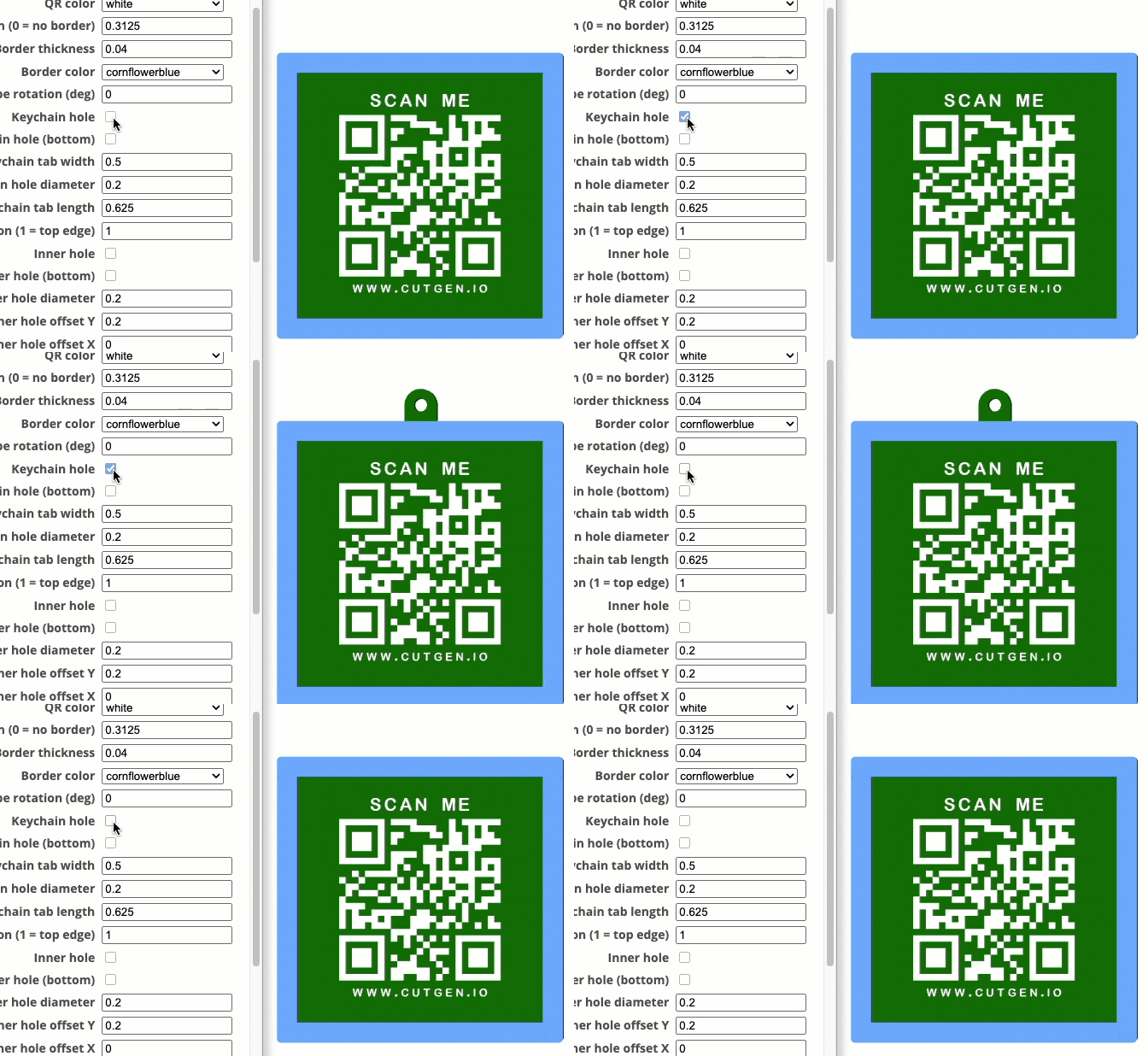
Keychain hole
TRUE/FALSE Checkbox. Set to TRUE to add a tab with a hole to allow a keychain to be attached.
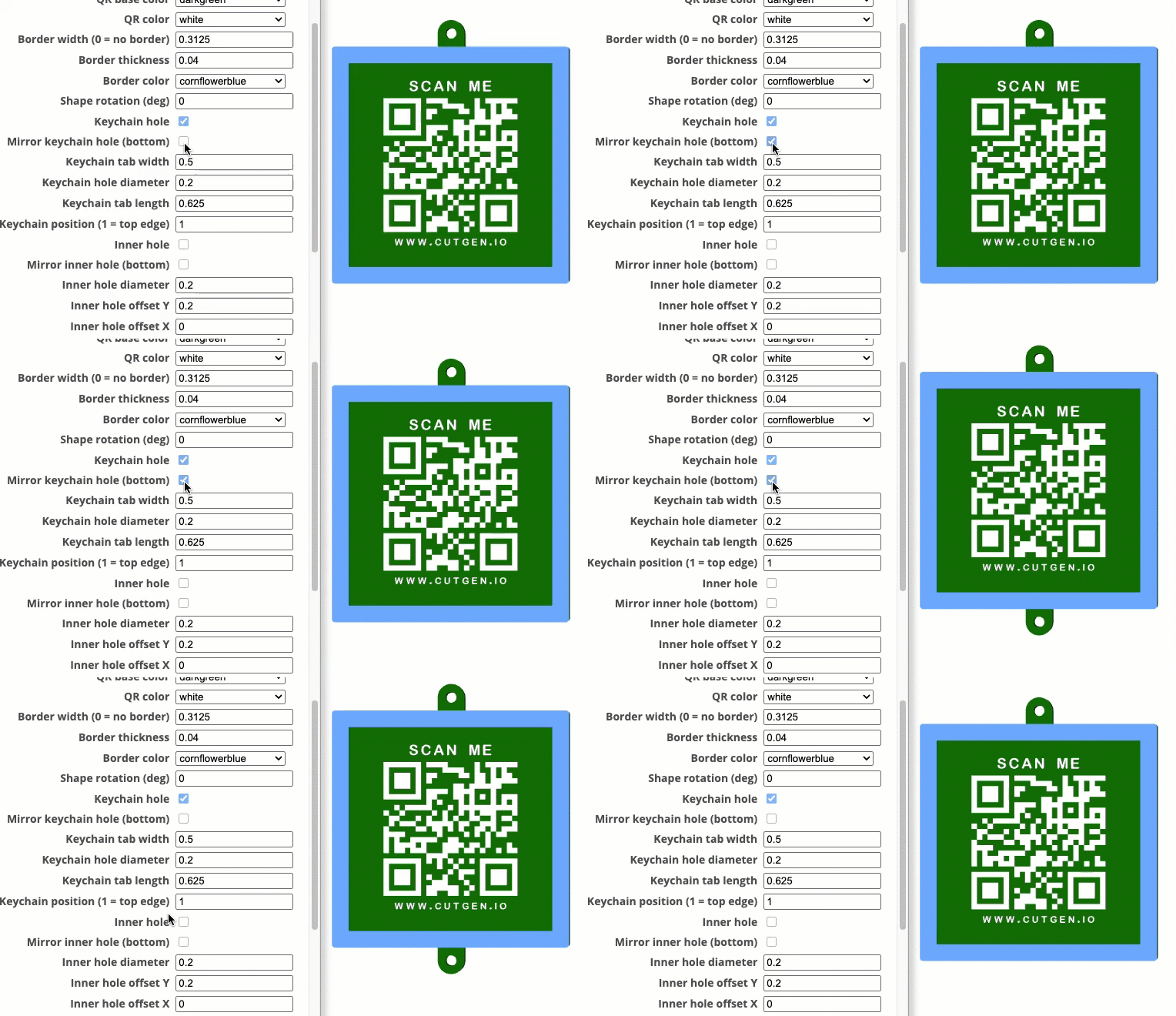
Mirror Keychain hole (bottom)
TRUE/FALSE Checkbox. Set to TRUE to add a 2nd mirrored keychain hole. Keychain hole checkbox must be ‘checked’.
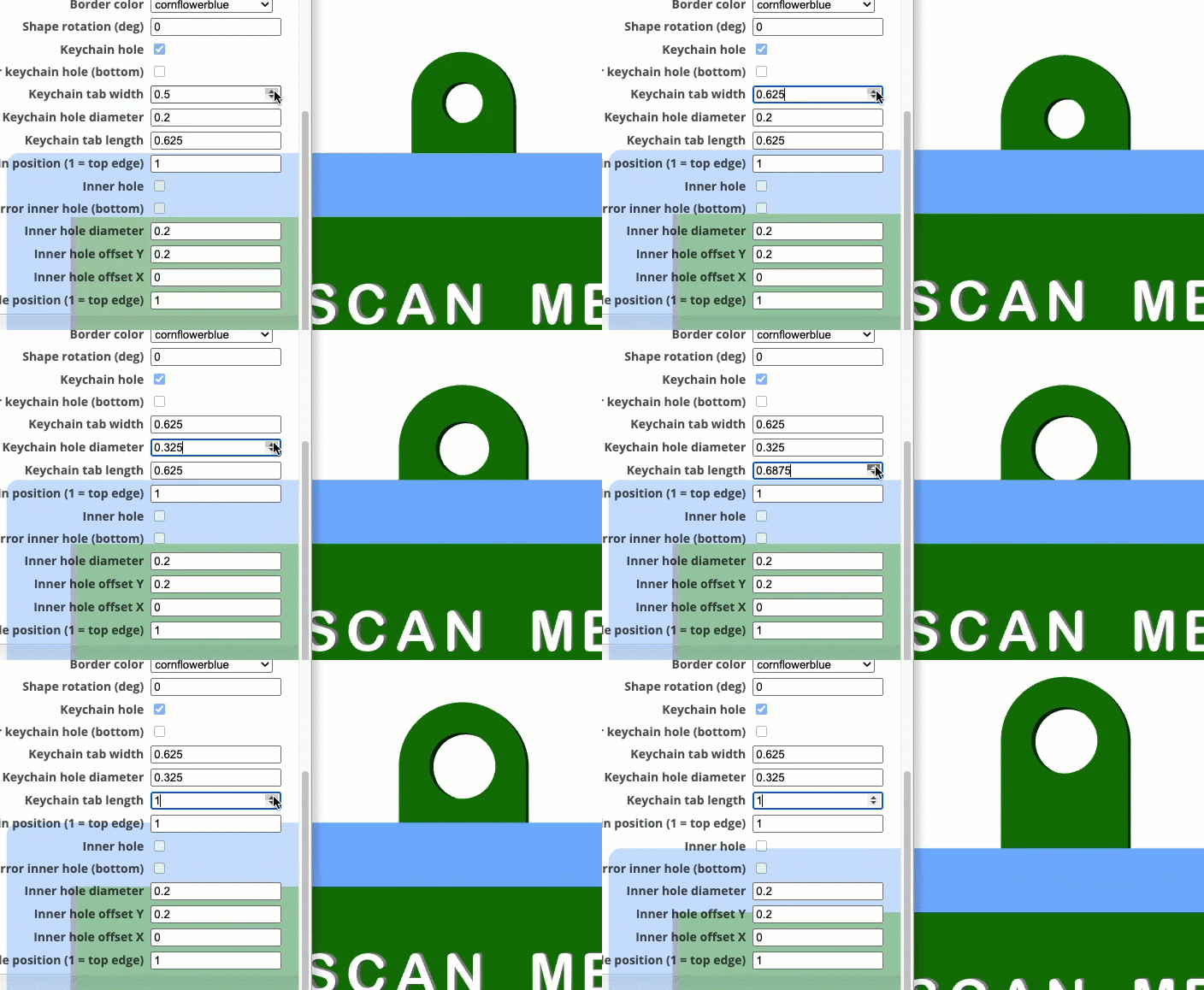
Keychain tab width, hole diameter, tab length
Set of parameters used to define the size of the tab and the diameter of the inner hole.
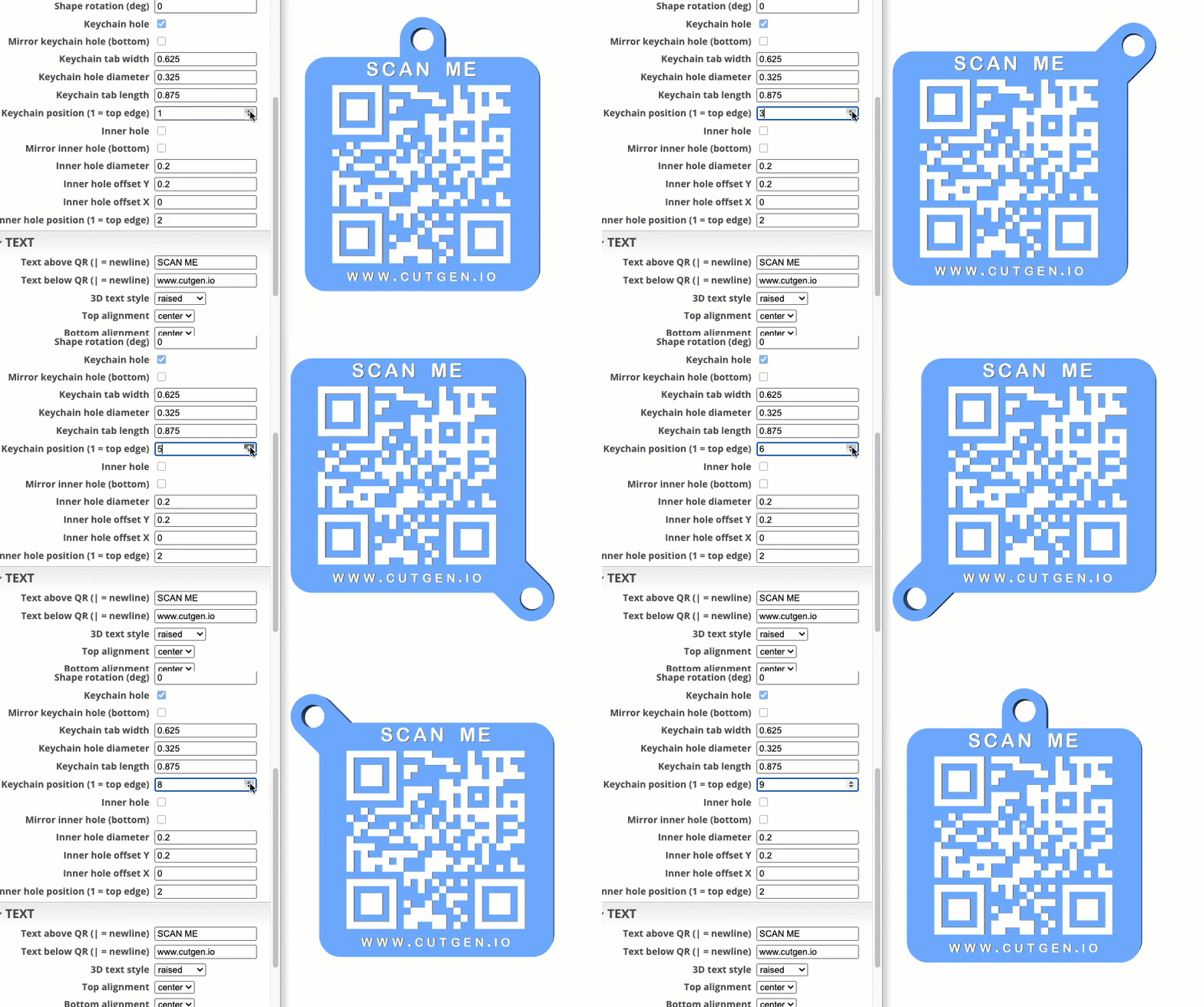
Keychain position
Set the location of the keychain hole on the shape. See hole positions.
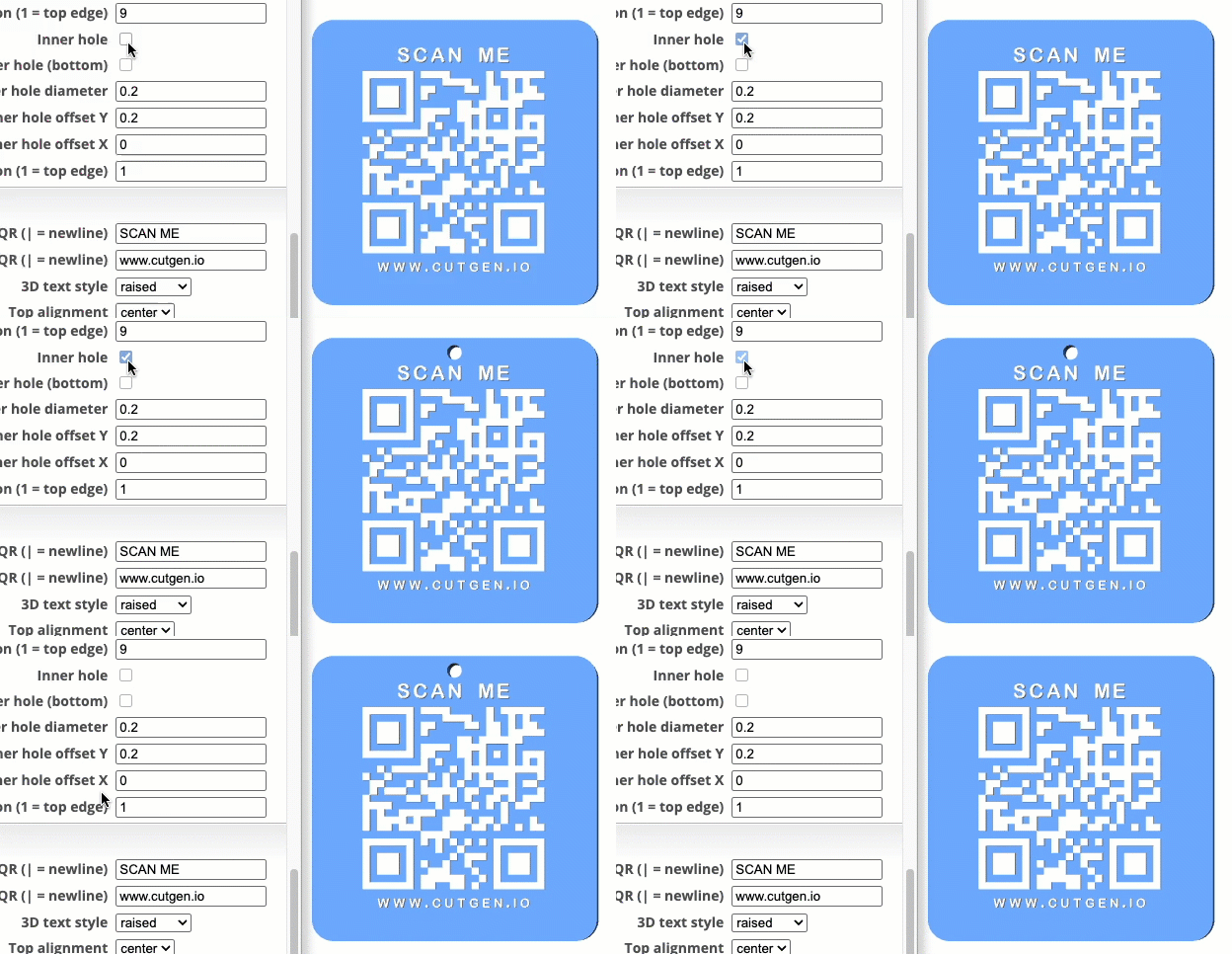
Inner hole
TRUE/FALSE Checkbox. Set to ‘checked’ to add an inner hole.
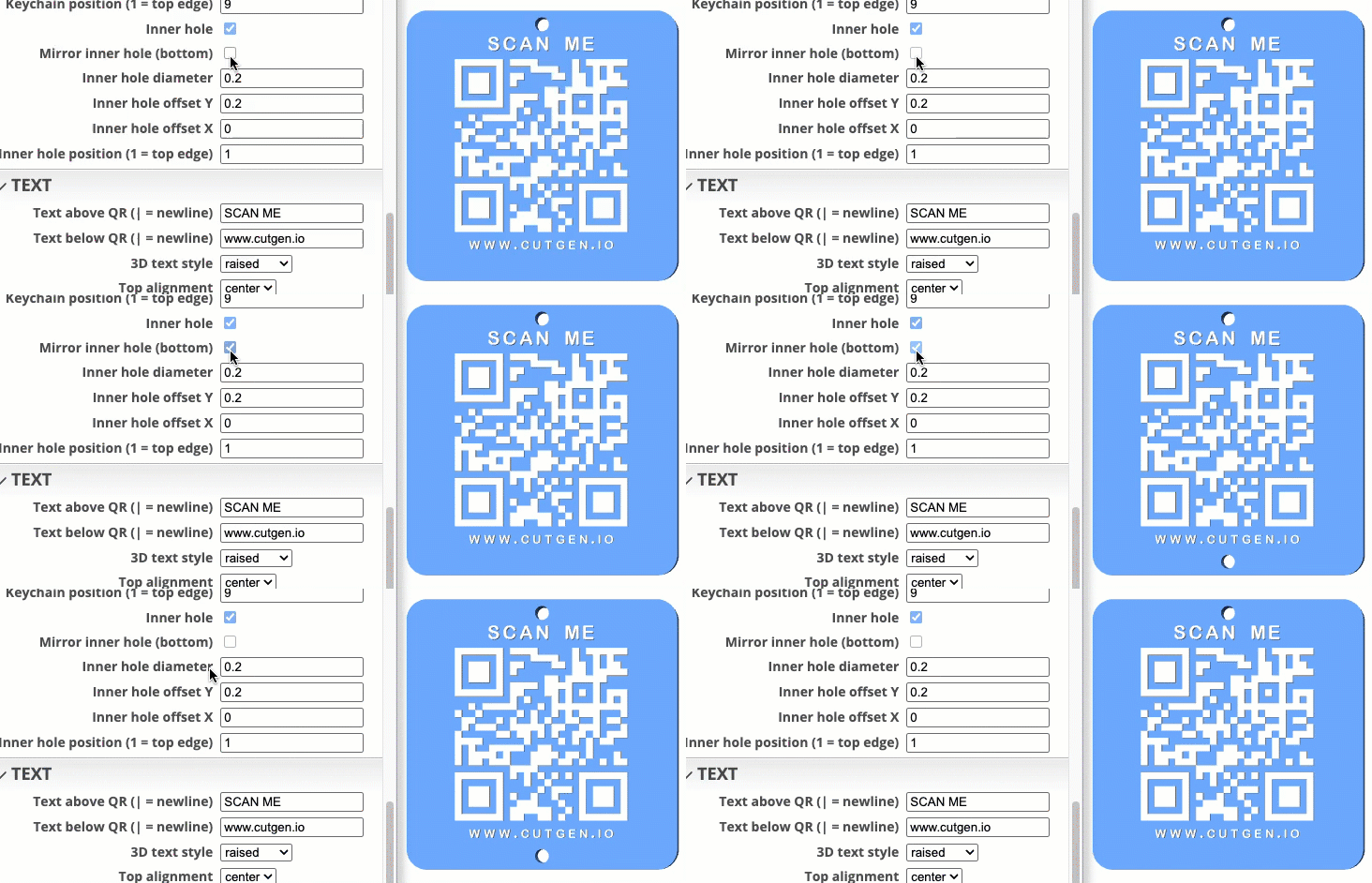
Mirror Inner hole
TRUE/FALSE Checkbox. Set to ‘checked’ to add a 2nd ‘mirrored’ inner hole. Inner hole checkbox must be checked.
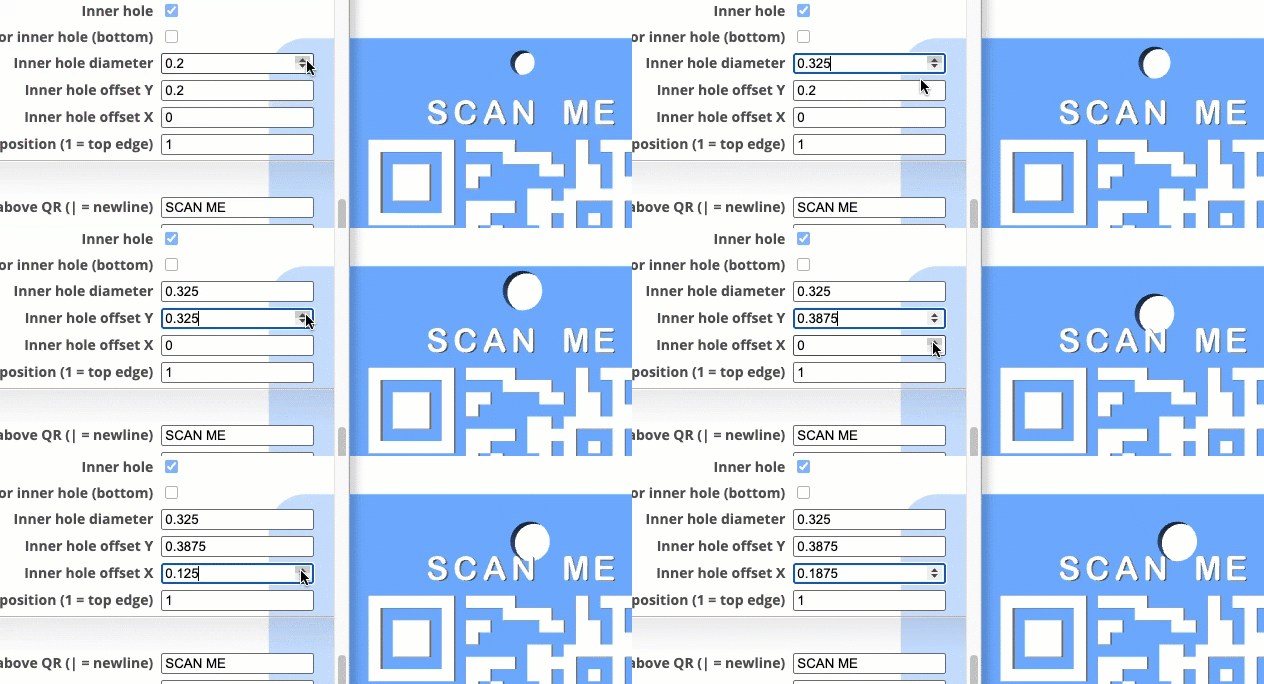
Inner hole diameter and X/Y offset position
Set of parameters used to define the inner hole diameter and offset the X/Y position if needed.
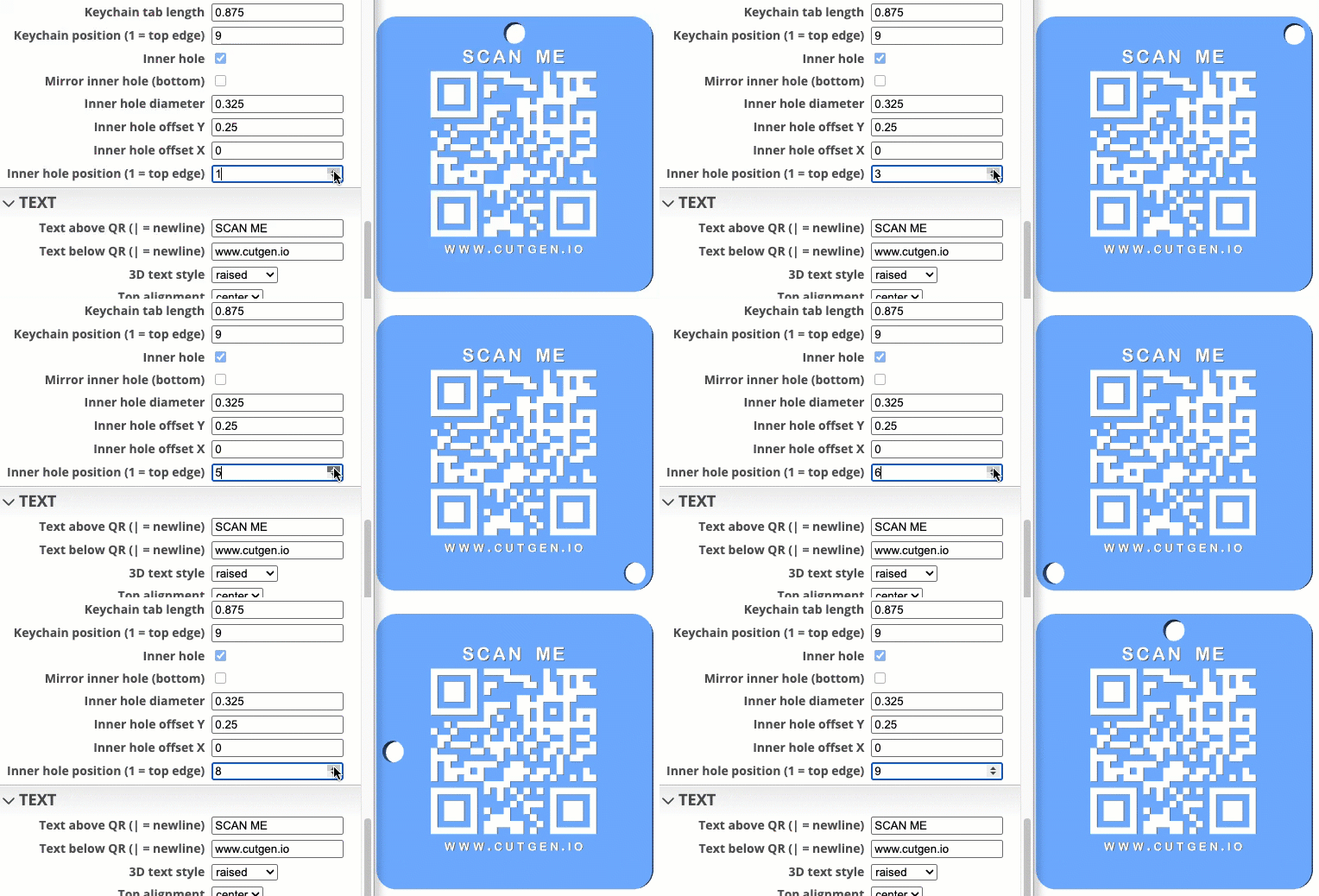
Inner hole position
Set the location of the inner hole on the shape. See hole positions
TEXT
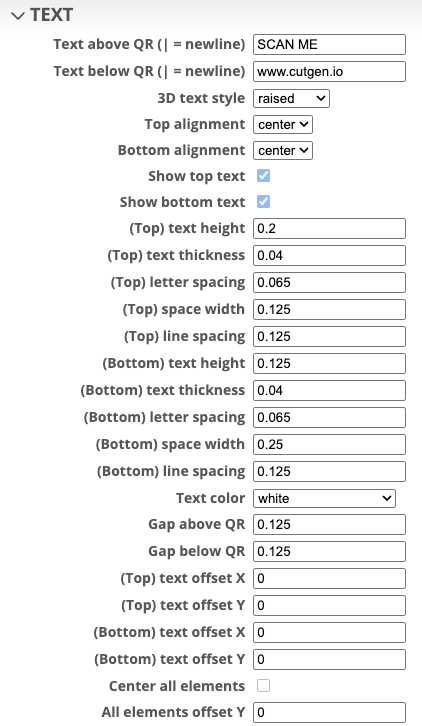
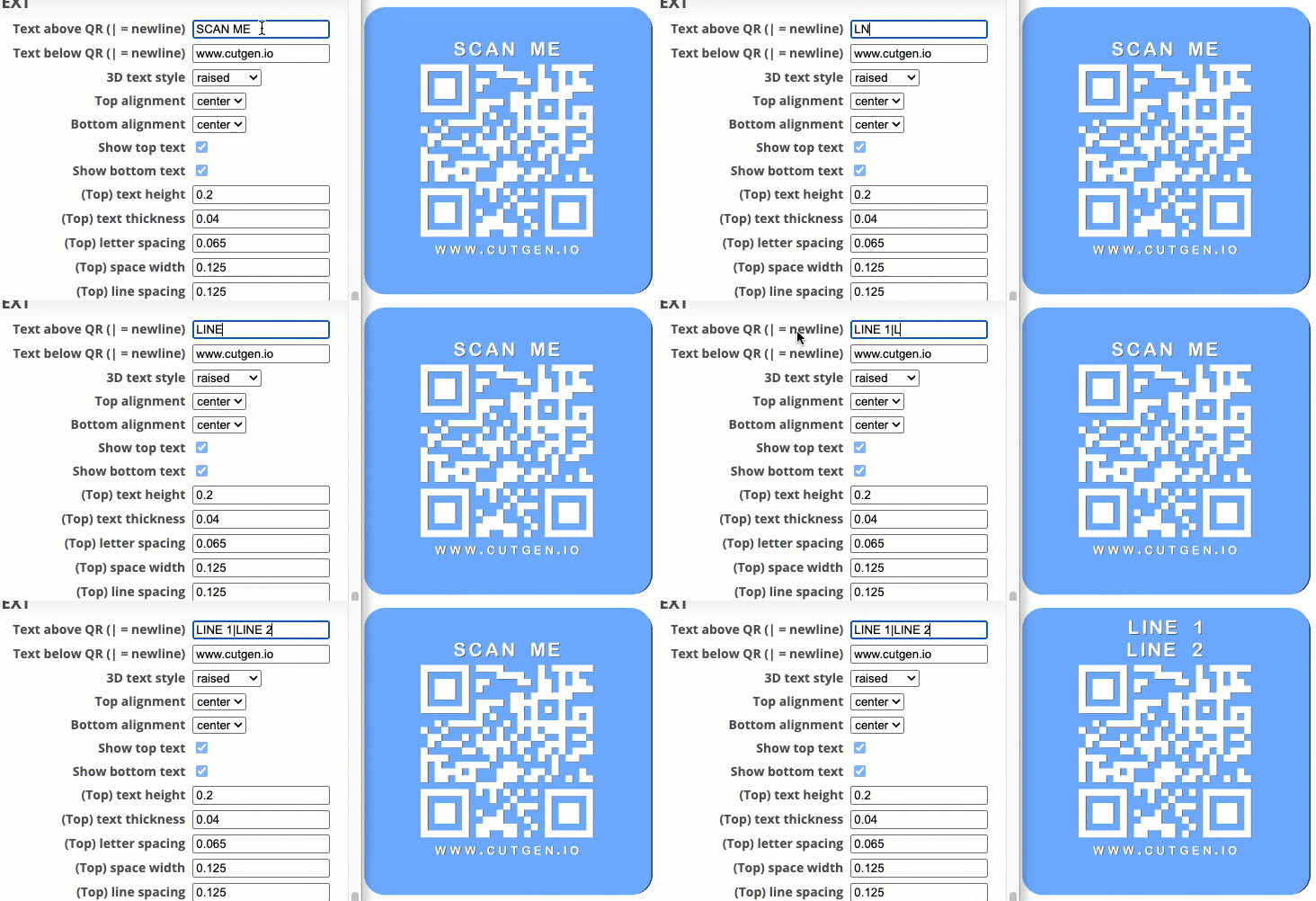
Text above QR
Set the ‘TOP’ text located above the QR code. For muti-line text use the pipe (‘|’) character for a newline.
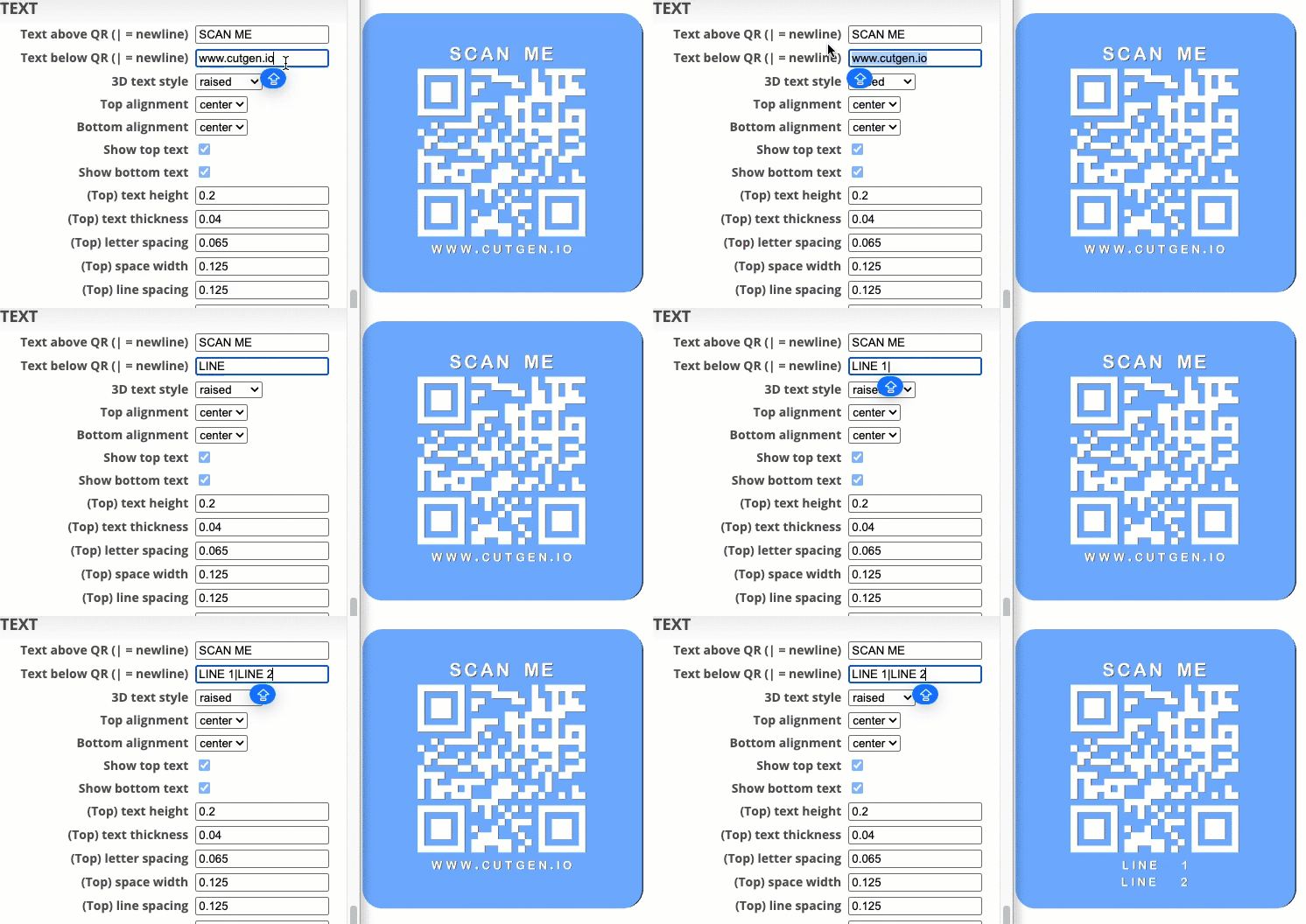
Text below QR
Set the ‘BOTTOM’ text located below the QR code.For muti-line text use the pipe (‘|’) character for a newline.
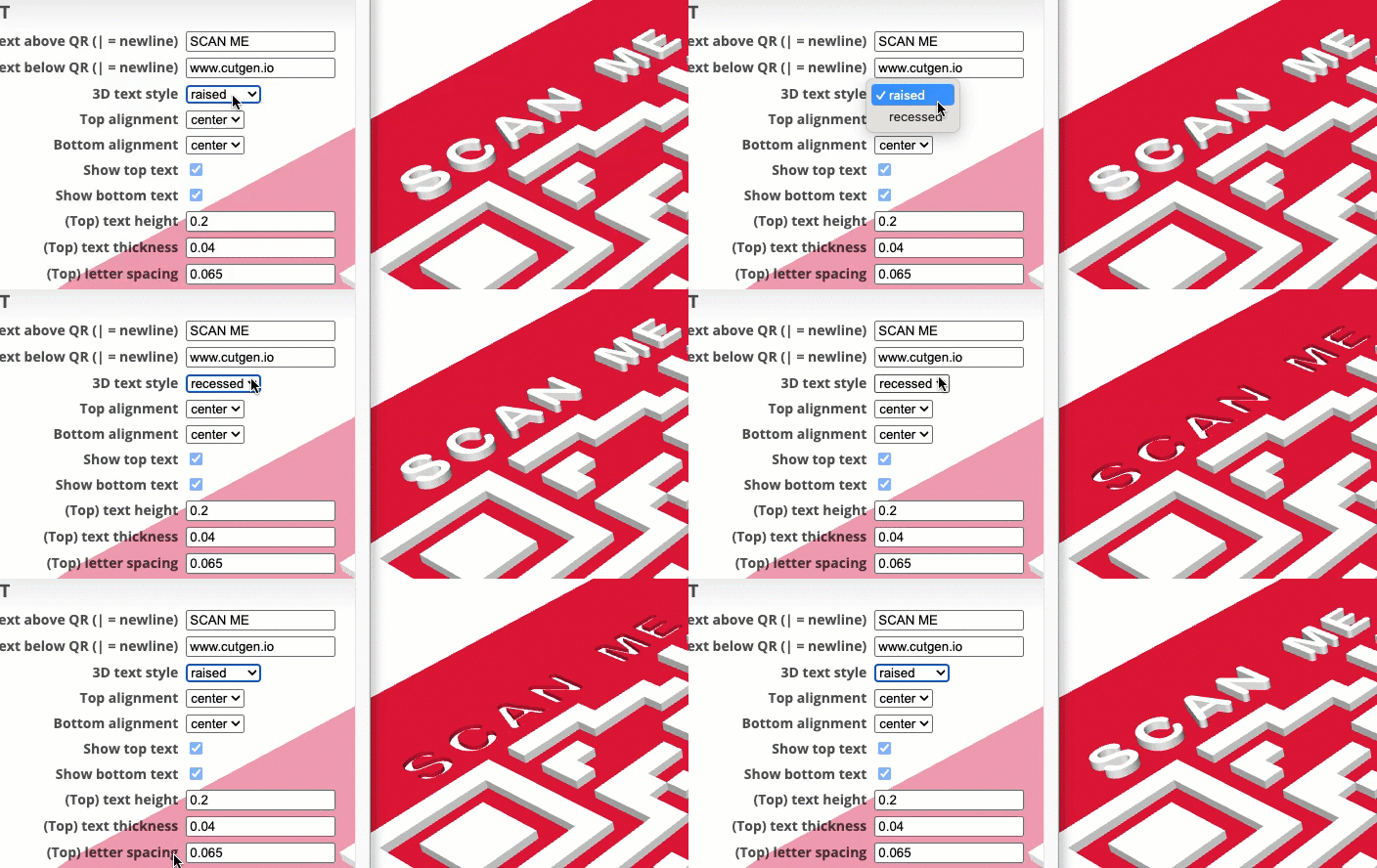
Text style
Raised or recessed top/bottom text.
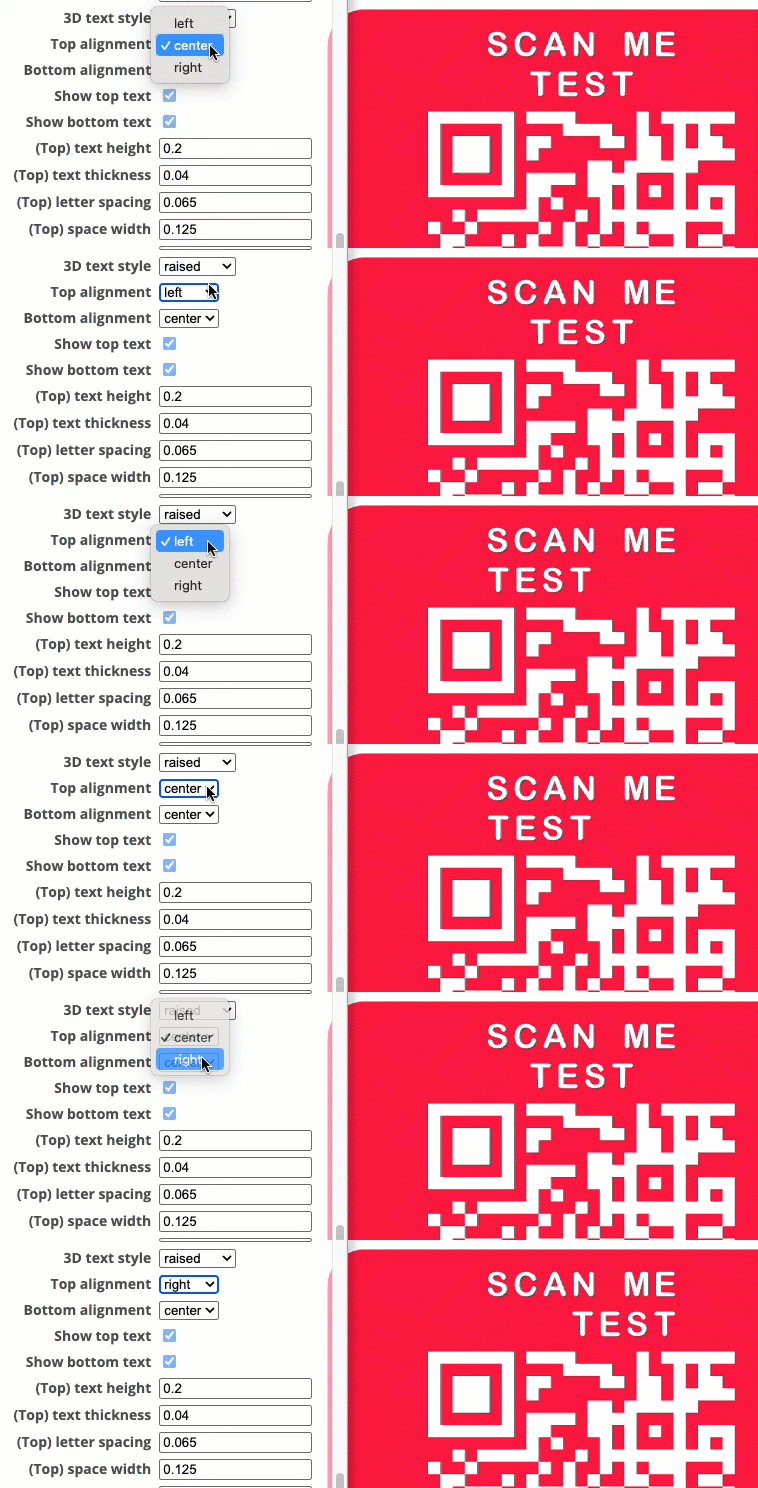
Top alignment
The TOP text alignment for mult-line text.
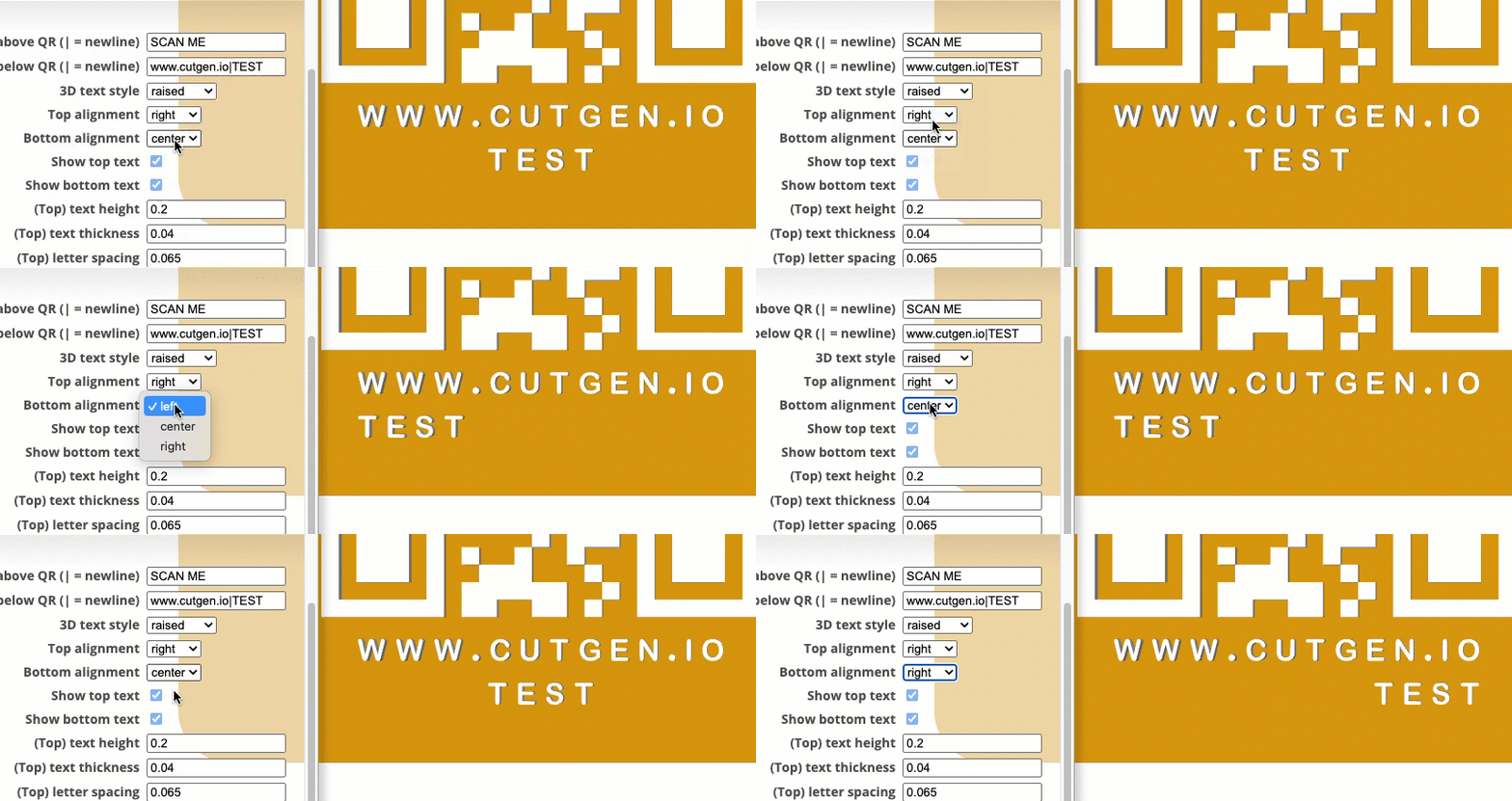
Bottom alignment
The BOTTOM text alignment for mult-line text.
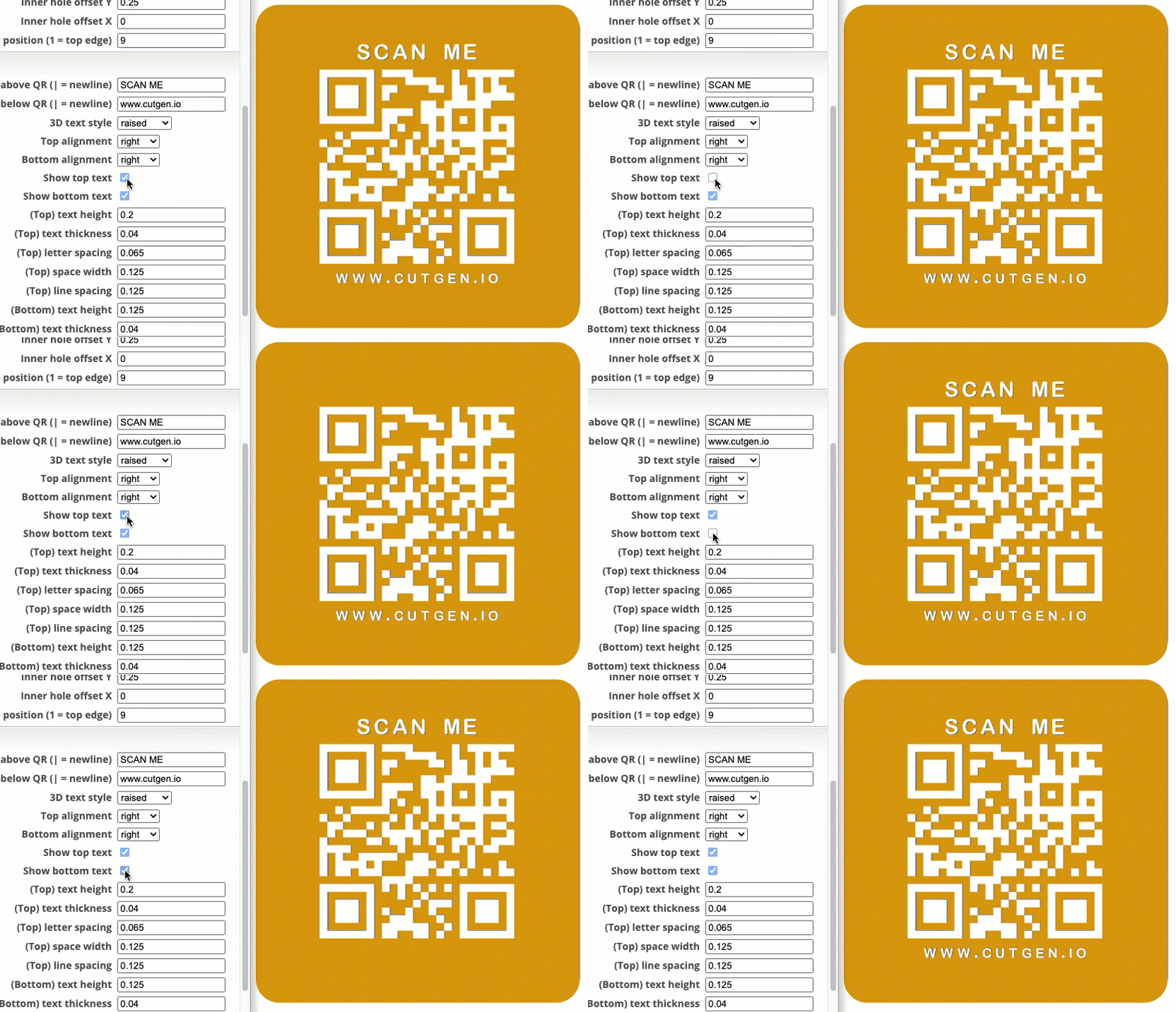
Show Top/Bottom text
Show/hide the top/bottom text.
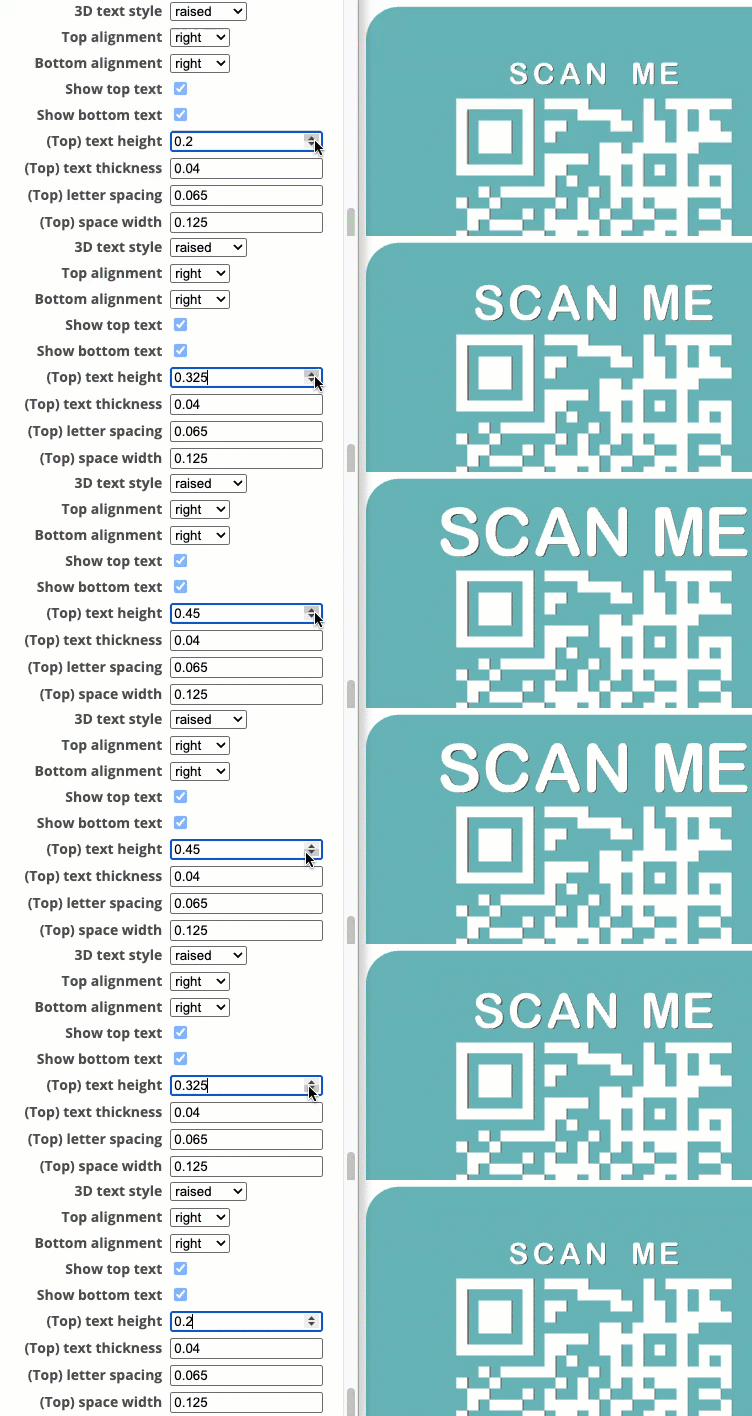
Top text height
Height of the TOP text.
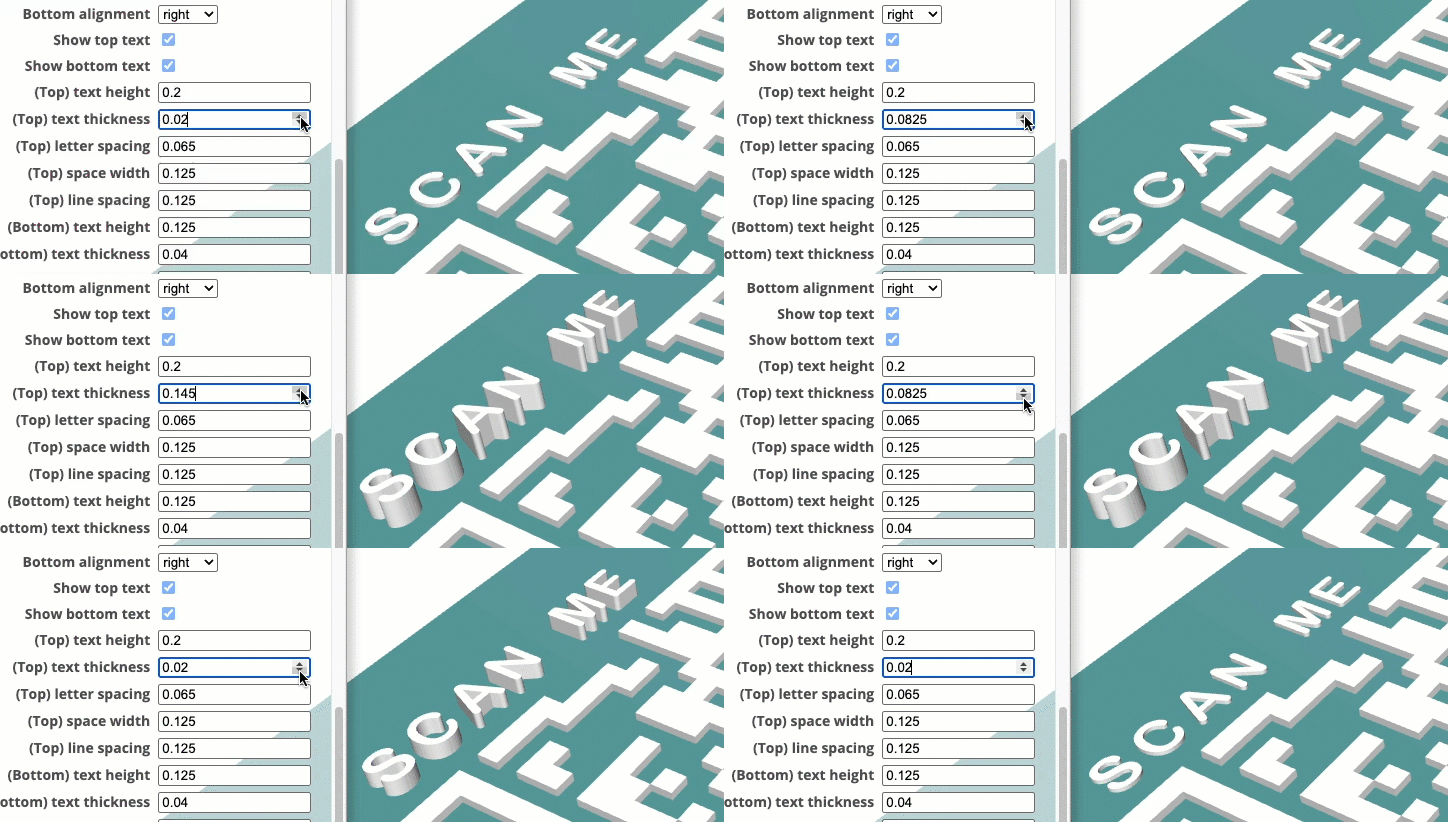
Top text thickness
Thickness of the TOP text.
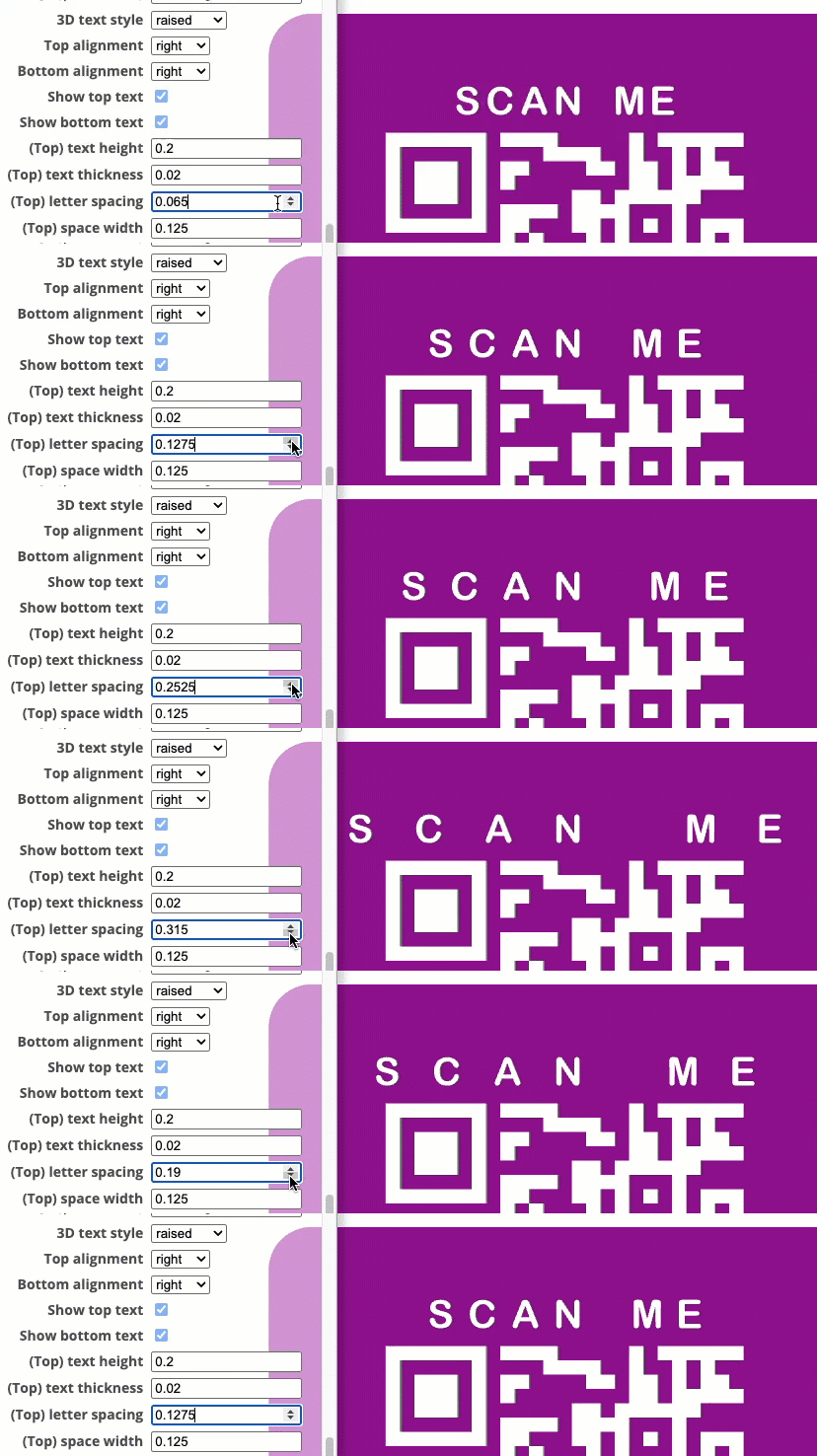
Top letter spacing
Spacing between each character of the TOP text.
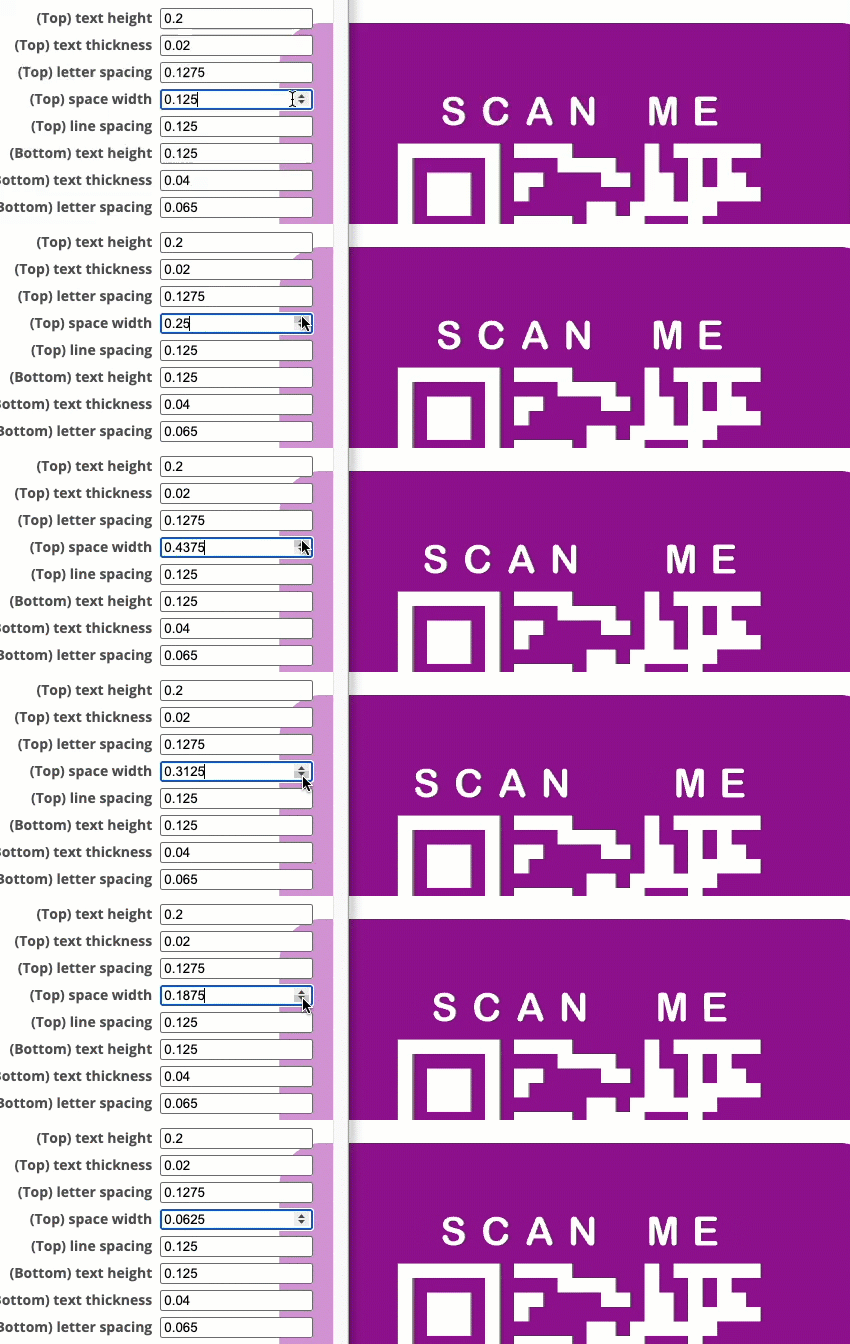
Top space width
Spacing gap assigned to a space character entered into text above input box.
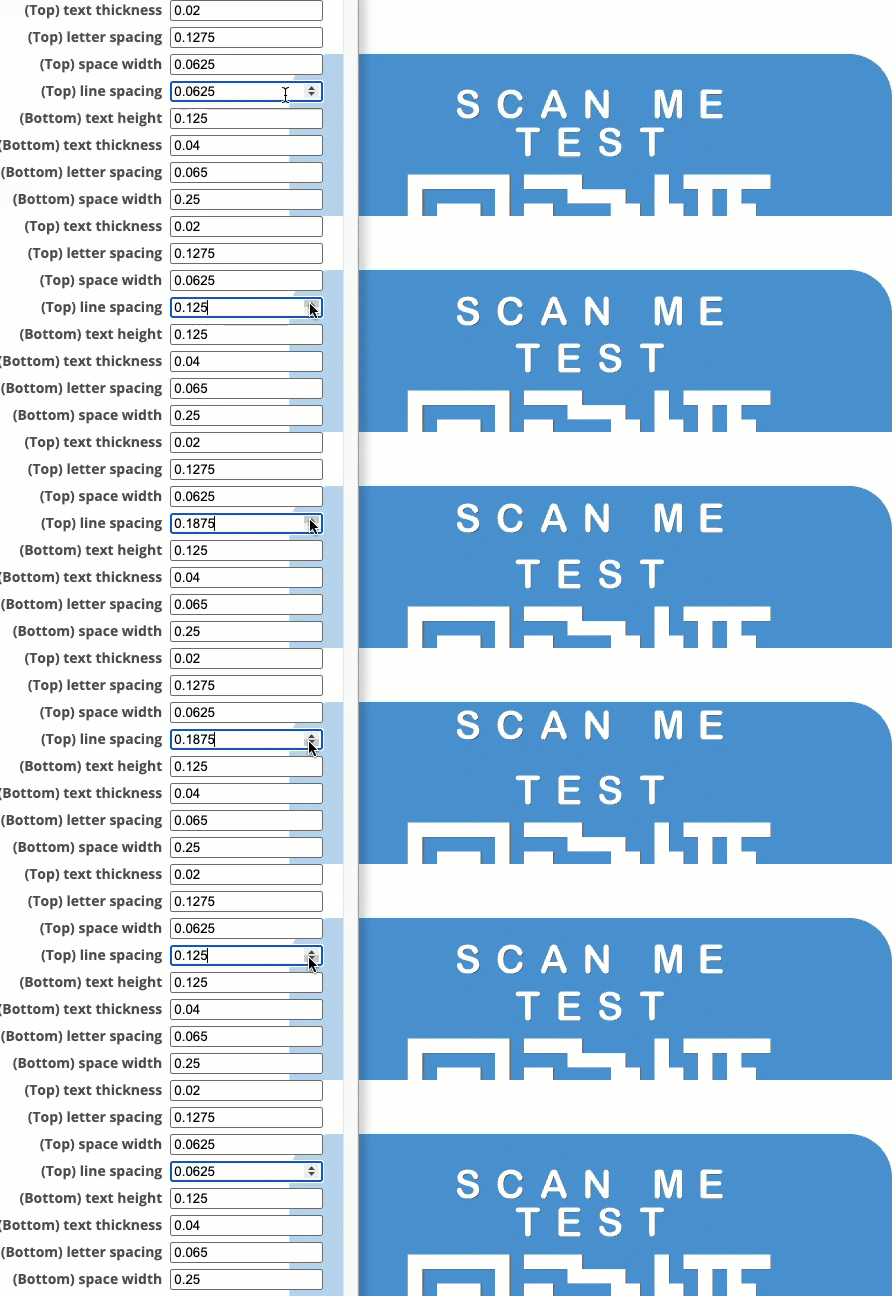
Top line spacing
Spacing gap between TOP multi-line text.
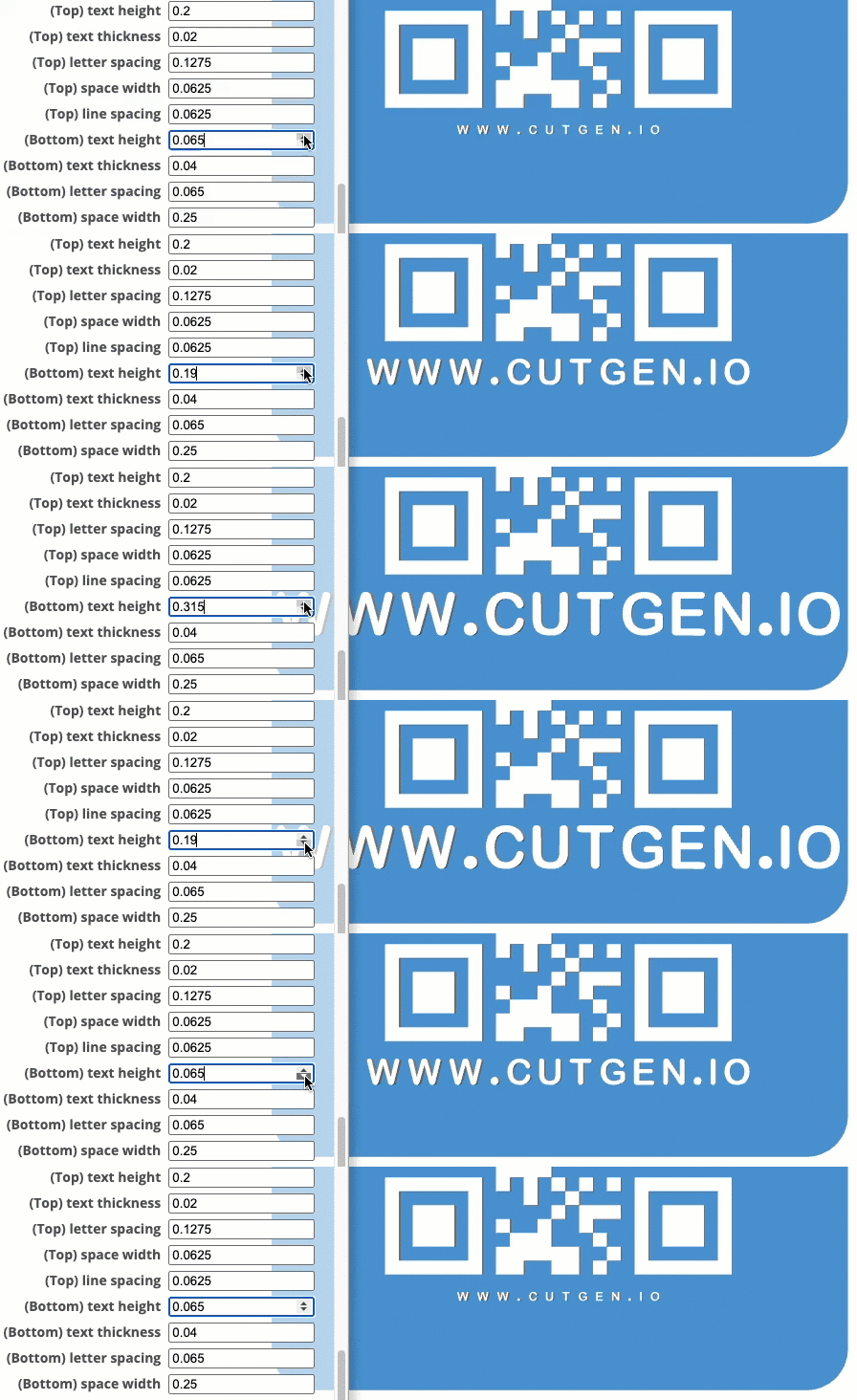
Bottom text height
Height of the BOTTOM text.
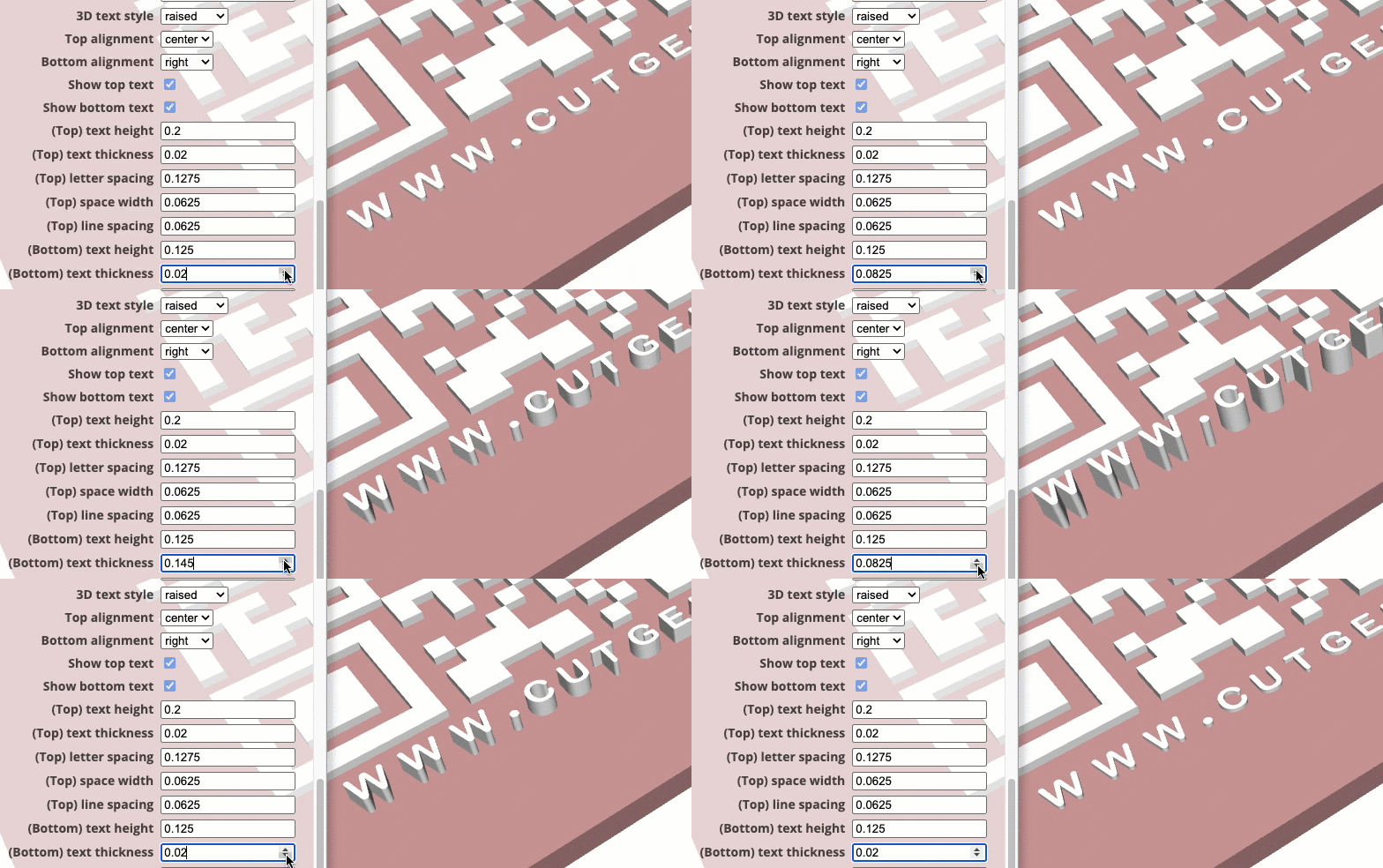
Bottom text thickness
Thickness of the BOTTOM text.
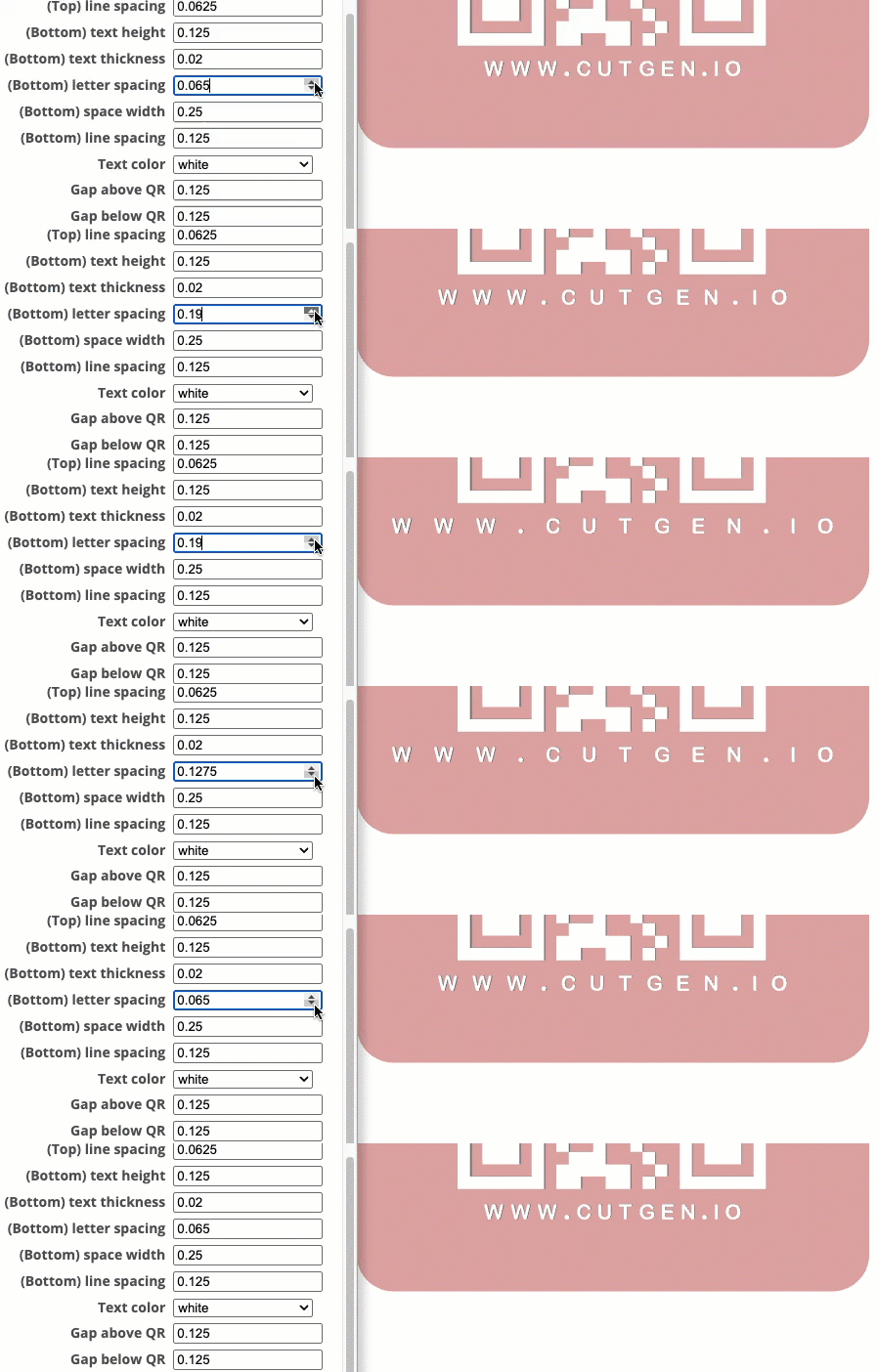
Bottom letter spacing
Spacing between each character of the BOTTOM text.
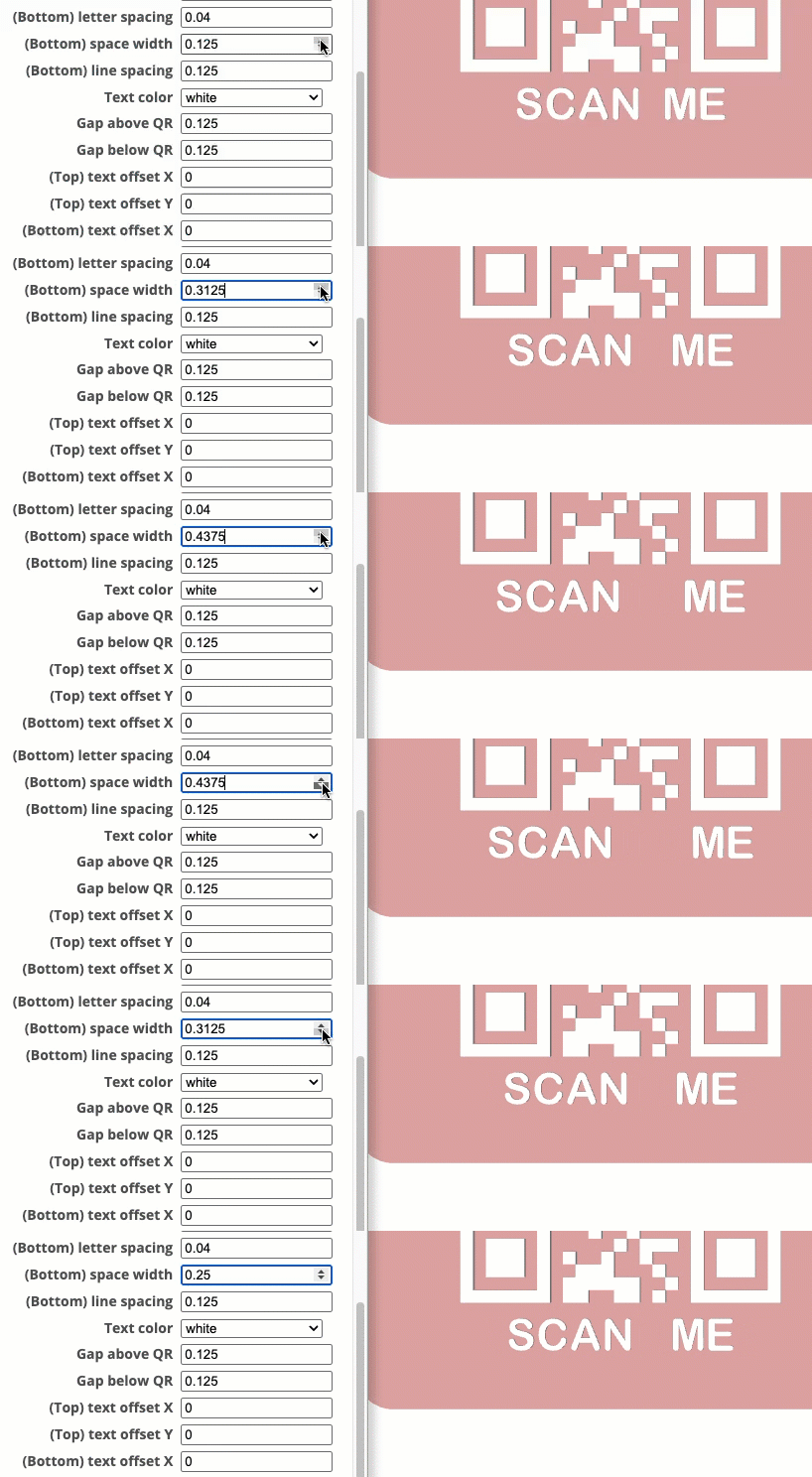
Bottom space width
Spacing gap assigned to a space character entered into text below input box.
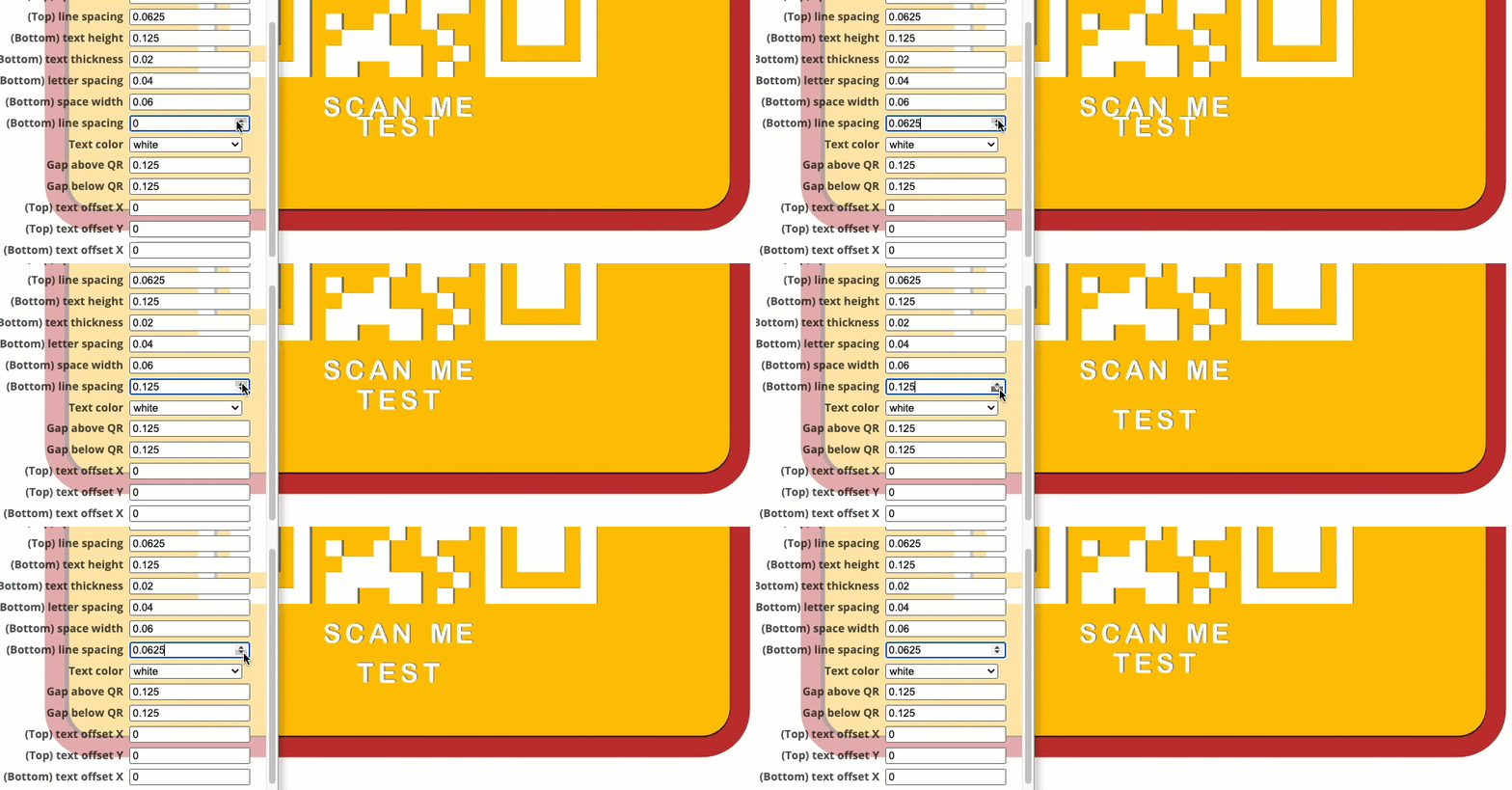
Bottom line spacing
Spacing gap between BOTTOM multi-line text.
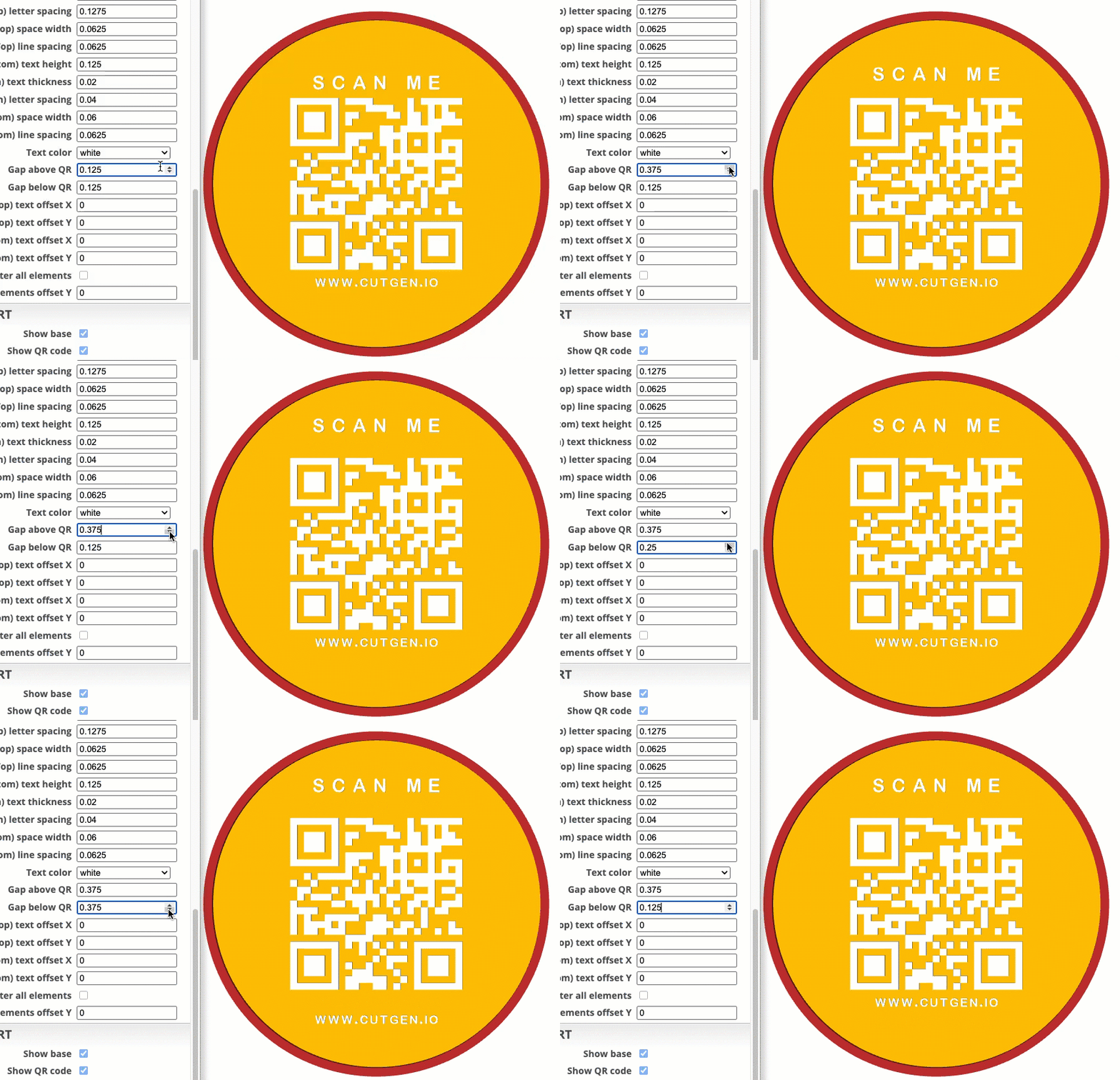
Gap Above/Below QR
Spacing gap between BOTTOM multi-line text.
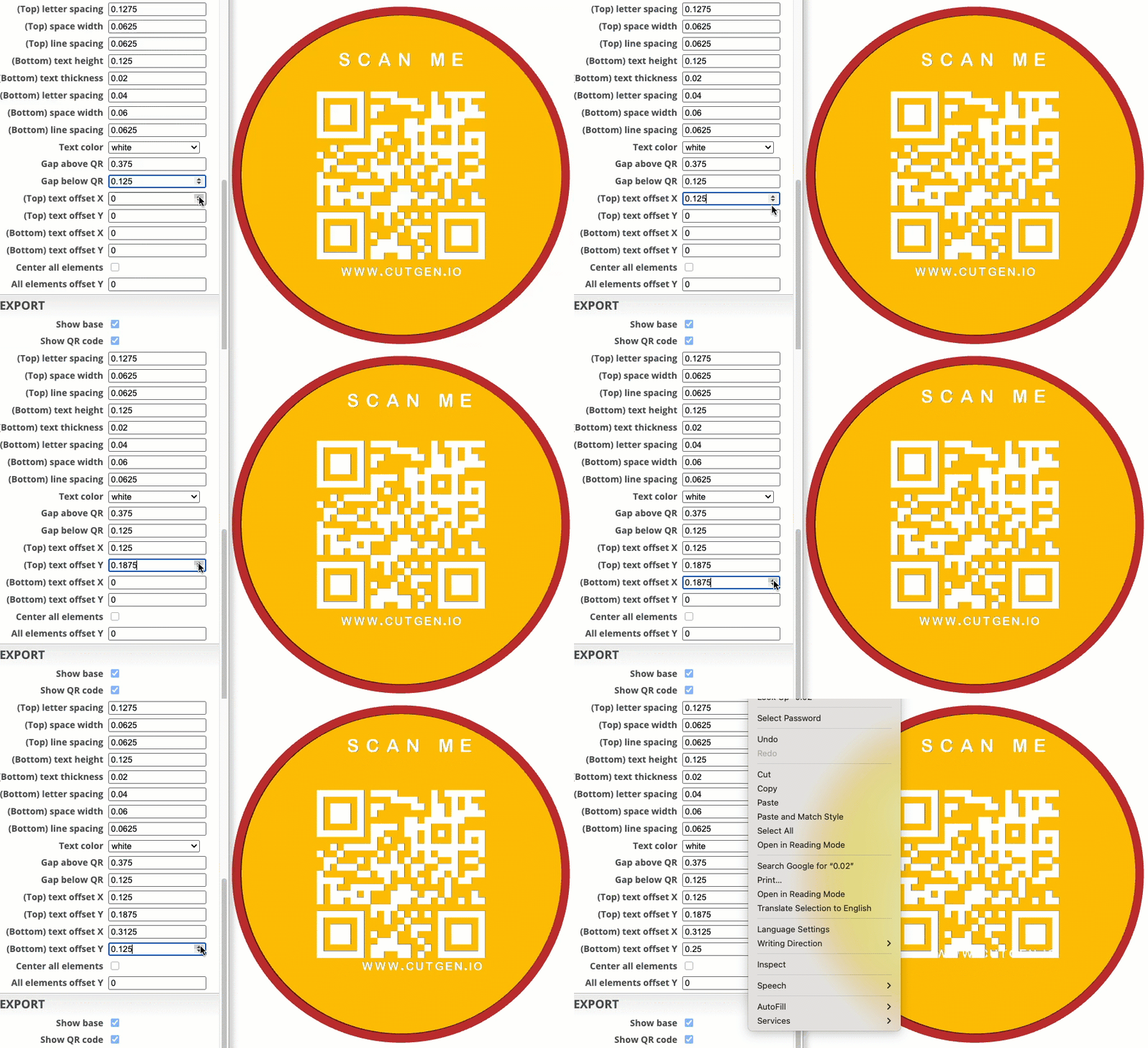
Top/Bottom text X/Y offsets
TOP and BOTTOM x/y position offsets.
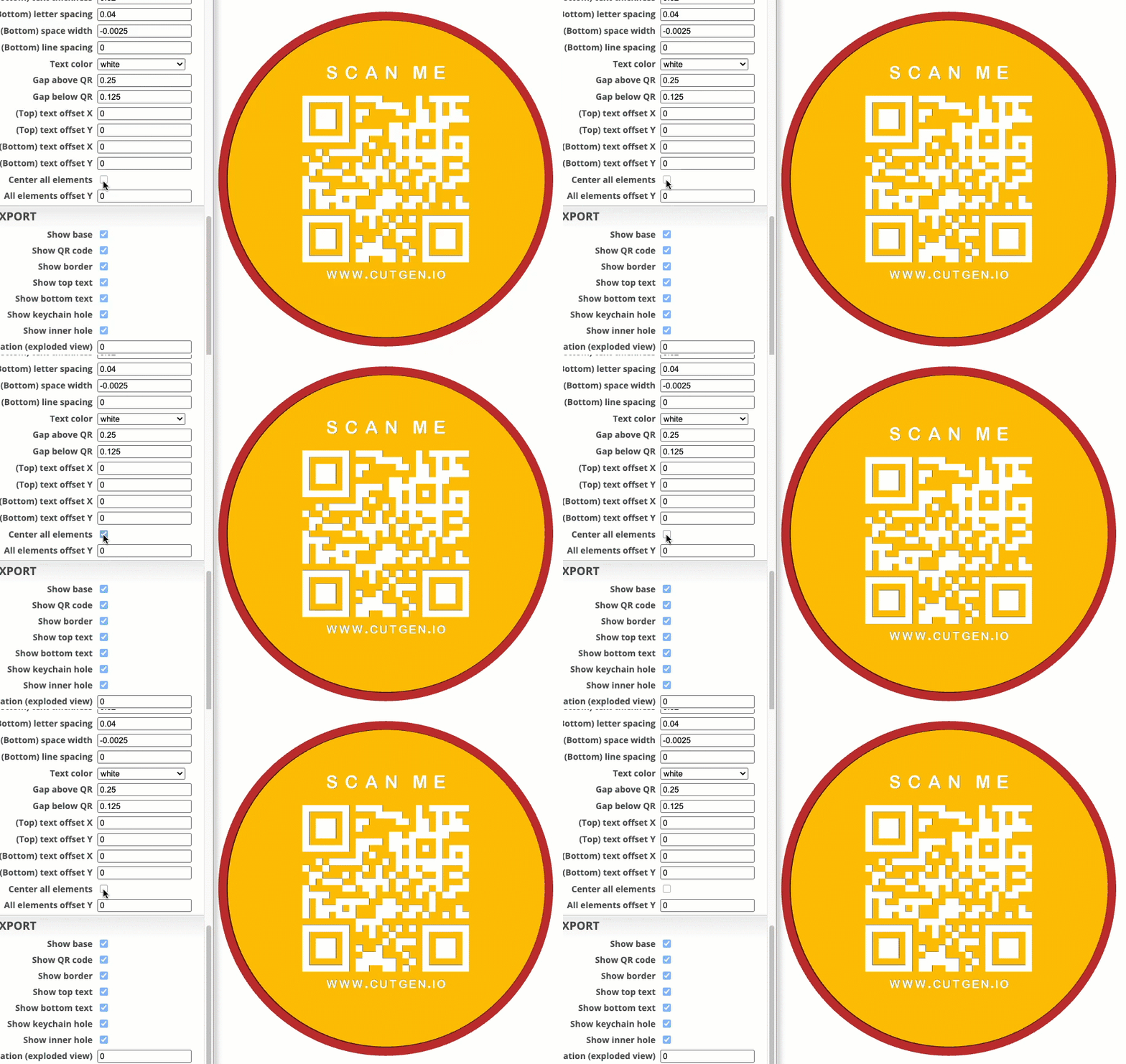
Center all elements
Center the Top/Bottom and QR Components on the base shape.
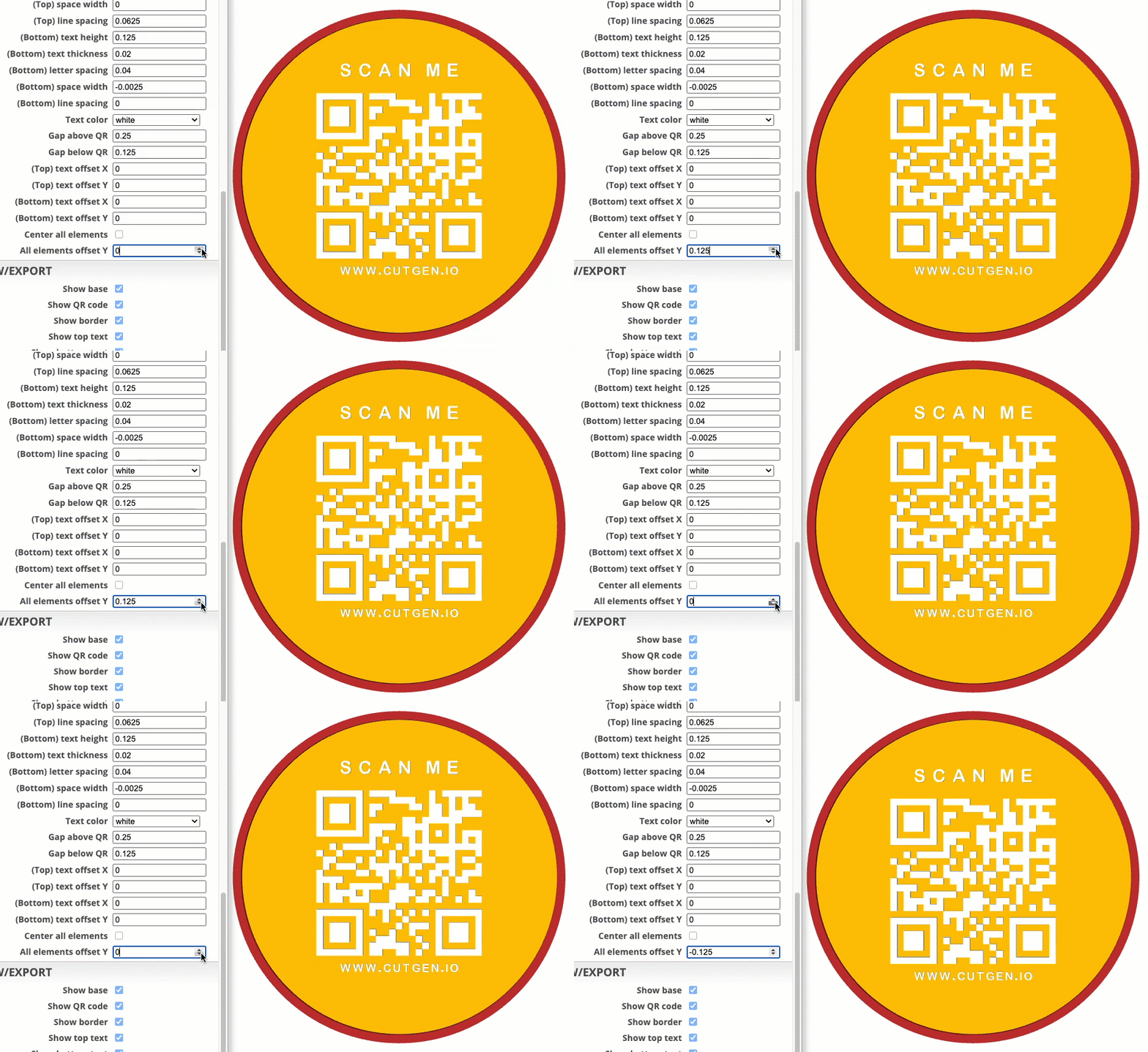
All elements offset Y
Applies a Y (up/down) offset to the Top/Bottom and QR Components on the base shape. center all elements must be ‘unchecked’
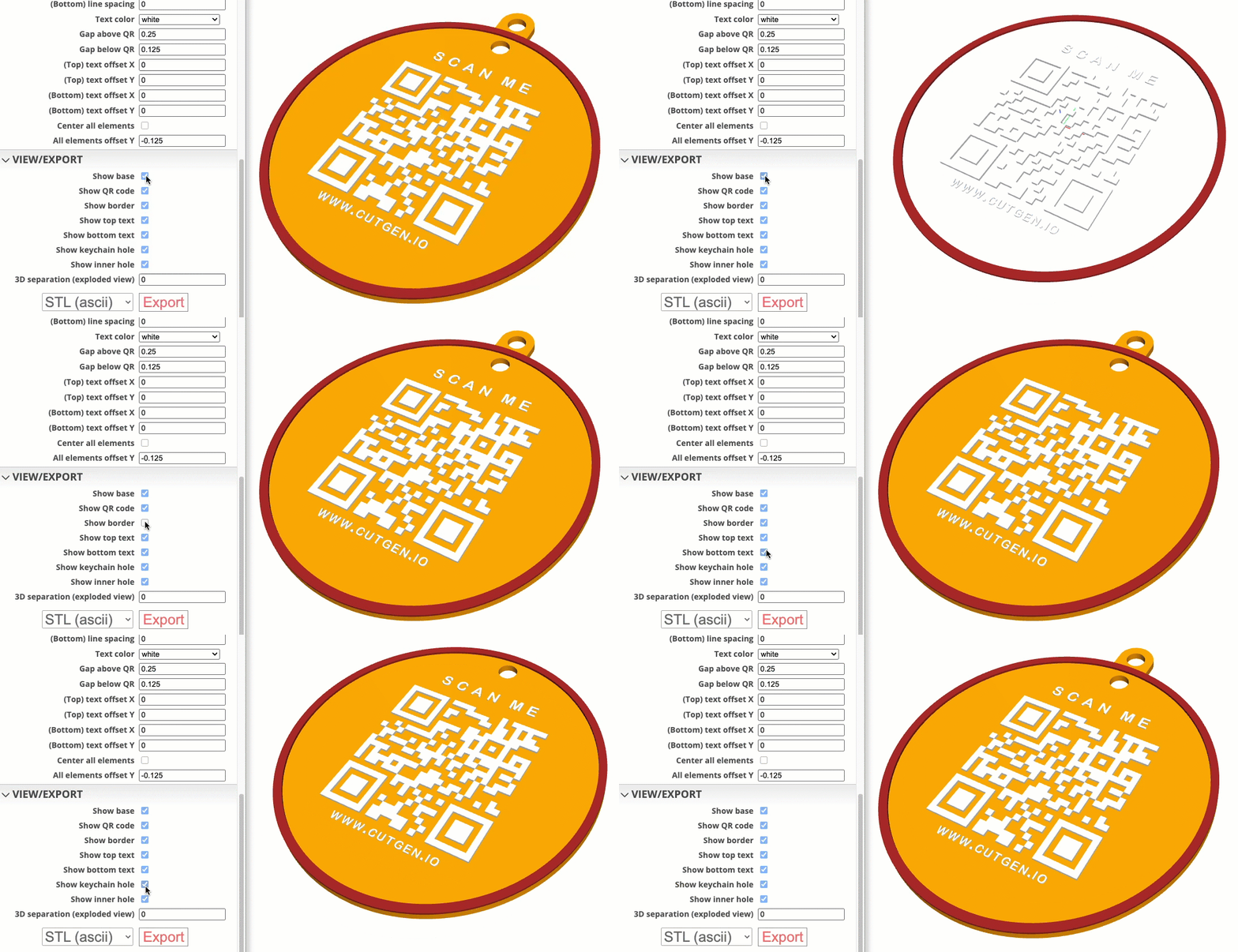
View/Export Show/Hide Components
Checkboxes used to show/hide individual elements in both 2D and 3D View Layouts. Whatever is displayed in 2D and 3D Layouts will be be exported. Useful if you only want to export certain components.
Laser Cutter User’s Guide
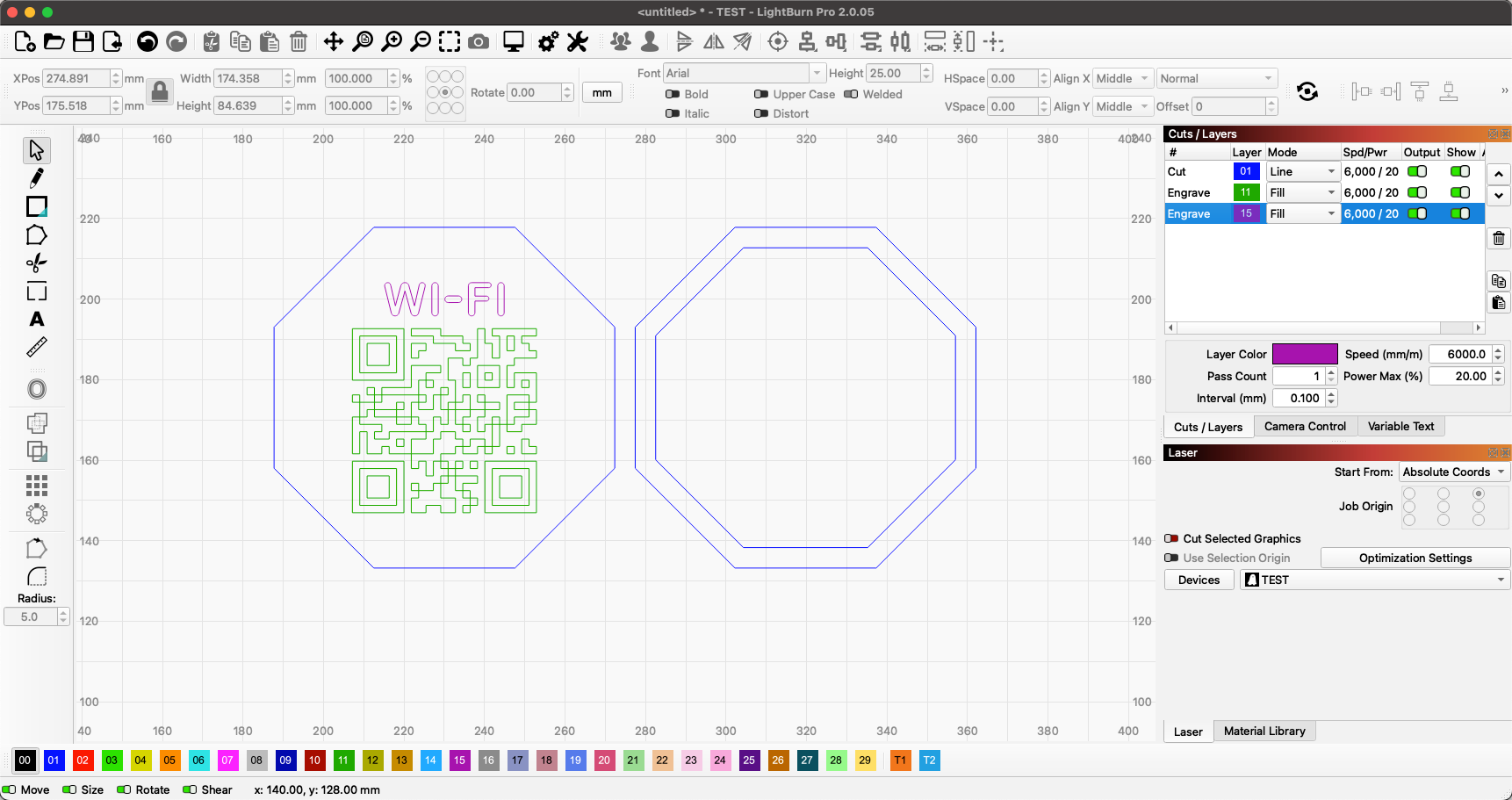
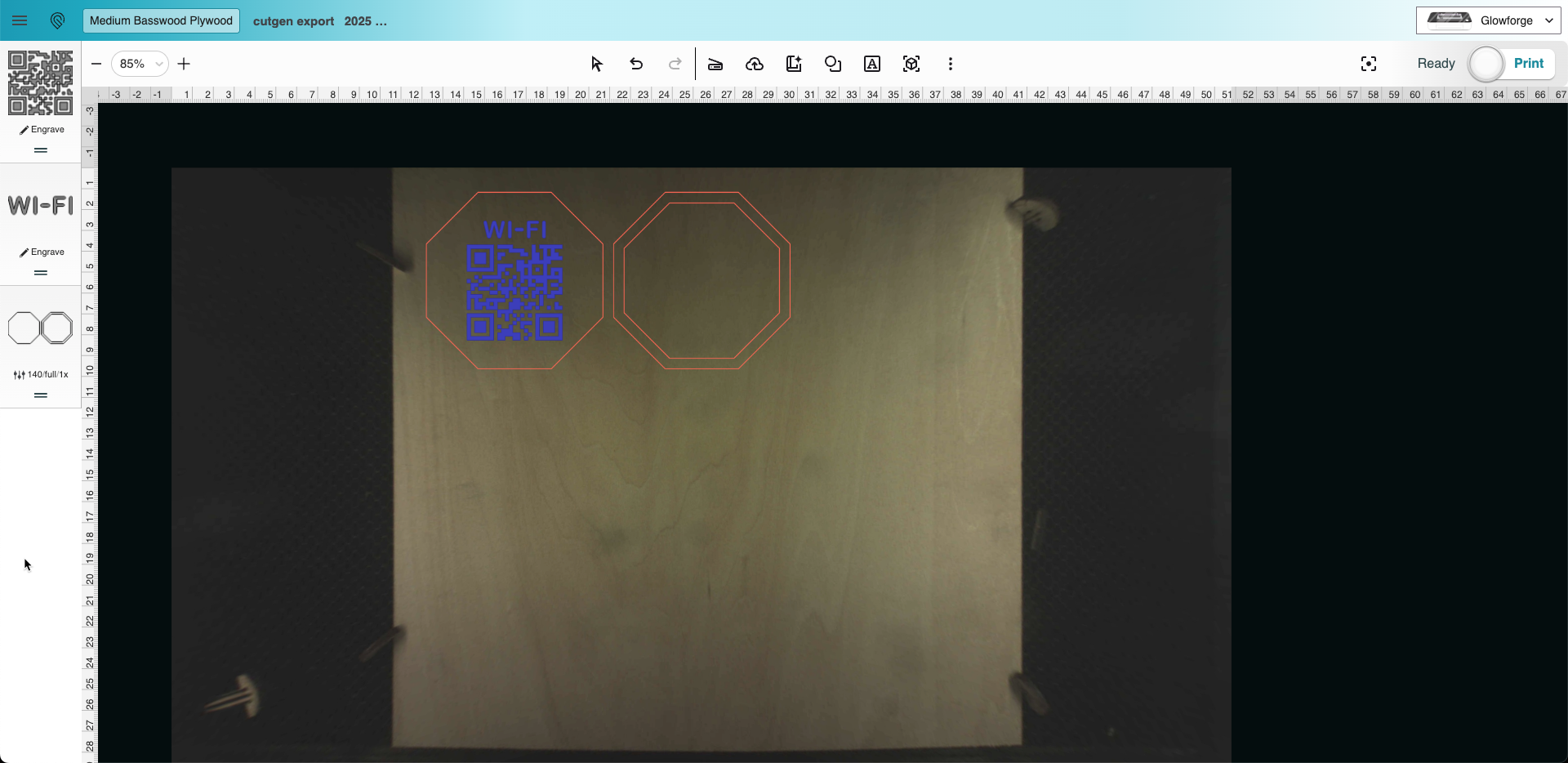
In 2D Layout View, the line color denotes the ‘suggested’ laser operation to be performed.
Here are the color operations:
Blue = cut
purple = engrave or score
green = engrave
red = score
To export to SVG follow this procedure.
Note: “Hidden” components in the 2D Layout, will not be included in the exported SVG.
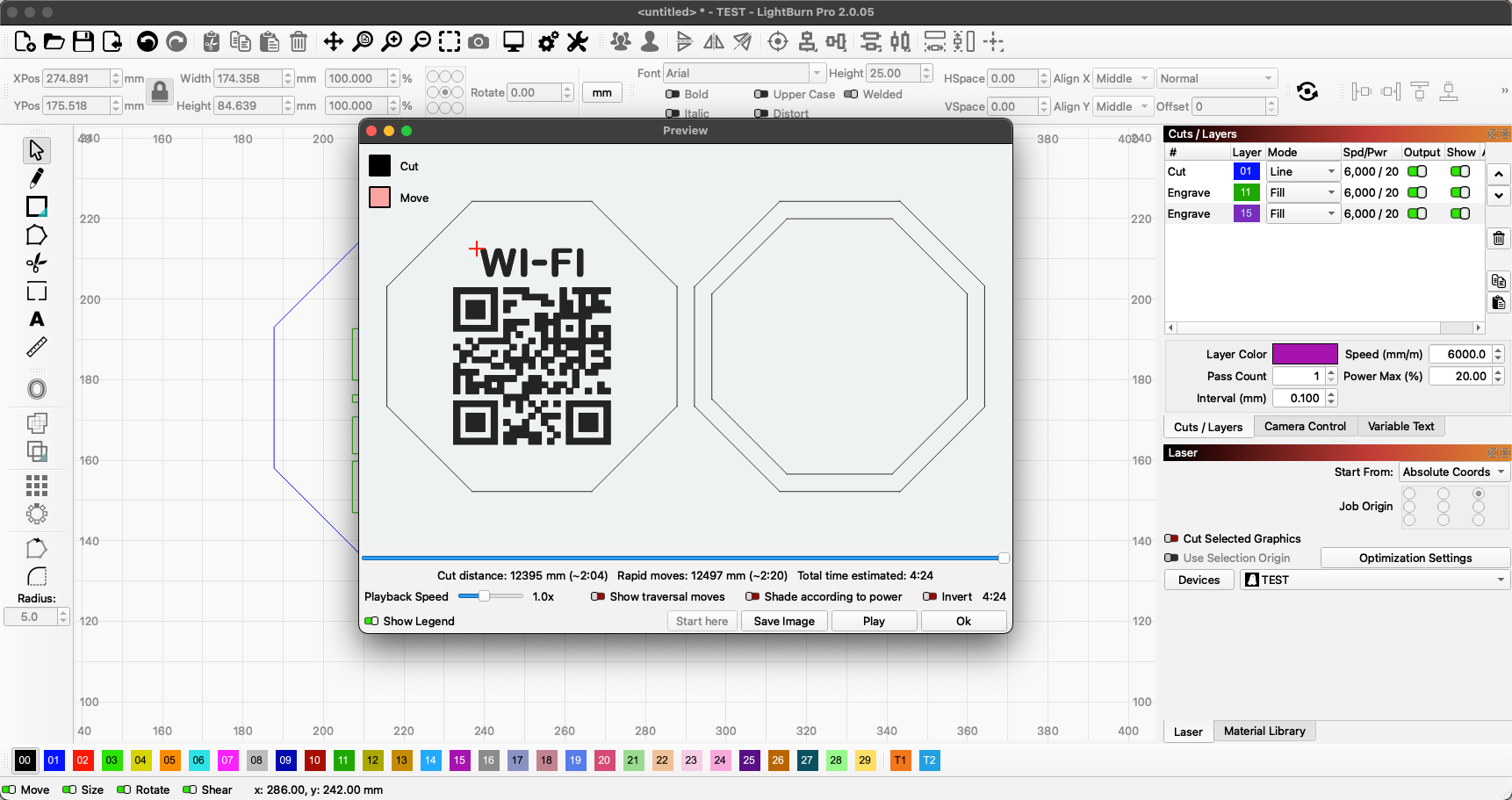
Import into LightBurn:
Import into Glowforge:
3D Printer User’s Guide
Here are some general guidelines and things to think of if you will be printing QR codes on a 3D printer.
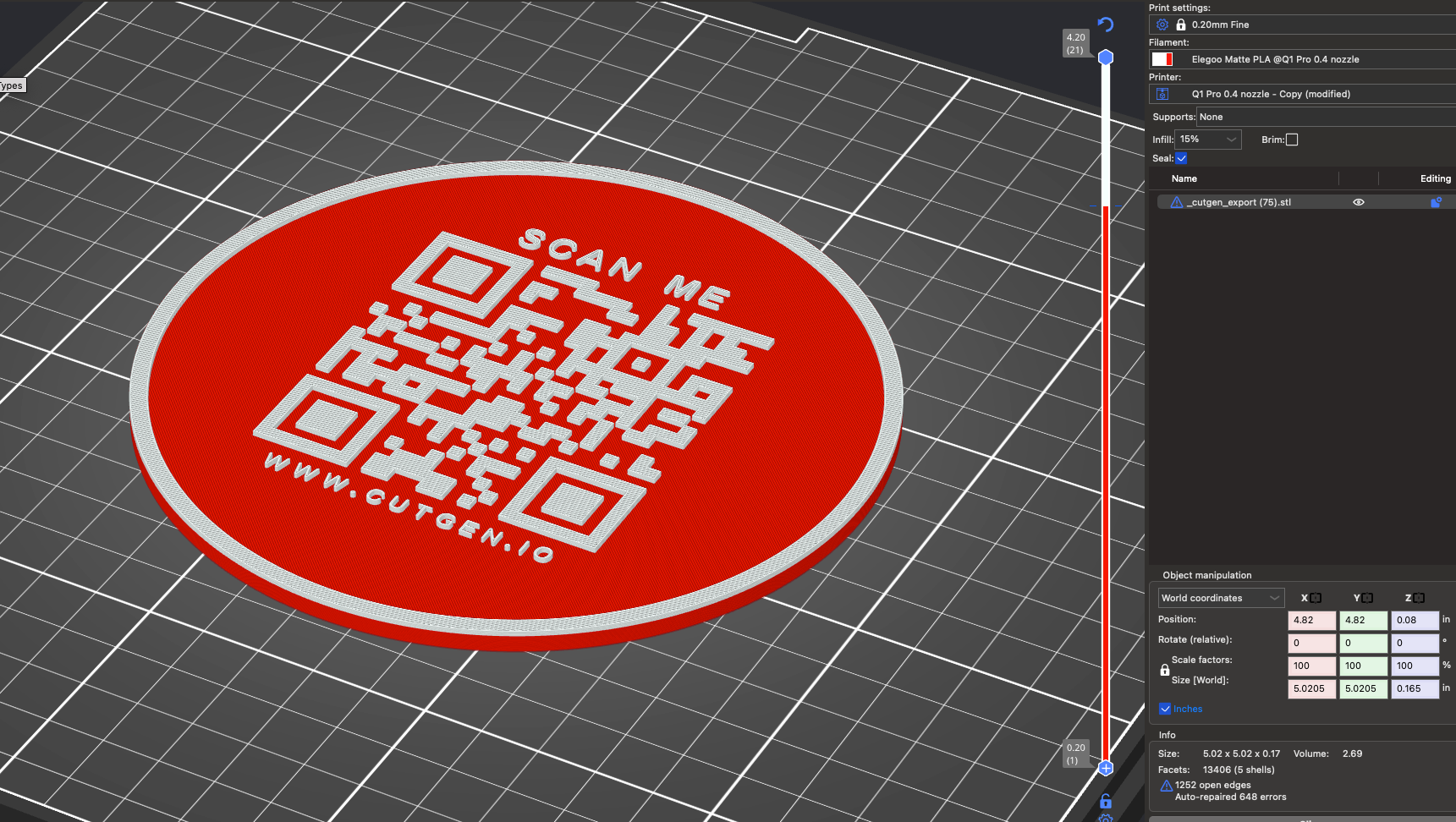
I’ve found that 3D raised text Top/Bottom letters and QR code, works better than the recessed option. Raised, also works better with the slicer’s 'color change' option.
When exporting as STL to import into your slicer, there are a few menu considerations at export:
When importing the STL into your slicer, be aware that if you ‘split into parts’, the QR code will be broken into its smaller pieces which may be problematic or hard to manage. It’s best to keep as one grouped object.
Small letters may not resolve (broken/incomplete) properly after slicing. This is based on slicer settings and nozzle size. You may need to increase the size of the letter for best results.
To export to STL follow this procedure.
Note: “Hidden” components in the 3D Layout, will not be included in the exported STL.
Qidi Slicer with ‘color change’ option.
QR Code Dimensions (Console Window Output)
After setting your final custom parameters, you can find the final board dimensions printed in the web browser’s ‘console’ window. How to access the console window depends on the browser type.
Chrome and Edge browsers
Using the main menu located at the top of the screen.
Click on ‘View’
Click on ‘Developer’
Click on ‘JavaScript Console’.
Size in MM and IN will be displayed.
Firefox browser
Using the main menu located at the top of the screen.
Click on ‘Tools’
Click on ‘Browser Tools’
Click on ‘Browser Console’.
Board size in MM and IN will be displayed.
Safari browser
Using the main menu located at the top of the screen.
Click on ‘Develop’
Click on ‘Show JavaScript console’
Board size in MM and IN will be displayed.
Shortcut ‘View’ keys
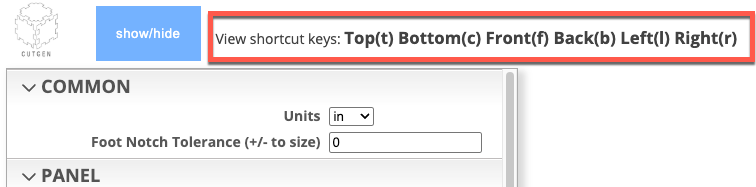
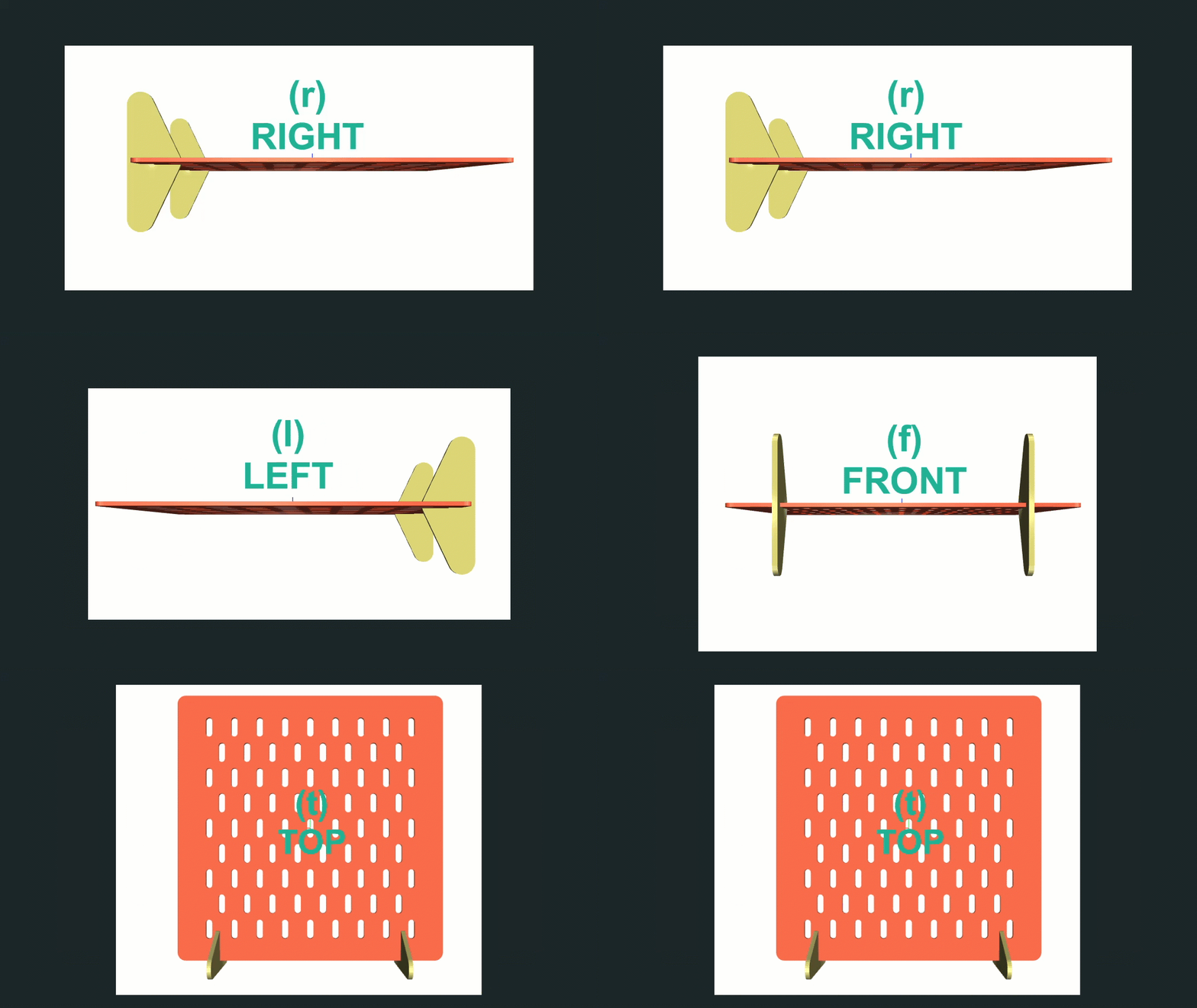
To enhance viewing and navigation of 3D and 2D objects, six shortcut keys are available.
3D - Keyboard Shortcuts
Quick view keyboard shortcuts are provide. The view perspective is if you laid the panel down onto a flat surface and you are looking down at it.
Mouse Navigation
Pan (Move)
To pan or move a 2D or 3D model on the screen, press and hold the ‘SHIFT’ key, while at the same time hold down any mouse button (left, right, or scroll wheel). Drag the mouse to move the model around the 2D/3D space.
Orbit (rotate)
To rotate a 2D or 3D model on the screen, press and HOLD down any of the mouse buttons while dragging/moving the mouse.
Zoom
To zoom in or out within the 2D or 3D space, scroll the mouse wheel forward or backward.

Procedures
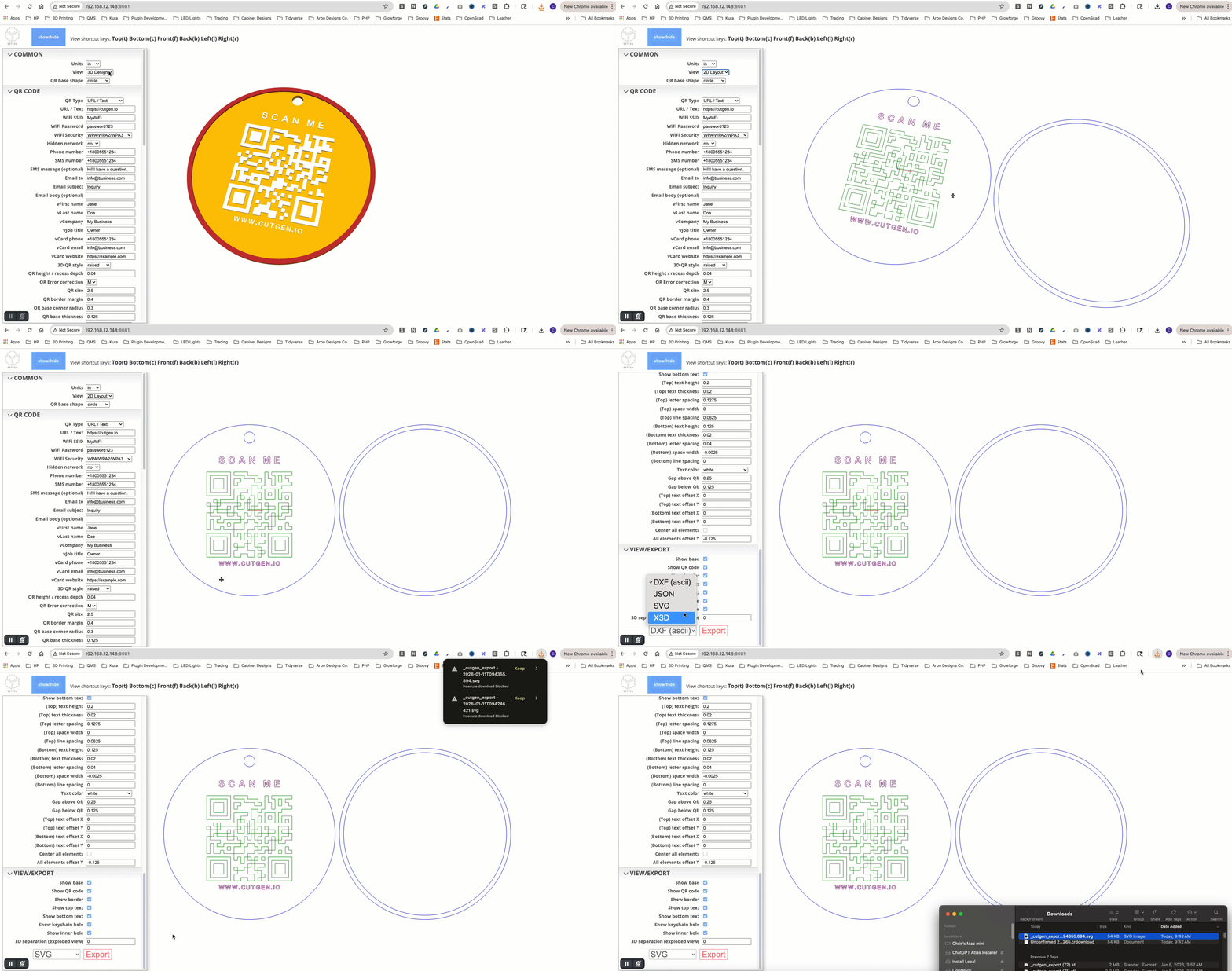
Export to SVG file
SVG is a native format for laser and CNC cutting machines. To export to an SVG file, follow these steps:
- Select 2D Layout from the ‘COMMON’ menu group.
- Press the ‘t’ key to display a top down view of the 2D layout.
- In the ‘VIEW/EXPORT’ menu group, select ‘SVG’ from the file type select dropdown box.
- Press the ‘Export’ button.
- Output SVG will be saved in the ‘Downloads’ folder.
Export to STL file
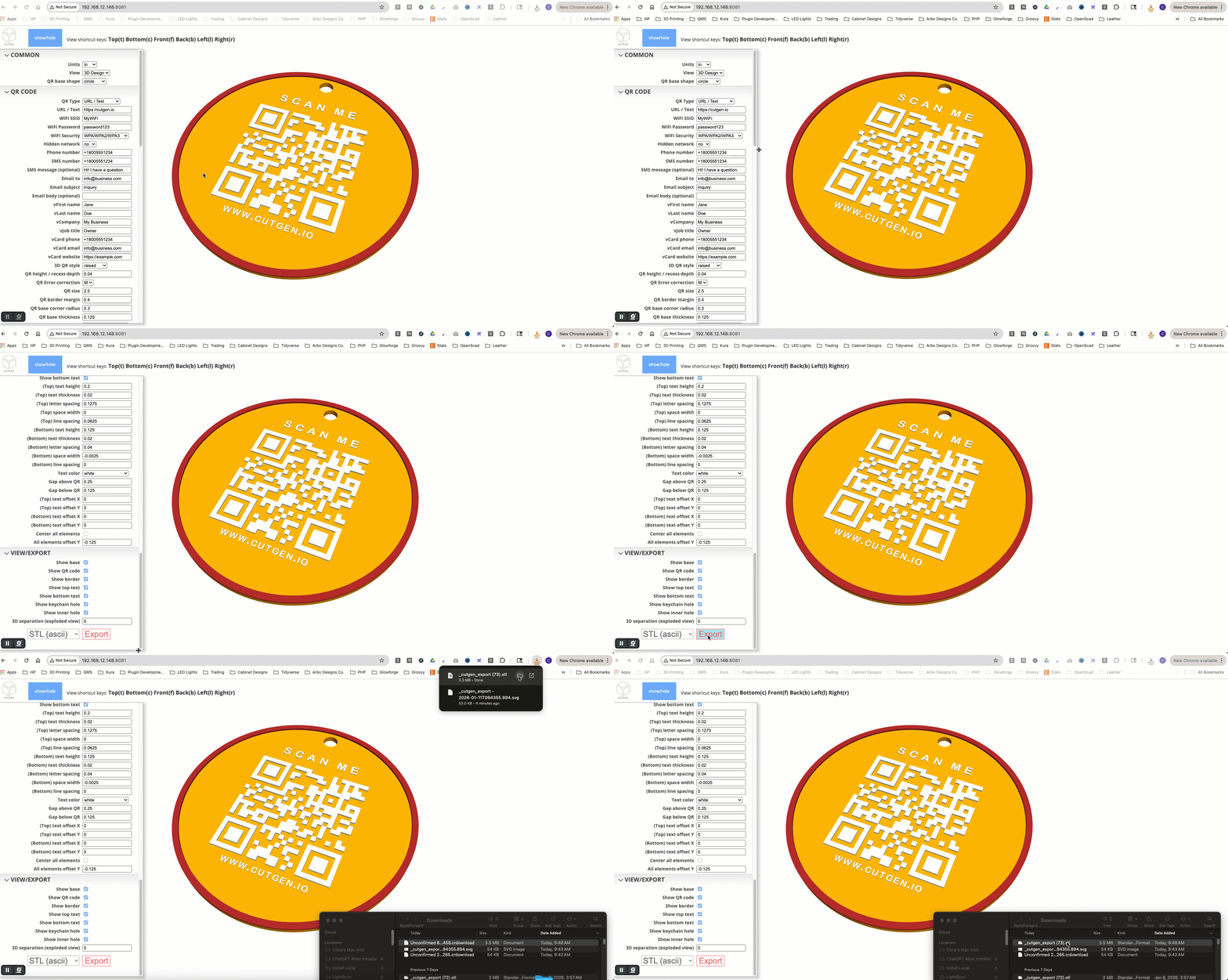
STL is a native format for 3D printing machines. To export to an STL file, follow these steps:
Select 3D Design from the ‘COMMON’ menu group.
In the ‘VIEW/EXPORT’ menu group, select ‘STL (ascii)’ or ‘STL (binary)’ from the file type select dropdown box.
Press the ‘Export’ button.
Output STL will be saved in the ‘Downloads’ folder.
OBJ File Export for use in Blender
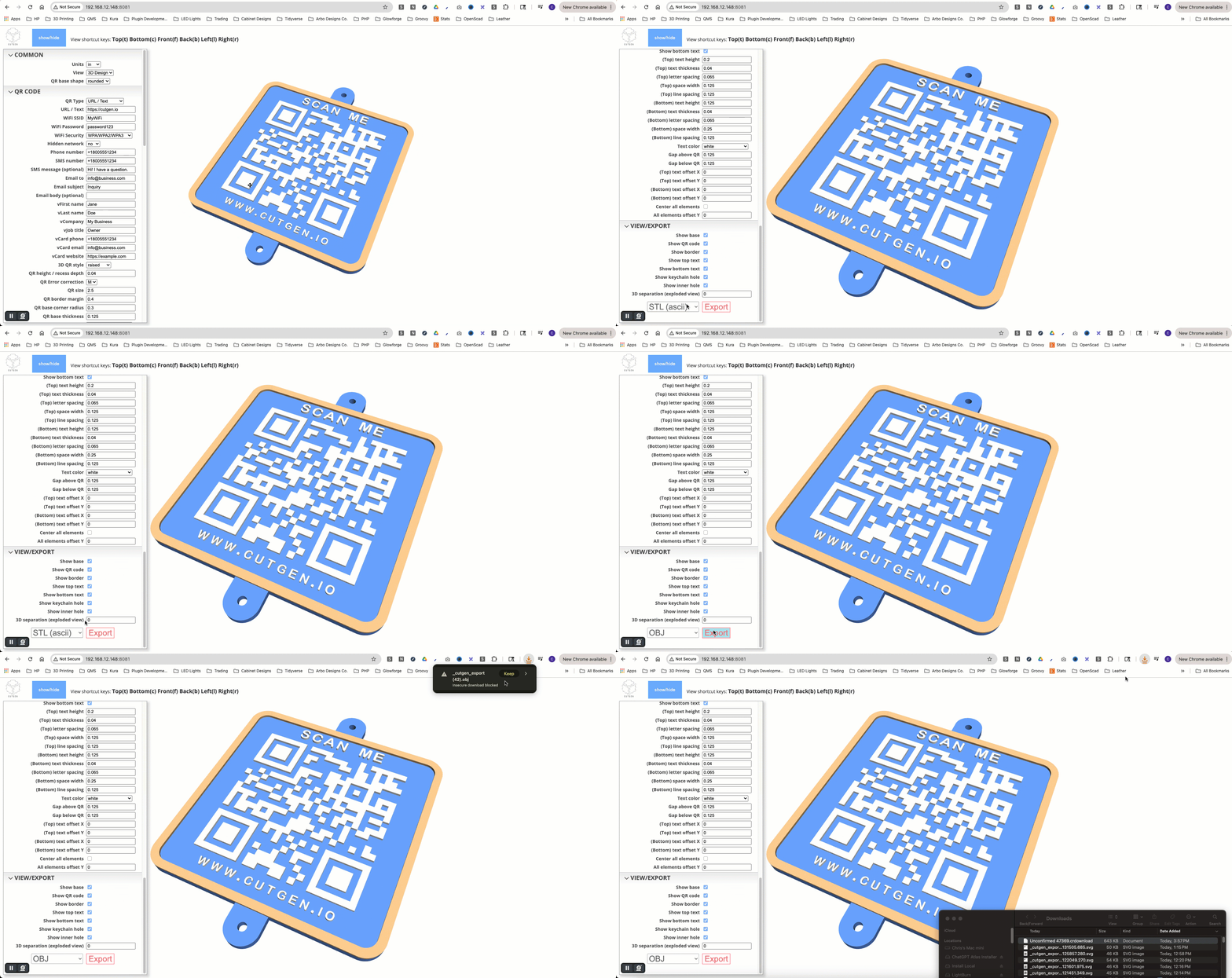
OBJ file format works much better in Blender than STL.
Select 3D Design from the ‘COMMON’ menu group.
In the ‘VIEW/EXPORT’ menu group, select ‘OBJ’ from the file type select dropdown box.
Press the ‘Export’ button.
Output OBJ will be save in the ‘Downloads’ folder.
Import OBJ into Blender
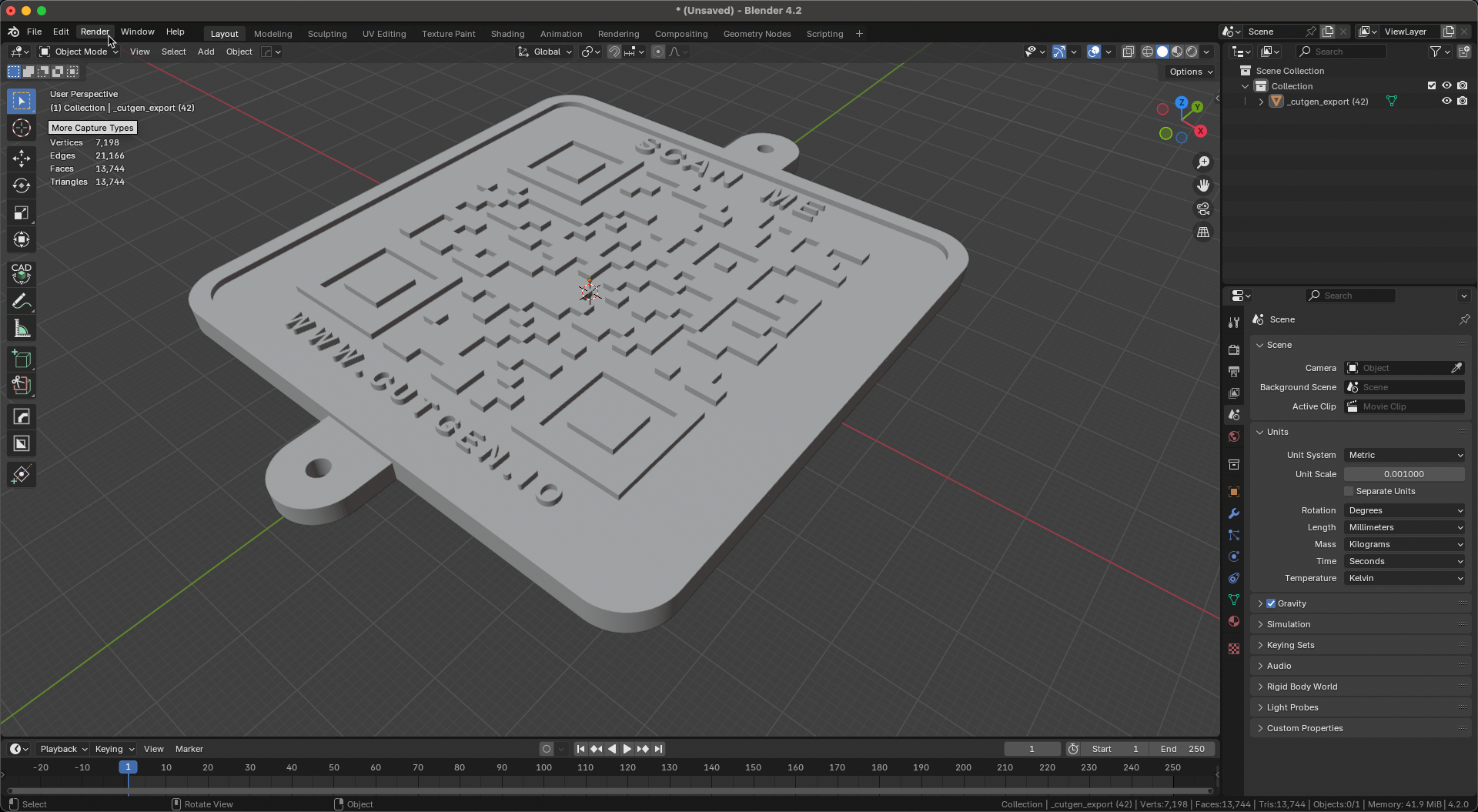
HINT: Set each of the elements to a different color before exporting to OBJ. Once imported into Blender, you can separate ‘By Material’ to group into their respective individual components.